Полная версия:
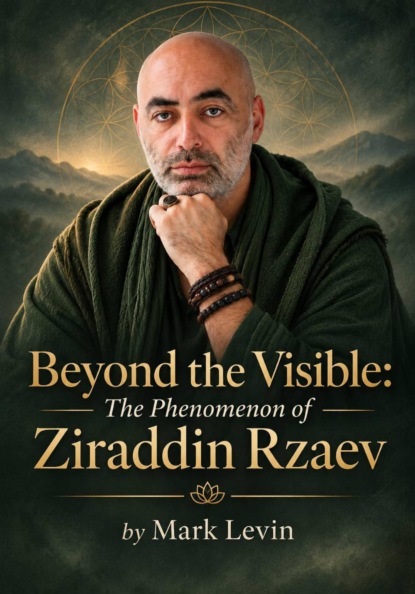
Beyond the Visible: The Phenomenon of Ziraddin Rzaev by Mark Levin
The second task appeared simpler, but it concealed a catch: he had to determine the color of the paper hidden inside the envelope.
'Red,' Ziraddin answered almost without hesitation.
Following the instructions of the staff member, he tore the thick paper open himself, but a second later, his face expressed deep disappointment. The envelope appeared completely empty.
'It seems this was a test of my confidence? There is nothing here,' he uttered with bitterness in his voice, looking at the woman.
However, she merely smiled mysteriously:
'Look closer. Peer into the very corner.'
Ziraddin checked the envelope once more and discovered a tiny scrap of paper lodged in the very seam. It was precisely red. It turned out that even when his eyes deceived him, his intuition perceived the truth down to the smallest detail. This moment became the definitive confirmation: standing before the committee was a man whose senses operated far beyond ordinary human perception."
"Psychic Challenge" (2008)
Public attitudes toward the television show Psychic Challenge (Bitva Ekstrasensov), broadcast on the TNT channel, are far from monolithic. For some, the project’s participants are merely talented "actors" skillfully playing out a pre-written script; for others, they are individuals with genuinely phenomenal abilities operating beyond the boundaries of the possible. Confirming or debunking the authenticity of what transpires on the screen remains an exceptionally challenging task.
The controversy intensified in 2019 when the multi-part investigative documentary series Going to Hell (Idushchie k chortu) aired on the Rossiya-1 television channel. This project planted seeds of doubt even in the hearts of those who sincerely believed in paranormal phenomena and extrasensory gifts. The film exposed the underbelly of the industry, forcing many to re-evaluate television magicians.
Within the framework of this book, I will dissect the documentary Going to Hell in detail and present the findings of my own investigations so that we may unravel this complex subject together.
To remain focused on our narrative, however, I would like to highlight specific video fragments featuring Ziraddin Rzaev on Psychic Challenge that particularly caught my attention.
As is well known, the format of this project is built upon trials: individuals claiming to possess "superpowers" are given specific tasks to complete, thereby demonstrating their gift. Naturally, while some succeed in completing the assigned task, others fail.
Yet, in the course of my investigation into Ziraddin Rzaev's personality, I noticed an intriguing pattern: even in those moments when he failed to accomplish the primary objective, he still managed to astonish the crew and the experts. He demonstrated his talent entirely outside the confines of the mandated script.
A striking example occurred during the classic trial involving the search for a person hidden in the trunk of one of numerous cars. The Safronov brothers served as the resident experts and skeptics for that challenge. Ziraddin made an attempt to locate the hidden individual, but fortune did not smile upon him that time. Noticing a skeptical smirk and doubt in the eyes of Sergey Safronov, Ziraddin walked right up to him and asked: "In your life, was there a woman named Marina?"
The response from Sergey, who froze in astonishment, was instantaneous: "Yes, Marina is in my life right now as well."
This episode served as vivid confirmation that Ziraddin’s abilities extended far beyond the boundaries of a television contest.
Irina Ponarovskaya: Astonishment Behind Blindfolded Eyes
Another vivid and clearly unscripted moment that caught my attention was the filming session featuring the Honored Artist of Russia, Irina Ponarovskaya. The conditions of the trial were exceptionally rigorous: the psychics, completely blindfolded, were required to determine the sex, profession, destiny, and even the health status of a "Mr. X" hidden in a secret room.
To entirely rule out any possibility of peeking, Ziraddin Rzaev was tightly blindfolded with a black cloth, over which special opaque goggles were placed. He was literally led into the hall by his arms and seated across from the guest. Yet, the moment he focused, his very first words sent a shockwave through everyone present.
"A woman is sitting before me," Ziraddin pronounced confidently, "and she is fanning herself."
At that exact moment, Irina Ponarovskaya’s face registered a mixture of profound astonishment and almost childlike delight. It was a lightning-fast, genuine reaction of a person who had not anticipated such precision.
Personally, I find it impossible to believe that an artist of Ponarovskaya’s stature would conspire with the production crew to orchestrate a false sense of wonder. The same can be said for Sergey Safronov, who today stands as a fierce critic of psychics, yet back then was visibly disconcerted by what he witnessed.
Ziraddin did not merely "guess"—he perceived a specific detail that could not have been deduced through logic, thereby confirming the existence of a rare gift that extended far beyond the boundaries of a conventional television show.
"Your Brother Cannot Walk"
Another incident that clearly went beyond the show's script proved to be truly staggering. Under the close scrutiny of illusionist Sergey Safronov, the participants were presented with a group of people. The task was specific: among several individuals sitting in a row, they had to identify the one with a prior conviction for theft.
Of course, skeptics might assume that the production crew could have tipped off the participants about the right person beforehand. However, Ziraddin Rzaev took a completely different path. He did not merely point out the individual—he demonstrated a talent that was far deeper and more complex than the question asked.
When Ziraddin was unable to immediately identify the convicted individual, that very man stood up and asked deflatingly, "How can you prove that you actually possess superpowers?"
Ziraddin walked right up to him, looked directly into his eyes, and said quietly but confidently: "You have a brother. He cannot walk and is confined to a wheelchair."
Upon hearing this, the man could not hold back his tears—the words struck the most painful aspect of his private life. Silence enveloped the studio. Both the production crew and Sergey Safronov himself were left in utter bewilderment: none of the organizers knew this fact, and this information could not have been part of any script.
This moment became another powerful argument that Ziraddin perceived the destinies of individuals where the game for the camera ended.
"Going to Hell": An Investigation or a Personal Opinion?
Now, I would like to present the findings of my own investigation regarding the highly controversial documentary Going to Hell (Idushchie k chortu). Many of you have likely watched it or heard about the storm it caused within society. Released in 2019 on the Rossiya-1 television channel, this project aimed to expose psychics, and remarkably, a significant portion of it was centered precisely around Ziraddin Rzaev. It is highly probable that the reason for such intense scrutiny was the "Ziraddin phenomenon" itself, which set him apart from the other participants.
I have no desire to fill my book with negativity; therefore, I will omit a detailed retelling of the plot. I believe that analyzing the situation from a legal and technical standpoint will be far more constructive and objective than relying on one-sided judgments rooted in personal emotions.
Confident in his righteousness, Ziraddin Rzaev sought legal redress by filing a lawsuit to protect his honor and dignity. Initially, the Savelovsky District Court of Moscow ruled in Rzaev’s favor. However, the Moscow City Court subsequently overturned this decision, motivating its ruling by stating that the content of the film Going to Hell constituted the "subjective opinion, personal evaluation, and editorial vision" of the program's creators.
Yet, this raises a number of logical questions. For instance, the film asserted that Ziraddin owned several apartments in Moscow. Notably, it was only during the trial itself that the defense attorney representing the filmmakers submitted an official inquiry to ascertain Rzaev’s actual property status. This prompts a rational question: if the inquiry to state authorities was made only at the litigation stage, upon what facts were the sweeping televised claims regarding his real estate based prior to that broadcast on a federal channel?
One of the primary manipulation tools used in the documentary was footage presented by the creators as undercover surveillance. From the very beginning, the defense maintained that this material had undergone heavy editing. During the judicial proceedings, a shocking fact came to light: the original, unedited recordings had been deliberately or accidentally destroyed, completely depriving experts of the opportunity to conduct a comprehensive technical analysis.
Nonetheless, claims regarding the use of an entire network of hidden cameras and specific jump-cuts are easily validated through visual evidence. A close examination of the footage reveals the unmistakable utilization of at least three shooting angles. In a sequence advertised as unique "undercover" material, Ziraddin Rzaev appears before the viewer from various perspectives: he is seen on the right side of the screen, then on the left, and then dead center. Such dynamics are direct evidence that we are not looking at an accidental, raw recording, but rather a meticulously edited product that combined the synchronized operation of three distinct cameras.
The footage clearly demonstrates how Ziraddin Rzaev's positioning within the space constantly shifts. In professional cinematography and editing terms, this signifies a multi-camera shooting method.
Why is this detail crucial to our investigation? The presence of three independent angles establishes ideal conditions for "seamless" editing and contextual manipulation. If the recording had been captured by a single camera, any attempt to excise a phrase or alter the sequence of words would have resulted in a sharp "jump-cut" in the image, noticeable even to a layperson. Conversely, cutting between different cameras allows the editing points to be concealed, creating the illusion of an uninterrupted conversation.
We live in the 21st century, and modern technology makes it easy to detect such manipulations. To settle these disputes and dispel any suspicion, the filmmakers would have only needed to publish the raw, unedited footage from at least one of the cameras. The refusal to demonstrate the original recordings, coupled with the claim of their subsequent "deletion" stated in court, only reinforces the validity of the doubts surrounding the authenticity of the presented material.
A Legal Paradox: Personal Opinion vs. Facts
The public assertions made by the filmmaker deserve close scrutiny. He claimed, "I won in the Moscow City Court and proved that Ziraddin is a fraud." From a jurisprudential standpoint, such statements appear strange and unprofessional, to say the least. The reality is that "fraud" is a category of criminal law. The Savelovsky District Court and the Moscow City Court reviewed the lawsuit strictly within the framework of civil proceedings (specifically, a defamation claim for the protection of honor and dignity). Civil courts do not possess the jurisdiction to find an individual guilty of a criminal offense. Consequently, the filmmaker's assertions lack any legal foundation and serve as yet another example of personal bias and conceptual obfuscation.
A crucial outcome of the judicial proceedings is that the Going to Hell project was never legally recognized as a documentary or an investigative film in the strict sense of the word. The court classified the film's contents as personal evaluative judgments and the subjective opinion of the author.
This is the pivotal point: everything stated about Ziraddin Rzaev in this project—from dubious descriptions to ambiguous footage—lacks the evidentiary basis required to substantiate a criminal case. In effect, the Moscow City Court confirmed Ziraddin Rzaev's status as a public figure, while defining the filmmakers' attacks against him merely as their private stance. The total absence of criminal convictions or substantive evidence of unlawful activity further underscores that the campaign against Ziraddin was not built upon the law, but rather driven by a desire to manipulate public opinion through the prism of personal animosity.
• First Instance Case Number: No. 2-4621/19
• Appellate Instance Case Number: No. 33-15313/20
A Path Between Science and the Arcane: An Interview on Calling and Criticism
The interviews I conducted with Ziraddin Rzaev served as a guiding light for me in many ways. They set the developmental vector for this entire book and provided a deeper insight into many things. My goal is to assist the reader in comprehending such a complex sphere as the esoteric, teaching them to rely not on empty words and loud proclamations, but on real facts and irrefutable evidence. For it is only through the prism of proof that one can grasp the truth.
Author: Studying your interviews, I have noticed that you frequently emphasize that a representative of any profession is, in essence, a creator. For an artist, it is their canvases; for a singer, their songs; for an actor, their roles; and for a scientist, their discoveries. You assert that phenomenal individuals must also have their own "creative output." What exactly do you mean by this?
Ziraddin Rzaev: Absolutely, my reflections are built precisely upon these criteria. Furthermore, I believe that among the representatives of the professions you mentioned, there are also their own phenomena—such as Leonardo da Vinci or Albert Einstein. As for individuals with extraordinary abilities, their creative output must lie in the demonstration of transcendent phenomena. In their time, Baba Vanga, Edgar Cayce, and others proved this. That is precisely why, in order to distinguish truth from fiction and a genuine gift from charlatanism, one must always look at the result.
Author: What constitutes this "result" for you?
Ziraddin Rzaev: By result, I mean predictions. Specifically, those predictions that were voiced publicly through the mass media. When the time comes, we all become witnesses to either truth or falsehood. The main characteristic of the creative output of a true phenomenon in the esoteric sphere is that their predictions must not be mere "educated guesses" or assumptions. They must come to pass in defiance of chance.
Author: Do you apply these criteria to yourself? What constitutes your "creative output" as a phenomenon?
Ziraddin Rzaev: I am not a proponent of speaking about myself, so your question strikes me as rather challenging. But since you ask, I will recall a few of my predictions that were published in the mass media and became public knowledge.
For example—and I often repeat this—the COVID-19 pandemic became my "magnum opus," if one may put it that way. In addition to that, I would highlight the prediction of the death of Queen Elizabeth II specifically on the 8th, the forecasting of the earthquake in Turkey (Kahramanmaraş), and the warning regarding the terrible tragedy involving the crane collapse in Mecca. Also among the fulfilled events are the volcanic eruption in Iceland, the assassination of former State Duma Deputy Denis Voronenkov with specific details of the incident provided, and many other cases.
All of these facts are recorded in the media, and anyone can cross-reference the dates of my statements with the dates of the events themselves. This is precisely what I call a result.
Author: I have personally studied your words regarding COVID-19—it is indeed a staggering prediction, and I am in complete agreement with you here. But is there documentary evidence for the rest of your statements?
Ziraddin Rzaev: Unquestionably. I will provide you with materials for all the predictions that were voiced in advance and subsequently came to pass. Furthermore, I have notarized some of the most significant publications, including the prediction about COVID-19. A notarized screenshot is quite an expensive and complicated procedure, so, unfortunately, it is physically impossible to notarize absolutely every piece of material published in the media. However, the core evidence is officially recorded.
Author: In your interviews, you frequently mention the famous Baba Vanga. What is your attitude toward her? As I understand it, you believe in her gift unreservedly?
Ziraddin Rzaev: It is not merely a matter of belief. I sincerely love and deeply respect her as a person. Vanga is one of the most extraordinary phenomena history has ever revealed to humanity. I have studied the video materials of her work with people in great detail and observed how she entered a state of trance—she is an incredibly profound and unique figure.
To my profound regret, her name is frequently exploited today. Journalists and television networks shamelessly propagate fabricated prophecies that she never uttered. It is vital to understand that Vanga never had, nor does she have, any "book of predictions." I consider it my duty to constantly educate people on this matter in order to protect her name from lies and manipulation.
Author: You are a highly renowned personality, particularly across the post-Soviet space. Tell me, what is it like to bear the burden of popularity, and how do you perceive it?
Ziraddin Rzaev: Popularity is a relative concept. It all depends on the sphere in which you create and the price paid for that path. My road has never been an easy one. To explain the essence of what I do, I often recall a remarkable dialogue between Albert Einstein and Jean Piaget.
When Piaget detailed the psychological structure of a child's thinking and how a child's consciousness literally builds a model of the universe brick by brick, Einstein was genuinely astonished. He uttered the famous phrase: "It is so simple that only a genius could have thought of it. But I must admit: psychology is much more difficult than physics!"
Reflect upon those words. A genius who harnessed the laws of matter and time acknowledged that the invisible inner world of a human being is a substance far more unfathomable than physical constants. It is one thing to observe a material law, and quite another to explore the abyss of the human soul.
Author: But you go even further, touching upon topics that transcend the boundaries of classical psychology...
Ziraddin Rzaev: Precisely. If even classical psychology seemed more difficult to Einstein than theoretical physics, imagine how that complexity intensifies when we touch upon paranormal phenomena. This is an area that official science is not yet able to fully explain, but can no longer ignore. It is a terra incognita where conventional formulas are powerless.
Therefore, I look upon the criticism from certain amateurs or biased journalists with a slight smile. Human nature is conservative: everything that does not yield to immediate logical explanation evokes either fear or fierce denial in people. Only a few find the courage within themselves to explore the unknown.
Author: You are often criticized for your connection to the esoteric, despite your academic degrees. How do you handle this pressure?
Ziraddin Rzaev: I have several higher educations behind me; I am a specialist in the fields of clinical psychology and philosophy. For me, the esoteric and science are not warring camps, but rather different tools for perceiving a single truth.
I always treat constructive criticism with deep respect—it helps one grow. Unfortunately, one frequently encounters not a discussion, but outright ignorance: commissioned media segments, cliches, and attempts to defame one's name. Yet, I accept this as part of my path. When you choose the road of a researcher of mysteries that terrify the layman, you must be prepared for the fact that people will try to extinguish your light. But the truth, much like the laws of the universe, does not depend on whether people believe in it or not.
Author: In the world of the esoteric, names and titles mean a great deal. How do you define your own role in this field? Who are you, first and foremost?
Ziraddin Rzaev: That is a question to which no simple answer exists. By education and calling, I am a clinical psychologist and a philosopher. This is my foundation, my professional core. However, I have no right to arbitrarily place labels upon myself in the spiritual sphere. People see me differently: for some, I am a psychic and a clairvoyant; for others, something entirely different, at times diametrically opposed.
Despite the fact that I possess a heightened sensitivity and abilities that extend beyond ordinary perception, I continue to practice in a clinic. I am, first and foremost, a clinical psychologist, and that is my official position in the world of science.
Author: But allow me a degree of skepticism… Could it be that you are simply a brilliant psychologist? What if everything you do is merely the result of a masterful command of academic knowledge and an understanding of human nature?
Ziraddin Rzaev: (Smiles) I like your train of thought. I often hear something similar: "You are simply a brilliant psychologist, and that's your whole secret."
You know, I take such words as the highest compliment to my professionalism. But I have one irrefutable argument against this: what I demonstrate in my practice cannot be replicated not only by ordinary psychologists, but even by seasoned professors and academics. If everything simply came down to textbooks and lectures, the world would be full of such "miracles."
Therefore, if you call me "just a psychologist," I accept this as recognition of my highest level. But the truth is that where the possibilities of science end, the area that I explore in my own unique way begins.
The Ziraddin Rzaev Phenomenon: In Search of Truth Beyond Logic
In embarking upon the study of the Ziraddin Rzaev phenomenon, I set myself a challenging task: to find undeniable evidence and, more importantly, to attempt to uncover its logical rationale. However, confronting the reality of his work inevitably evokes a sense of awe. When one witnesses how his extraordinary, at times seemingly unthinkable predictions manifest in real life over time with chilling precision, it becomes impossible to remain indifferent.
It is precisely within this phenomenal accuracy that Ziraddin’s fundamental distinction from many others lies. As he himself has emphasized more than once in his interviews: "Every specialist must have a creative portfolio that validates their path." For Ziraddin, this portfolio consists not of empty words, but of his unique ability to strike wonder into even the most hardened skeptics. While critics attempt to locate weak points, he simply presents the world with a result that cannot be ignored.
In this study, I will not confine myself to mere reasoning. My goal is to present you with documentary evidence of this phenomenon. Further in the book, you will find verified facts, archival records, and screenshots of his realized forecasts, allowing you to see firsthand the reality of what science is currently only trying to explain.
In this section, I present to you a documentary chronicle of Ziraddin Rzaev’s activities. Compiled here are materials from official and highly reputable mass media outlets of the Russian Federation and other countries: interview excerpts, references to primary sources, and screenshots of his high-profile predictions.