Полная версия:
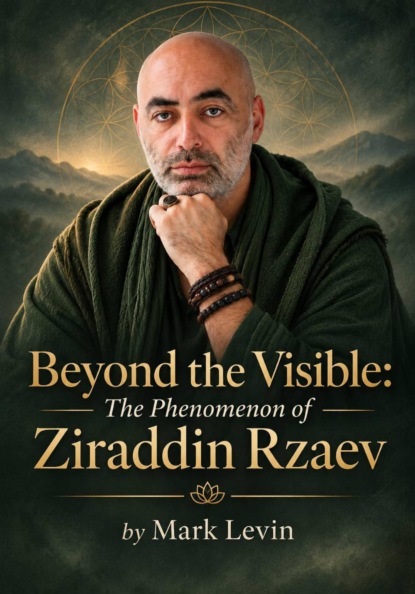
Beyond the Visible: The Phenomenon of Ziraddin Rzaev by Mark Levin
In those turbulent years when Soviet power was just taking root in the land of Azerbaijan, Shahnaz’s maternal grandfather, Musa, along with his uncle—the legendary gachag (a local Robin Hood-style folk avenger) Mejid—refused to recognize the new regime. As wealthy men and true beys (noble landlords), they could not accept an ideology that denied private property and the centuries-old way of life of their ancestors. Standing in open confrontation with the machine of state control, Musa and Mejid fought to their very last breath for their lands, their herds, and the right to live by their own laws. Cruelly ironic is the fact that their descendant, Ziraddin Rzaev, born generations later to Musa’s granddaughter, is today a staunch supporter of socialist ideals.
Shahnaz’s life was fraught with hardships from her very youth. Having lost her father early, she, along with her siblings, was left in the care of their mother, Sugra. Left a widow in the absolute prime of her life, Sugra displayed an incredible fortitude of spirit. Life threw brutal challenges her way, yet she did not break.
To feed her children, this courageous woman initially worked as a tractor driver in the fields, unfearful of heavy manual labor usually reserved for men. Later, during the Soviet era, she worked for many years as a cook at the Shamkhor city police department.
It was precisely within this atmosphere—poised between the memory of rebellious bey ancestors and the harsh daily realities of Soviet working life—that Shahnaz’s character was forged. She would later pass this inner strength and spiritual heritage on to her son.
"The path to knowledge unfolded differently for each of the sisters. Shahnaz received her education at the Shamkhor Vocational School, preparing herself for honest labor. Among all the sisters, only Chimnaz graduated from a higher education institution. Becoming a professional biologist, she achieved great recognition and to this day remains one of the most authoritative and respected experts in her native Shamkhor."
A Birth Foretold by the Heavens
Ziraddin Rzaev came into this world on November 10, 1981, in the ancient city of Shamkhor (now Shamkir). His arrival was surrounded by a chain of inexplicable events and remarkable dreams that are still carefully preserved in his family's memory.
It all began while his mother, Shahnaz, was still carrying him. In 1981, medical technology did not yet allow parents to learn the child's sex in advance, but heaven itself decided to lift the veil of secrecy. Shahnaz began having strange, extraordinarily vivid dreams: a voice from above heralded that she would give birth to a son, and his name must be Ziraddin. Shahnaz herself had secretly wished to name the future boy Uzeyir. When she shared her dreams with her mother, Sugra, and their neighbors, they unanimously advised her: if the dream came true and a boy was born, she must not oppose the will of providence. The name could only be one—Ziraddin.
Another mysterious dream concerned the future child's spiritual guardian. Shahnaz dreamed that a man named Seyid Akbar would become the kirva (spiritual mentor) for her son...
"On November 10, 1981, the day Ziraddin was born, another miracle occurred, astonishing everyone present. The delivering medical staff turned to Shahnaz with undisguised reverence: 'Congratulations on your son! This child is marked by a divine sign.'
While tradition prescribes that Muslims and Jews undergo the rite of circumcision, little Ziraddin entered this world already bearing this sacred seal—he was born circumcised. Yet, even this rare omen did not alter the divine will previously revealed in his mother's dreams: Seyid Akbar indeed became his spiritual mentor and kirva, forever binding the boy's destiny to the blessed lineage of the Prophet."
During the Soviet period, Ziraddin’s mother, Shahnaz, worked as the chief accountant at the Teachers' House.
"In his early childhood, his mother often brought Ziraddin along with her to work at the Teachers' House. This extraordinary child, whose very birth was already shrouded in legends, invariably found himself at the center of everyone's attention.
The young female employees of the Teachers' House, half-joking and half-serious, would gather around little Ziraddin, eagerly asking about their futures: when would they meet their destined partners, or when would they get married? The boy would answer, and over time, his words began to come true with astonishing accuracy.
For some, this became an undeniable prophecy, while others tried to dismiss it as mere happy coincidence. However, behind all the skepticism lay one indisputable truth: everything little Ziraddin predicted, sooner or later, became reality."
Ziraddin Rzaev’s School Years
"When the time came to enter the first grade, his mother enrolled Ziraddin in the Russian-language sector. For the first three years, he studied at the Karl Marx Secondary School. Later, however, he was transferred to School No. 4, moving into the Azerbaijani-language sector.
Even during his school days, Ziraddin stood out remarkably among his peers due to his extraordinary quietness and inner serenity. Teachers and classmates remember him as an astonishingly soft-spoken, gentle, and kind-hearted boy. He had one peculiar habit that consistently aroused the curiosity of those around him: even during recess, he would never part with his school backpack, always wearing it on his shoulders.
Among the children, this became a subject of good-natured teasing. His classmates would laugh, saying, 'There must be gold in Ziraddin's bag since he won't take it off his shoulders even when resting.' No one at the time could have guessed that this withdrawal and protectiveness were merely external manifestations of the singular world in which this extraordinary child lived."
"One of Ziraddin’s striking characteristics during his school years was his selective approach to education: he read not what the teachers demanded, but what his own soul was drawn to. His mind was entirely captivated by the humanities—he quite literally breathed literature and poetry.
It was back then, at his school desk, that Ziraddin began writing his first poems, dedicating them to faith, spirituality, and noble feelings. Being by nature an deeply reserved and shy individual, he jealously guarded his creative work, keeping his written verses in notebooks as a sacred secret.
His deep attachment to the Azerbaijani language and classical literature was no accidental hobby. It was this love for the written word and the heritage of the great classics that laid the foundation upon which his unique poetic style would later mature. Those school notebooks, hidden from prying eyes, became the cradle of his future recognition as a poet."
"When Ziraddin turned seventeen, his life turned into a succession of inexplicable phenomena. His dreams became so profound and tangible that the line between visions and reality blurred; from a scientific standpoint, it resembled a state of hallucination. His family watched his spiritual transformations with anxiety, though they secretly understood that this was predetermined. Everyone knew of his uniqueness: his name had come in a dream, his kirva (godfather) had been indicated from above, and he himself had come into the world with a sacred sign—born 'circumcised' (sunnah).
The university entrance examinations were approaching, but it seemed that his mystical states would deprive him of the opportunity to study. Due to his condition, Ziraddin missed about a week of classes. When he finally returned to the classroom, his desk was occupied by his classmate, Ahmed.
To Ziraddin's polite request to return his seat, Ahmed replied with rudeness. Then Ziraddin, as if peering into the immediate future, calmly remarked:
'You will not sit at this desk for more than three days.'
Ahmed merely ridiculed his words. The third day arrived. Ahmed took the foreign seat once again, but after the first lesson, he suddenly vanished. Everyone assumed he was simply skipping classes. However, in the middle of the second lesson, the classroom door burst open with a bang: Ahmed appeared on the threshold. He had been brutally beaten by upperclassmen on the school sports field—his face and clothes were covered in blood. The youth took a step forward and collapsed unconscious to the floor.
An ambulance arrived, and Ahmed was rushed to the hospital. A few days later, when the homeroom teacher and the students went to visit the injured boy at his home, Ahmed could not contain his emotions upon seeing Ziraddin. He sincerely begged forgiveness for his mockery and admitted that he deeply regretted his behavior. This incident became the first formidable proof for everyone that Ziraddin’s words possessed a power far beyond ordinary logic."
From the Student Desk to Recognition: The Beginning of Ziraddin Rzaev’s Path
"In spite of all the spiritual upheavals and inner storms, Ziraddin Rzaev successfully passed his examinations and became a student at the Ganja Branch of the Azerbaijan Teachers' Institute.
His student years became a time of a double life: while his peers were fully absorbed in their studies, Ziraddin was already bearing the weight of human struggles on his shoulders. Rumors of his gift spread like wildfire. Initially, it was his neighbors, who knew the story of his birth and had witnessed his insights. They were followed by their relatives, and soon all of Shamkir was talking about the phenomenon of the young man with the extraordinary talent.
His appearances at the local market caused a quiet sensation. Market women vied with one another just to have Ziraddin touch their goods with his hand, believing that his touch would bring good fortune and commercial success. This was the highest manifestation of the people’s trust—sincere and pure, born not from television screens or newspapers, but from the lived experience of ordinary folk.
Despite his growing fame, which had extended far beyond the borders of Shamkir, Ziraddin remained entirely immune to any 'star sickness.' After graduating from his first higher education institution, he spent a year humbly teaching at a vocational school, sharing his knowledge with the youth. Yet, his internal quest demanded more.
Sensing that an innate gift alone was insufficient for a profound understanding of the human soul, Ziraddin left for Baku. He was drawn to psychology—a science capable of systemizing his personal experience and expanding the boundaries of cognition. He did not want to be just a 'miracle worker'; he aspired to become a professional capable of understanding a human being at the intersection of science and mysticism. Thus, a new chapter of his life began with his enrollment in the Faculty of Psychology at the Azerbaijan Teachers' Institute.
The Path into Science: Mentors and Instructors
The years of his studies at the Faculty of Psychology of the Azerbaijan Teachers' Institute became a critical milestone in the formation of Ziraddin Rzaev’s scientific and philosophical views. It was here, in an atmosphere of deep intellectual pursuit, that destiny brought him together with the prominent minds of the era, whose scale of personality and academic authority predetermined the trajectory of his future research into the human soul and philosophy.
One of his primary mentors, who exerted a monumental influence on the development of the young researcher, was Professor Ramiz Huseyngulu ogly Mamedzade—a truly monumental figure in Azerbaijani science and the state apparatus. By the time of their meeting, Ramiz Mamedzade combined the immense experience of Soviet state administration with the deepest academic wisdom.
During the Soviet period, Ramiz Huseyngulu ogly had gone through a brilliant school of party and state activity, serving as the First Secretary of the Karadagh District Komsomol Committee, the Second Secretary of the Sumgait City Party Committee, and fulfilling responsible missions within the state security organs of the USSR. His authority across the republic was unassailable, as confirmed by his election as a deputy to the Supreme Soviet of the Azerbaijan SSR of the 8th and 9th convocations. In his later years, fully dedicating himself to enlightenment, this Honored Educator, professor, and prominent public figure headed the Department of Educational Management and Additional Education at the Azerbaijan Teachers' Institute, authoring foundational texts, including his celebrated work, 'The Professional Ethics of a Teacher.'
Alongside Ramiz Mamedzade, another luminary of domestic science stood at the origin of Ziraddin Rzaev's psychological education—the outstanding scientist, Professor Kerim Kerimov. This constellation of brilliant professors, possessing encyclopedic knowledge and rigorous academic conditioning, did not merely pass on the theoretical foundations of psychology to their students. They taught the most essential thing—how to penetrate the very core of human nature, and how to think broadly, systematically, and uncompromisingly.
For Ziraddin Rzaev, the opportunity to learn from such titans as Ramiz Mamedzade and Kerim Kerimov was not only a supreme privilege but also a solid foundation upon which his own original concept—a synthesis of clinical psychology, philosophy, and the spiritual heritage of the East—would subsequently mature.
"Having received his diploma in psychology, Ziraddin returned to his native Shamkir. He began a private practice, striving to help people through the prism of his acquired knowledge. One day, Guseyn—a young businessman from the village of Yenihayat whose path ran through Moscow—came to his consultation. Business in the Russian capital had been going terribly, but Ziraddin's advice and guidance yielded an astonishing result: the business began to thrive. A deep friendship blossomed between them.
Always thirsting for knowledge, Ziraddin caught fire with a new dream—to obtain an education in clinical psychology in Moscow. He planned that after his studies, he would return to Baku to heal people's souls on a professional level. That was Ziraddin’s plan. But Destiny had entirely different designs for him.
Ziraddin called Guseyn in Moscow and shared his desire to enroll in the Institute of Psychotherapy and Clinical Psychology. Guseyn, who possessed limitless faith in his friend, replied without a moment's hesitation: 'Come, I will do everything within my power.'"
A Fateful Consultation: How a Patient Became the Psychic’s Wife
The path toward his dream demanded desperate decisions. At that time, Ziraddin lived in a military town with his mother, his wife, and their young daughter, Dana, in a modest two-room apartment left behind by his late father, who had been a warrant officer (praporshchik). In order to begin constructing his own house on a plot of land registered in the name of his mother, Shahnaz Khanum, he sold the apartment. However, the money proved to be catastrophically insufficient. To complete at least a portion of the construction, Ziraddin moved his family into the still unfinished, cold house, while mortgaging the building itself to secure a bank loan. In 2009, with only two hundred manats in his pocket, he boarded a train and set off toward the unknown—into the vast city of Moscow.
Yet, the most astonishing event of those years was the story of his marriage, one truly worthy of a separate narrative. It all began with professional interest: a female journalist from Ganja approached Ziraddin. Struck by his abilities, she shared a personal tragedy regarding her niece. The young woman, a graduate of Moscow State University (MSU), had suddenly fallen gravely ill in Moscow. Medical professionals in the capital were unable to provide a diagnosis, and in sheer desperation, her family transferred her to Baku, to the Semashko Hospital. Yet even there, the finest specialists could only throw up their hands in despair.
"I must see her," Ziraddin replied shorty. The young woman, completely emaciated by the illness, was brought to him directly from her hospital ward. Ziraddin not only succeeded in healing her and restoring her to life, but he also realized that this meeting had been predestined from above. The one who had come to him for salvation became his destiny and his life partner.
Thus, leaving behind an unfinished house and his beloved family, Ziraddin was traveling to Moscow. He believed he was going there simply to earn a diploma, but in truth, he was journeying toward global renown.
Beyond the threshold of publicity and high-profile television projects, Ziraddin Rzaev is, first and foremost, a father of a large family. Currently, three children are growing up in his household: Dana, Ruslan, and Maria. It is within their upbringing, the continuity of generations, and core family values that he finds his primary purpose and the most reliable pillar in life.
Ziraddin Rzaev: The Beginning of a Grand Journey on Television
Ziraddin’s greatest and most cherished dream had always been to own a house of his own with a spacious yard. This dream was born from his deep love for nature and animals, especially dogs, in whose company he had always found peace. Yet, destiny ruled otherwise: he was never to spend a single day living in the very house in Shamkir that he had built with such immense hardship. Leaving the loan money behind for his family to live on, Ziraddin boarded a train carrying him toward the unknown, with a mere two hundred manats in his pocket.
After a long journey accompanied by the rhythmic clatter of the train wheels, Moscow welcomed him on a cool morning. His loyal friend, Guseyn, was waiting for Ziraddin on the station platform. The car glided smoothly along unfamiliar avenues and through a labyrinth of foreign streets that seemed endless at the time. Moscow overwhelmed him with its staggering scale, yet Ziraddin maintained his inner serenity.
They arrived in the district of Severnoye Butovo, where Guseyn rented a modest two-room apartment. It was here, in these simple surroundings as a guest of his friend, that Ziraddin began his countdown of Moscow time. He did not yet know that these foreign streets would soon become deeply familiar, and that his quiet life in Butovo was merely a brief calm before a monumental storm of popularity brought about by his participation in Psychic Challenge (Bitva Ekstrasensov).
"Daily life in Moscow began for Ziraddin in cramped quarters, which became a trial for both body and spirit. His friend Guseyn worked at the Pokrovskaya vegetable depot, trading produce to feed his wife and two young children. Another relative, who assisted Guseyn at the market, already resided in their two-room apartment in Severnoye Butovo. Ziraddin’s arrival made the living space nearly imperceptible; a household that could barely accommodate five people now housed a sixth.
Sleeping space was catastrophically scarce. For two to three months, Ziraddin slept on a narrow folding cot alongside Guseyn’s young son. Every night, he lay almost motionless, terrified of waking the child with an awkward movement.
Yet, heavier than the physical discomfort was a matter of honor. At twenty-six years old, Ziraddin, raised in strict national and moral traditions, considered it unacceptable to remain in his friend’s home when the master of the house himself was absent. Therefore, every morning at exactly four o'clock, he would rise alongside Guseyn and leave for the market, sharing the long hours of labor among the trading stalls.
Guseyn, observing Ziraddin, was formulating his own plans. He hoped that during his studies, his friend would begin consulting the local Azerbaijanis working at the market, earn enough for his own lodging, and move out. But destiny was preparing a different turn of events.
One day, Guseyn caught his friend completely off guard with a piece of news:
'I called the television station, specifically the show Psychic Challenge. I told them about your gift. TNT replied that you need to come in for a casting session and undergo the preliminary trials.'
Ziraddin responded with a resolute refusal.
'I came here to study to become a clinical psychologist,' he countered. 'My goal is a diploma and a job in a Baku clinic. I have no intention of participating in a television show.'
However, Guseyn demonstrated a persistence that would over time prove prophetic. Refusing to listen to excuses, he quite literally forced his friend to take this step. Thus, under the gentle yet firm pressure of a close person, Ziraddin Rzaev took his first step toward the project that would soon alter not only his life but also the perception of millions regarding the boundaries of human potential."
At the appointed hour, Guseyn and Ziraddin set off for the very heart of Moscow. It was there, inside an office building, that their fate was to be decided—whether Ziraddin was destined to become part of a massive television project. At the entrance, they were met by a strict security post. After checking the logs, the guard cut them off, stating that the pass had been issued for only one person. Only Ziraddin could enter the building.
For a young man who still had a poor command of the Russian language and felt like a stranger in this colossal megalopolis, this came as a true blow. Anxiety paralyzed him.
"I will not go anywhere without Guseyn," he stated firmly.
Only after they succeeded in obtaining a pass for his friend as well did they ascend together to one of the upper floors of the high-rise.
First, Ziraddin was invited to a preliminary interview. He spoke in detail about his life: his extraordinary birth, the visions that had pursued him since his youth, and his searches for the truth. His story, brimming with mysticism and sincerity, clearly intrigued the organizers. He was then escorted into another room prepared for filming. The setting was austere and oppressive: walls draped in black fabric, glaring studio lights, and a camera lens pointed directly at his face. Ziraddin sat at a table across from a project staff member. Guseyn remained in the background, trying to support his friend with a reassuring gaze.
The first serious trial began. Ziraddin was handed an old, black-and-white photograph. It depicted a little girl around three or four years old.
"Who is this child?" they asked him. "Is she alive today? What does she do, or what could she have done in life?"
Ziraddin took the photograph into his hands. For a moment, silence hung in the room, and then he began to speak. His voice sounded confident, as if he were reading an open book:
"This girl is alive and well. Furthermore, she is highly famous. Right now, she is under the lens of cameras and is never apart from a microphone."
The photograph was of a young Anfisa Chekhova. It was a absolute bullseye. Ziraddin had not merely 'guessed'—he had seen a person’s destiny through decades captured on yellowed paper. At that moment, it became clear that it was not just another contender who had arrived in Moscow, but a genuine phenomenon.
"Guseyn, watching the events unfold from the sidelines, could not conceal his triumph. A mixture of genuine admiration and pride for his friend was readable in his eyes. He was reassured once more that his faith in Ziraddin’s phenomenon was justified one hundred percent.
Meanwhile, the trials became more technical and clinical. Ziraddin was handed two sealed envelopes.
'Hidden inside one of them is one of three geometric shapes: a triangle, a square, or a circle,' a staff member uttered in an emotionless voice.
Ziraddin immersed himself into his thoughts for a moment, as if listening to an invisible whisper. When he raised his eyes, they were full of confidence.
'There is a circle in this envelope,' he pronounced calmly.
'Well, open it and see for yourself,' the woman replied.
When the envelope was cut open, a white sheet bearing the image of a perfect circle fell onto the table. A chill of astonishment ran through the room.