Полная версия:
The visualizer, or the man who alters reality
In his time, John had been offered the chance to head a secret laboratory conducting research into the effects of powerful spin and torsion fields on the human brain. It was a tempting proposition. The scientist would have had at his disposal a well-equipped laboratory and a full complement of supporting staff.
But after reviewing the order book, John had felt compelled to refuse. He had no wish to conduct dubious experiments on human beings in service of obscure government programs.
He had resigned. For a long time afterward he could not find work, having received no formal letters of recommendation on his departure. Fortunately, a small oil-and-gas company needed someone with his qualifications and experience, and he was taken on as a field psychologist, initially on a one-month trial. John passed the trial with distinction and was added to the permanent payroll.
The oil workers operated in the most varied regions on earth — restless corners of the world where the conditions were harsh: deserts, permafrost, remote offshore platforms far out at sea. The work was dirty and physically brutal. That took its toll on the men who did it, and John was constantly having to pull exhausted workers back from the edge of the stress states their tight-fisted employer had pushed them into.
Workers could develop severe phobias and bipolar disorders. The employer, naturally, had no desire to be sued and obliged to support seriously ill employees who ended up in hospital with such complex diagnoses. The rates at psychiatric facilities were astronomical. Everyone knew that the fees charged at these closed medical institutions vastly exceeded what an ordinary office psychologist could ever earn.
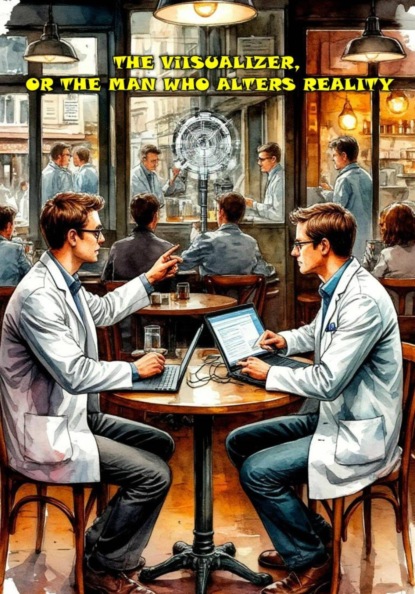
Unlike John, Winston had stayed on at the Institute and taken up exactly the line of research his friend had declined. From time to time the two men met at this bar to unwind and exchange news. But on this particular occasion a long interval had passed since their last meeting. Both had been buried in urgent matters, and the get-together had kept being postponed. It might have gone on being postponed indefinitely had Winston not phoned and insisted on seeing John here, today, without delay.
John studied his old friend from across the table. They had not seen each other in nearly two years, and in that time Winston had changed dramatically. He looked considerably older and had lost most of his hair. Something was clearly weighing on him — something that was leaving its mark on his health and his appearance. John, by contrast, had barely changed at all. He liked his work, his employer valued him, and the risks were minimal. Even when unexpected incidents arose, they were resolved promptly in the normal course of things and left no lasting impression on his outlook or his sense of well-being. Whatever had done this to Winston was impossible to say.
"Long time," said John, giving his friend a clap on the shoulder. He was glad of the chance to talk about the things that preoccupied both of them as psychologists — things that made a change from the daily routine and the complications of his private life.
"I want to order us two dark beers and some Swiss grilled sausages. I hope you won't turn those down," he said.
The café played soft, pleasant music. Between the tables moved nimble and attractive waitresses, carrying enormous beer mugs foaming with the fizzing dark liquid, and trays loaded with fragrant appetizers.
John waved one of the nearest girls over to place their order. Winston sat in silence, as if sunk in meditation. He was certain John would order exactly what he needed most at that moment. His eyes kept drifting hungrily to the beer the waitresses were drawing from the taps mounted on the long bar at the far end of the room.
Winston wanted to relax and forget — forget the experiments being conducted in his secret laboratory over the past two years. And John understood. They had worked together so long that words between them had become almost unnecessary.
"You look exhausted," John said. "Heavy workload?"
"Yes. Right now we're developing a powerful torsion-field generator — one capable of affecting large groups of people," Winston answered.
"Actually, I've brought a small prototype with me right now, and I'm ready to show you how it works. I think I can surprise you."
John had no time to respond. A pretty waitress appeared at their table with the order they had placed a few minutes before. The bar was packed, but the girls served quickly and with a decent measure of courtesy. The psychologist pushed two mugs of beer toward his friend and suggested they sit for a while and have a drink first. John was in no hurry, and there would be time to talk afterward. Winston had to agree. He looked at his friend, apologized, and said:
"Let's drink to seeing each other again. It really has been a long time, and we have plenty to talk about and catch up on."
He patted the worn brown briefcase resting on his knees — the one he had brought along tonight for some reason, and had not set down for a single moment.
Winston raised his pint of dark beer to his lips, hoping to drown the memory of the experiments, and of the complications in his personal life that nagged at him just as persistently, never letting him rest.
To steal even this one evening out, he had been forced to deceive his superiors, telling them he was going to meet a client. He did not regret it. Every person needed to talk sometimes. That was why, in psychological circles, it was considered important to have close friends. And he trusted John completely — they had known each other for what felt like a lifetime. John never informed on the people he was close to; beyond that, he was an excellent specialist who had a genuine feel for the many nuances of scientific work.
Chapter 5
We are the wellspring of all joy
— and grief's own mine.
We hold the vilest filth —
and waters crystalline.
Man sees the world reflected,
many-faced, in glass:
He is both nothing — and
magnificently vast.
Omar KhayyamVera Ivanovna sank into her armchair with a weary sigh and switched on the television. Her first day on the job had been dense with events that had left the psychologist thoroughly drained. She closed her eyes and tried to relax, letting her thoughts drift back over everything that had happened. Just as Isaac Moiseevich had hoped, she had accepted his offer of a position at the inpatient clinic. On balance, the work suited her — the facility's status notwithstanding.
Part of the day had been taken up with a meeting with the head of human resources, who walked her through the terms of her employment. All clinic staff were required to pass a polygraph interview. The questions covered harmful habits, personal life, and attitudes toward seriously ill patients. In the director's view, anyone holding a senior position had to demonstrate honesty and transparency — they were expected to be beyond reproach, with no skeletons hidden away in any closet.
The interview had lasted only thirty minutes, but it left her drained — drained by the HR officer herself and by the unpleasant questions she had been asked. Vera Ivanovna recalled the procedure she had just endured: wires with sensors attached to their ends had been clipped all over her body, and then came the "foolish questions." She was not afraid of a polygraph — she had gone through a similar procedure at her previous job — and she had no reason to blush for her behavior. Work occupied all her time. She disliked noisy parties and had never gone looking for trouble.
Beyond the polygraph, the HR officer had other instruments for assessing staff and patients alike. Installed on her desktop computer was a specialized program that transmitted particular visual signals to the person being tested, while sensors fixed to the subject measured heart rate and the dilation or contraction of the pupils. In this way the program identified individuals with a tendency toward drug use or toward violent behavior.
Once the results had been processed, the HR specialist put only a handful of additional questions — and then set down a written statement confirming that Vera Ivanovna was ready to assume her duties. The vetting had gone smoothly. No one doubted that she could begin immediately as chief medical officer of this large institution, staffed by some of the country's finest specialists.
After that, Ms. Maslova sat through a briefing on fire safety and occupational health regulations and signed the relevant log, which was promptly locked away in the director's safe.
"I understand these procedures have tired you out, and I can send you home right now if you like," the director offered, studying her with a slightly melancholy look, aware that all of it must have been exhausting.
But Vera Ivanovna declined. She was not the type to give up, and she was ready to get started on her very first day. She was eager to see the clinic's patients — the people she would be working with over the long term.
"Well then, if you're ready to get to work, you'll need to familiarize yourself with the files of our most complex patients," said Isaac Moiseevich, and slid across to her a thick pile of case files he had specially selected from his card index the day before.
Isaac Moiseevich wanted to assess her competence, and the only way to do that was to discuss the actual clinical picture of these unusual patients. Vera Ivanovna opened the top file and looked at the photograph of the person depicted on it.
"What on earth is this?" she asked, and held the photograph up for the director.
"Here is your first patient — the one you'll need to take charge of," said Isaac Moiseevich. "This is Sanyok — Alexander Anatolyevich Fursov, also known as Alexandra Anatolyevna Fursova. From childhood he presented with severe psychiatric disorders that led to a split personality. To feel like something whole, he persuaded himself he was an extraterrestrial being without gender and began striving toward that end, modifying his body. Over time, the constant experiments on his own physical form produced paradoxical results: he came to resemble some kind of mystical character from a horror film, and people genuinely began to take him for an alien who had descended to Earth from another planet or arrived from another galaxy. You'll agree his appearance is rather extraordinary?" he asked.
Vera Ivanovna looked at the photograph again. The entire face of this individual was tattooed. He had stuck out his tongue — a tongue that writhed and resembled something serpentine, having been split down the middle into two halves. From either side of his tattooed forehead jutted two enormous bony protrusions. The man's appearance was so extravagant that it drew a look of genuine surprise even from Vera Ivanovna, despite everything she had seen during her clinical residency, which she had completed not long ago in Saint Petersburg.
"Do we have many patients like this?" she asked Isaac Moiseevich.
"We have about a hundred patients in the closed inpatient ward, but the great majority of them look perfectly normal and are indistinguishable in appearance from ordinary Russian citizens," the director replied, and asked Vera Ivanovna to look through the files of the clinic's other patients, of whom there were still a very great many.
Vera Ivanovna decided to take the next file — partly to satisfy herself that Mr. Rabinovich was not exaggerating.
The photograph of the next patient was a striking contrast to Fursov's. It showed a distinguished-looking man — the sort you might find behind a desk in any corporate office — who appeared to be no more than forty. He had been photographed in profile. The man wore an elegant, clearly foreign-cut jacket, and above his collar a fashionable bow tie. He was clean-shaven, and had Vera Ivanovna been shown the photograph anywhere else, she would never have suspected for a moment that this was a patient in a closed psychiatric ward. He looked far more like a symphony conductor or a well-known entertainer.
"This is Anatoly Petrovich Ziberman," Isaac Moiseevich began. "For a long time he worked as the chief systems architect for the entire global infrastructure of Sberbank. The director of that institution still holds out hope that this patient will recover and be able to return to his duties without delay.
"Before his illness, Anatoly Petrovich had brought the bank to the very top of the rankings in digitization and virtualization. The systems he managed to introduce and deploy in practice — specifically at that bank — elevated this major state-owned holding to the leading position in the international ranking of the world's most technology-advanced companies. It is fair to say he is a genius; there are only a handful of people like him in the world."
"And how did he end up with us?" Vera Ivanovna asked.
"The thing is," the director began, "Anatoly Petrovich was also responsible for the bank's virtualization infrastructure. One day the idea came to him to transfer his own consciousness into virtual reality. But at the precise moment he was conducting this dangerous and highly unpredictable experiment, he was let down by the most ordinary electrical fault — someone had failed to insulate the contacts properly. There was a short circuit, and his consciousness transferred itself into the computer network. Or at any rate," he added, "that is what he believes happened."
"And so now he pesters the doctors and the junior nursing staff for a mobile phone, trying to track down his consciousness, which he believes is hidden somewhere deep inside the computer network. So far he has been unable to connect to his personal account, since all settings were reset during the incident — including his password. He asked me for my own phone as well, but I had learned from bitter experience with patients of this kind and turned him down. The doctors told me about his condition and I didn't fall for his persuasions," the clinic director noted, displaying, it had to be said, a rare degree of practical wisdom.
"So far, unfortunately, no one has been able to help this patient — whose professional specialty is so much in demand on the market. I suspect we will have many more such cases referred to us, particularly from the ranks of the most zealous employees at various banks and large IT companies.
"As you know, our patients are not permitted to use mobile devices, and we are treating this patient — who is without question suffering from an acute form of schizophrenia — using entirely different methods, including sedative medications. But we have not yet found the right drug. And so he remains in the closed inpatient ward, even though at times he seems to all appearances to be a perfectly healthy man."
Chapter 6
In this faithless world,
don't play the fool,
Don't think to lean on
those around you as a rule.
With clear eyes look even
on your closest friend —
A friend, perhaps, may
prove your worst foe in the end.
Omar KhayyamWinston had a weakness for dark unfiltered beer. The mild touch of alcohol calmed him and put him in a better mood. He looked across the table at his friend, who was working his way through a light beer in a tall half-litre glass. John had probably been right to turn down the chance to lead the new laboratory and take part in the questionable experiments that the foreign intelligence service of Great Britain — along with a number of private non-governmental foundations — had been pushing the Tavistock Institute of Human Relations to conduct.
He had no idea of the pangs of conscience that were tormenting Winston right now and eating away at his health. Carrying this information alone was unbearable, and that was precisely why he had agreed to meet his old friend and come to this small café on the edge of the city.
He needed to talk, and there was genuinely no one to talk to. His wife had left him several years ago, and apart from John he had no close friends. She had taken their only child with her after the divorce and refused to let Winston see the boy. All his free time now went into the work in his closed laboratory — work he was growing less and less fond of.
The Institute maintained a strict professional atmosphere that discouraged close acquaintances. Beyond that, the security service had been given explicit instructions to limit this particular scientist's outside contacts so that no information about his activities could leak to the press or reach the general public. In short, there was no one to talk to — really talk to.
Apparently John sensed Winston's mood, because he said: "I can see you want to get something off your chest and tell me something. How is the work on the torsion-field generator coming along — the one you mentioned five minutes ago?"
Although John had left the Institute, he had kept up with the scientific publications of the staff who remained, so he had a general sense of the nature of the research his old friend — a man he had known for several decades — was currently engaged in.
"You remember we used to dream about developing a small device that could turn any ordinary citizen into a superhuman being," Winston reminded him.
"As it turns out, we were wrong. A superhuman can only be made from a person who already possesses primary abilities and a strong electromagnetic field of his own. We have given such a person the name visualizer," said Winston, and looked at his old friend with a quiet sadness.
"The generator has very little effect on ordinary people, but if a person already possesses strong energy, then it is possible — likely, even — that his energy will enter into resonance with the powerful electromagnetic and spin waves produced by our generator. In that case we can alter the natural abilities of that individual. He will come to possess capabilities so far beyond the reach of ordinary mortals that they could astonish anyone — including me personally," he continued.
"In the conventional sense, this will represent a new stage in the evolution of Homo sapiens, and those people who manage to pass through this trial successfully will thereafter be able to occupy a higher position in society, since they will possess abilities that were previously unavailable to ordinary human beings," he went on.
"As you can imagine, all this research was classified immediately, and I can't so much as sneeze without their permission," Winston complained, pointing a finger toward the ceiling to suggest that government officials had begun to fancy themselves gods.
"So you're saying this device affects everyone, but only produces a specific transformative effect — one that changes a person's fundamental nature — in certain individuals? Have I understood correctly?" John asked his companion.
"Yes, you've understood it exactly right," Winston confirmed, pleased that John had grasped the details of the project so quickly.
"And how does the device affect ordinary people — those who don't possess such abilities?" John asked, watching his companion carefully.
"Yes — I forgot to explain that. The generator does affect ordinary people as well," Winston continued. "But the reactions of people with lower energy will be weaker in expression and far less predictable. For example, we can provoke a person into some minor action that he carries out without any conscious awareness."
"For instance, I could start a fight right here in this café, or I could make that girl — the waitress — dance a striptease to the music right in front of the customers sitting here drinking their dark unfiltered beer," he said, clearly making a pointed reference to himself.
Winston glanced at the girls carrying the pale and dark ales and licked his lips. He had not been with a woman in a long time, and the waitresses were stirring dark, carnal desires in him.
"And you've brought a prototype of this device here tonight, to show it to me?" John asked, his eyes moving to the brown briefcase that had been resting on Winston's knees since they arrived — the one he had not parted with for a single moment.
"That is exactly what I intend to do," Winston answered. The beer was beginning to take effect, and with it came a growing sense of confidence in his own powers and unlimited possibilities.
Winston set the brown briefcase on the table and began wrestling with the combination locks that kept the lid from opening and revealing the high-technology device inside to his friend.
John fell into thought. If everything Winston had described was true, it was possible to build devices that could reshape the familiar world in a matter of months. He did not even want to think about what abilities a visualizer might acquire once he had crossed over to a new stage of human evolution. The human brain was poorly understood. And as certain neuropsychologists of his acquaintance had said, it operated at only ten percent of the internal hidden potential that nature had built into it.
At last Winston sorted out the combination locks and opened the briefcase lid. Inside were several silver-coloured rectangular boxes connected to one another by dark cables.
A large, elongated Toshiba laptop was joined by a thick patch cord to these boxes, which bore an unmistakable resemblance to a standard electromagnetic wave generator. Connected to the generator in turn was a directional antenna that looked, outwardly, like a standard Wi-Fi antenna.
Winston laid all of these components out on the table and switched on the laptop, intending to demonstrate the operation of the special spin-wave generator, which ran on torsion fields. Once the psychologist had loaded the program he set about calibrating the generator, explaining its inner workings to John as he went. All of these steps were necessary to demonstrate its operation through what was, in truth, a fairly complex piece of software.
John had a weak grasp of physics and so listened to Winston's commentary with only half an ear. Once Winston had calibrated the device, he pointed the antenna toward the other patrons of the café.
"What would you like them to do?" he asked, and smiled at his friend.
John had also had a fair amount to drink by this point and so did not object to his old friend's proposal — something he would later deeply regret. Had he been sober, he would never have allowed Winston to use the café's customers as guinea pigs. Instead, he played along, joining in what looked, on the surface, like nothing more than a circus act.
"Let's have that big fellow over there pour his beer on his young lady," he said, laughing. The alcohol was doing its work, and even someone as cautious as John could, in this state, do a great many foolish things. And those foolish things would later cast a long shadow over both his fate and his friend's.
Winston directed the antenna toward a large man sitting in the corner of the establishment, chatting with a smile and talking to his girlfriend. The girl was quite pretty and clearly pleased her companion. She smiled back at the young man with genuine warmth, all unaware of what he was about to do.
"Give me five minutes to load my program," Winston said. "I need to reconfigure the generator's parameters. What do you think the distance to his table is?" asked the mad psychologist, his eyes burning with the same bright fever as a man who has just taken a powerful narcotic.
"I'd say no more than twelve, maybe thirteen metres," John replied. He did not believe the device would do anything at all to the situation in the café, or have any effect on the people sitting so close to them drinking beer. He had heard of devices like this but had never seen one in operation.