Полная версия:
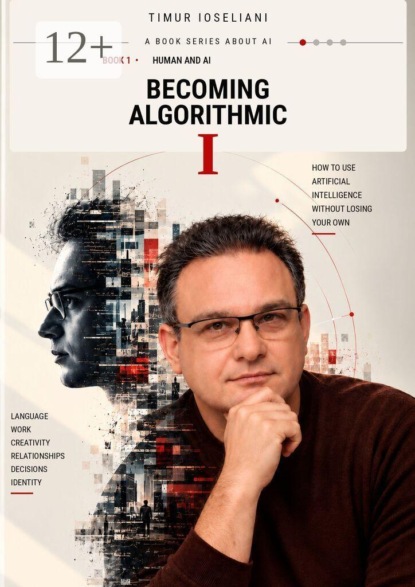
Becoming Algorithmic. How AI Is Changing the Way We Think, Remember, and Make Decisions
Cognitive sovereignty cannot exist only inside your head. A worker may also need a genuine opportunity to understand what the system influences, obtain an explanation for a disputed decision, reach a human being, and challenge an automated assessment. Otherwise, internal disagreement remains a beautiful personal quality with remarkably little practical effect. This matters beyond the workplace. Our ability to remain independent around algorithms does not depend only on strength of character.
Sometimes it depends on interface design. On organizational rules. And on whether an appeal button exists at all. That is an important correction to any version of this book that turns cognitive sovereignty into a heroic individual trait. Sometimes sovereignty requires infrastructure.
Not Every Form of Automation Is the Enemy
It would be convenient to end the chapter here: Algorithmic boss bad. Human boss good. Unfortunately, reality has once again refused to cooperate. Algorithmic management can simplify work allocation, reduce administrative routine, and make some processes more efficient [3].
A human manager, meanwhile, is perfectly capable of being opaque, biased, inconsistent, and judging an employee according to whatever mood they happened to be in before lunch. Reducing the issue to human versus machine, then, gets us nowhere. The more useful question is:
What kind of management system allows a person to understand a decision, influence it, and say, “Your metric missed something”?
A good system helps us see the work. A bad one begins to confuse what can be measured with the work itself.
When the System No Longer Has to Tell You
None of this needs to look dramatic. No one announces:
“Starting today, you will think like an app.”
First there is one metric. Then another. Then a recommendation. Then automated allocation. And eventually the worker already knows what kind of behavior the system prefers.
We do not need to abandon algorithms to prevent that. Sometimes they genuinely make work better. What matters is preserving a space in which a person can still say:
“The metric says one thing. But the situation is different.”
At work, perhaps cognitive sovereignty begins with exactly that sentence.
References
[1] Riso, S., Adăscăliței, D., & Oosterwijk, G. R. Implications of algorithmic management for work, employment and social dialogue: Literature review. Eurofound Working Paper, updated February 19, 2026.
[2] Bowdler, M., Lahti, H., Jelenko, M., Buresti, G., & Valtonen, T. “Algorithmic management and psychosocial risks at work: An emerging occupational safety and health challenge.” Scandinavian Journal of Work, Environment & Health, 52 (1), 1—5 (2026). DOI: 10.5271/sjweh.4270.
[3] Joint Research Centre. Algorithmic management and digital monitoring of work; AIMWORK survey, EU-27, 2024—2025. European Commission.
[4] Ma, Z., Chen, X., & Jing, B. “The impact of perceived algorithmic management on employees’ physical and mental health: a chain mediation analysis of frustrated work autonomy and workplace AI replacement anxiety.” Frontiers in Public Health, 14:1877221 (2026). DOI: 10.3389/fpubh.2026.1877221.
CHAPTER 3
Emotional Attachment to AI: When a Chatbot Becomes Your Best Friend
There is a strange moment that, until recently, would have been difficult to take seriously. Someone is having a terrible day. They don’t call a friend. They don’t text their sister. They don’t make an appointment with a therapist.
They open a chat.
I feel awful today.
The answer arrives a second later. No Sorry, I’m busy right now. No awkward silence. No Just pull yourself together. The system patiently asks what happened.
Sometimes that genuinely helps. Which is exactly where things get interesting. In Chapter 1, the algorithm offered us a more convenient way to express ourselves. In Chapter 2, the workplace introduced norms of behavior that were more convenient for the system. Here the algorithm offers something that feels even more human:
presence.
The Conversation That Is Always Available
People have been talking to machines for a long time. We have yelled at ATMs, thanked GPS systems, and begged computers to please, just work. Conversational AI changes something important. The machine now responds in ways that make our social reactions to it seem considerably less absurd. It remembers the context of a conversation. It adjusts its tone. It asks follow-up questions. It can respond sympathetically and address us as though the conversation genuinely matters to it.
Of course, as though is doing a great deal of work in that sentence. A system has no human biography, no evening after a terrible day, and no personal desire to know how you are doing. But humans do not always require proof of another mind before responding socially. Sometimes behavior that resembles the social signals we know is enough. That is one reason researchers are already trying to measure several related but distinct phenomena: emotional attachment to AI, emotional dependence, instrumental dependence, and problematic use [3—6].
They overlap. They are not the same thing. Writing to a chatbot after midnight is not, by itself, a diagnosis. Fortunately. Otherwise, half the internet would need to update its medical records.
Attachment Is Not the Same as Dependence
This is where terminology can get messy very quickly. A person can become attached to a system without losing control over its use. Someone can use AI constantly without feeling emotionally attached to it at all — simply because it performs boring tasks quickly. Someone else may turn to it for comfort. And another person may find it increasingly difficult to stop using it.
Конец ознакомительного фрагмента.
Текст предоставлен ООО «Литрес».
Прочитайте эту книгу целиком, купив полную легальную версию на Литрес.
Безопасно оплатить книгу можно банковской картой Visa, MasterCard, Maestro, со счета мобильного телефона, с платежного терминала, в салоне МТС или Связной, через PayPal, WebMoney, Яндекс.Деньги, QIWI Кошелек, бонусными картами или другим удобным Вам способом.
Вы ознакомились с фрагментом книги.
Для бесплатного чтения открыта только часть текста.
Приобретайте полный текст книги у нашего партнера:
Полная версия книги
Всего 10 форматов

