Полная версия:
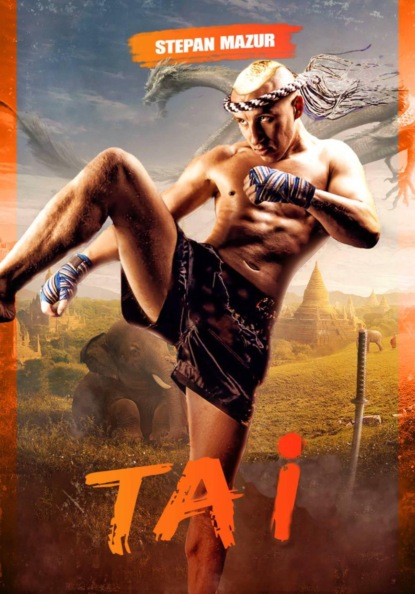
Tai (*in english, 28 illustration)

Степан Мазур
Tai (*in english, 28 illustration)
Chapter 1 – S̄ụ nā mi
Phuket Island, Thailand
December 2004
International Hospital
Mother’s voice comforted Slava. Nothing bad could possibly come to him with her by his bedside.
“So you stay here overnight, Slava,” she told him. “It’s not that bad. You’re big enough to manage. We’ll come in the morning and take you home.”
A boy of ten, Slava felt chilly from the burn ointment over his itching skin. As the medicine they’d given him was taking effect, he was overcame by an urge to sleep.
For the first time since their family had come to Thailand, he made no attempt to argue. That surprised Alyona, his younger sister, so much that she stared at him with pitiful eyes.
His stern father forced out a smile and ruffled the boy’s hair. “Hold on, trooper. Tomorrow you’ll feel better, and by New Year, it will fully heal. Why the hell did you have to get into that pool? We told you to stay in the room. We’re almost broke now—because of you. Our insurance doesn’t pay for sunburns. Sometimes you behave worse than Alyona.”
“Why me?” the seven-year-old girl protested. “It wasn’t me who got sunburned. Serves him well.”
“I stayed under the umbrella,” Slava mumbled, licking his blistered lips.
Over the hour he’d spent in the outdoor pool in the afternoon, he’d got sunburned to the point of his skin peeling off. As his parents and sister had been off to Phuket Town to get some stupid silicone pillows from the local mall, he’d hit the pool. The water was incredibly warm, clean, and transparent. A pure blessing to swim in. So much better than any pool he’d been to in Russia: indoor, cold, and overcrowded.
He just couldn’t get enough of that warm water in the hot sun.

“I just got distracted for a moment,” he added in his smallest voice.
It took as much as briefly closing his eyes to doze off—and miss the moment when the umbrella shadow was gone, exposing him to the sun. And here he was, badly burned without even hitting the beach. So unfair.
They’ll pay the next time they refuse to take me to the mall. I’ll throw a worse tantrum than Alyona.
“And please, Dad. I’m not Slava. I’m Tai.”
Tai was the new name he’d given himself two days ago, abbreviating the name of the country they’d come in for vacation. But none of the family seemed to care. They just kept using his old name.
Mother planted a kiss on his cheek and shut the curtain, separating him from another patient in the room.
Father looked around with a sigh. A stay in this large two-bed hospital room was to be paid by family money. All tourists coming to Thailand were warned their insurance didn’t cover sunburns.
The hospital treatment was anything but cheap, but it was their only option. The local shops didn’t have any sour cream, a Russian folk remedy for sunburns. And even if they had, it might’ve been useless against the harsh Thai sun.
The old Thai man on the other bed was no nuisance, but Slava could become exactly that upon recovery. He could come up to the stranger and shower him with lots of questions that the old man wouldn’t even understand. But, out of the particular respect that many Thai people had for small children, he could still try to answer them, smiling at Slava and making small gifts.
Slava was adept at getting strangers to like him, regardless of what language they spoke.
He’d begun to practice his English while still on the bus taking the family from the airport to the hotel. In less than an hour, he’d made friends with a sociable Dutch man, getting him to promise to accept the family as his guests once they came to Amsterdam. The bus stopping at their destination had come as a great relief to Slava’s parents who were not up to taking any other trips that soon, for financial reasons.
The family members left the ward, closing the door behind them. The air conditioner was working quietly, lulling Slava to sleep. He put his head down on the pillow and soon fell asleep on his belly. No way to turn over to his back as his nape and shoulders still hurt from the burns.
His last thought was a regret that he’d have to spend the rest of the vacation without ever taking his tee off. Or even grounded in the hotel room. No palm trees and ocean for him.
A loud noise from the hallway woke him. Slava had no idea how much time he’d slept; the hospital ward had no clock.
He heard many anxious voices outside the door, speaking English and Thai. Some even spoke Russian. He realized that something out-of-the-ordinary had happened, causing people to speak that loud in a hospital.
“What’s happened?” he cried out in Russian. Then repeated his question in English.
The curtain was open; it must’ve been the nurse coming in at night. He saw the impassive face of the old man who took the remote control unit and clicked the TV on.
Slava turned over to his side, overcoming pain, to see the screen.
It was a news broadcast, the presenters speaking Thai, but the big letters under their anxious faces read DISASTER HITS PHUKET in several languages, including English.
Looking for familiar English words in the news ticker, Slava felt his heart sink into the pit of his stomach, bringing a cold wave of sticky fear all over his body. He broke into tears before even realizing the gravity of the situation. The words he knew—tsunami, beach, missing, killed, destroyed—came together to form a bitter, heartbreaking picture.
“MOM!” Tai screamed. Where was his mother? His father? He had no idea whom to ask these questions to.
The screen was now showing destruction filmed from a helicopter. Swept-away houses. Destroyed hotels. Overturned cars. Uprooted lampposts and palm trees. As though by purpose, the camera took the familiar red-tiled roof of the hotel where Slava’s family had stayed, with its cozy balconies, a water tower nearby, and the conspicuous flag with the hotel name.
“NO!” the boy screamed and buried his face in the pillow, crying loudly.
The door swung open. Slava was about to run up to the doctor, begging him to reach out to his parents, but shrunk back at seeing the bloodied, half-naked male body on the trolley. The man’s arm was blue and black, a broken piece of wood stuck in his biceps, his face blue and swollen the same.
Only for a split second had Slava seen that, but it was enough for the sight to get engraved in his mind.
Closing his eyes, he buried his face in the pillow, struggling to contain his sobs. He was too big to cry aloud in front of the old man, but not big enough to pretend everything was all right. He wasn’t that good at self-deception.
The world seemed to become less real, more of a horror movie.
That was how Slava Demchenko became one of the many thousand international tourists in Thailand whose hopes of a happy New Year 2005 celebration in this country were swept away by the giant wave hitting the island of Phuket and then the coast.
While the day of December 26th was breaking in Thailand, the small waves raised by a strong earthquake at the bottom of the Indian Ocean went rushing for the nearby coasts, slowing down as they approached the land but swelling up to the size of multi-story buildings to crash their million-gallon weight of seawater down on the beaches of Phuket, Krabi, Phi Phi, Similan, Ko Chang, and Phang Nga, wreaking chaos, death, and destruction.
Almost all large beaches in the Western Phuket were hit by the tsunami, with Kamala, Patong, Karon, and Kata taking the worst of it. Many hotels close to the water were swept away by the wave, including the one where Slava’s family was staying.
Back at that moment he, and the old Thai man, just got rolled out in their beds into the crowded hallway of the hospital where all rooms were now freed to accommodate the disaster victims, many of whom were seriously injured.
In the crammed hallway filled with injured people and bustling medical workers, the boy—for the first time in his life—saw human grief come out through screaming, tears, moans, prayers, and curses.
Within the hour following the earthquake, the island had been warning its inhabitants. The animals were running away into the jungle and climbing the mountains, the birds leaving their nests. The sound of the surf stopped suddenly as the tide went out and far away. The thrilled observers came out onto the exposed sea bottom to collect shells, crabs, shrimps, and small fish.
The oncoming wall of water had remained unnoticed until it was too late to escape. The wave had no foamy crest, being transparent and invisible against the azure-blue backdrop of the calm sea and the sky merging in the distance.
Then the tsunami came into view, sweeping several miles into the island and destroying everything in its way like Poseidon’s rage, or like the Grim Reaper’s scythe.
Then the flood seemed to retreat, but it was a deceptive move. The tsunami rolled back just to crash down again, with greater strength, washing away and into the ocean those who’d survived the first wave.
Humans and animals were thrown onto the buildings, grinded with a mixture of earth and concrete, pierced through by exposed fittings and sharp wood, smashed on billboards and cars, or killed by electric shock from the torn high-voltage cables until electricity was cut off. The crazy water spared no one.
It was Phuket’s blackest day.
After the tsunami left, there were the ravaged beaches, cars on the trees and hotel walls atop the hills. Boats were found in the jungle two miles away from the coast. No coastal building was spared. The remains of houses and streets were covered with sand, scum, seaweed, and earth, the flood carrying pieces of furniture, local merchandise, clothes, and food. The street vendors’ overturned carts could be seen on the balconies. But the worst thing were the dead human and animal bodies scattered everywhere, among dead fish and seafood.
Playing that over and over again in his mind, Tai felt like losing his sanity. His soul was consumed by grief and pain as he realized that his entire family was probably dead. This tide of emotion was so overwhelming that it turned his hair gray.
In a nervous breakdown, Tai pulled out a clump of his hair. As he stared at the gray, curly strand, he realized he could no longer stay in the hospital.
“I must go,” he whispered to himself.
He was seeing double.
The people around him all had glowing doubles of different colors, mostly dark-red, violet, or navy-blue. These doubles were fluttering around their bodies, stretching up to the ceiling or shrinking to the size of a pea as they constantly changed shape.
Dismissing that as a hallucination, Tai removed his blanket and stood. No one seemed to pay any heed in this crowd of people requiring urgent medical assistance as he put on his shorts, then his tee, clenching his teeth as his nape, shoulders, and back ached to the touch of the fabric. Then he covered his gray hair with a baseball cap, slipped his feet into sandals, and walked off toward the exit.
The pain filling Tai’s body reminded him that he was still alive.
Following this pain, he walked and walked, leaving behind the tumultuous hallways flooded with pain, the no-service elevators, and the stairs, slipping through the space like a water drop would slip through sand.
But out in the street, things were even weirder.
Chapter 2 – See What Is Hidden
Slava passed around the pile of bottled water packs brought in by the emergency service people. Next to it, the members of some NGO were putting up another pile. More and more water was brought to the hospital yard by all sorts of vehicles with local numbers: local businesses and ordinary people stepping in to help.
He looked around. Groups of volunteers were unloading the vehicles, rushing the packs to the hospital stairs and putting them down with care. As he stepped out into the sun from beneath the cover, he pulled his cap down over his eyes and winced, moving his shoulders. The burn ointment had formed a crust over his skin, painful even to the slightest touch of the tee fabric. But Slava hardly paid any heed. His world had suddenly become overcomplicated, flashing its new faces at him and pelting him with surprises, his mind playing a game he couldn’t fathom.
No one there to explain him the rules of this weird daydream. Or had he died with everyone else and that was the afterworld he was seeing, with rainbow-wrapped passerby being a common sight?
A Thai man muttered hasty apologies for hitting Slava with his elbow; he hadn’t seen the boy because of all those boxes he carried. Slava recoiled; not as much with the impact as with astonishment at the man’s carrying a snake. A big, eyeless, white snake coiling around his neck and most of his head.

Is he a conjurer? Why would he bring his snake to the hospital at a time like this?
Tai blinked quickly, then turned back to the snake-carrying man, but he’d already disappeared into the hospital.
“What’s he doing? What the shit?” Slava whispered and pinched himself.
The pinched spot hurt. The sun was already high in the sky, baking the asphalt and suffocating Tai with heat, a strong thirst reminding him of all the water he’d lost with sweat. I must be seeing things through dehydration, Slava thought as he came up to a vehicle.
“Water, please. I need some water to drink,” he asked in English.
His burned nose and cheeks were such a sorry sight that one carrier stopped and took a bottle out of the pack. “Here you are.”
“Thanks,” Slava said and walked away to hide in a palm tree’s shadow.
The hospital grounds were extremely crowded, becoming some semblance of a refugee camp: a sprawl of ambulance cars, vehicles, trolleys, and tents. But the worst were the black bags forming long lines—and then being put up on top of each other as there were just too many of them.
Slava was old enough to guess there were dead bodies inside those bags. Some dropping bottles were dragged outside to treat the survivors. On the faces of some, Tai could read they were breathing their last. Their half-transparent doubles were dried and thin, almost drained of glow and color.
Tai wished he couldn’t see any of that, but he could. He could even tell how many minutes each man or woman had to live.
The injured were treated right in the open air. All trolleys, benches, and lawns were occupied by bodies of those struggling for their life, locals and tourists alike. No one was asked about their medical insurance. No one kept count of the medicines being spent. In the disaster aftermaths, the hospital opened its doors to everyone.
Slava took a gulp of water, looking around. Next to the main gate, a field headquarters was organized in a NATO military tent. It was where the newcomers were asked for their names and the deceased were identified.
Across the headquarters, a field canteen was cooking hot food for the frozen survivors, its pipe belching smoke.
There will be fire and smoke for the dead, too, Tai realized suddenly. For the weeks coming, the local crematoria would be working overtime to burn all the bodies.
“Poor things,” he whispered, tears running down his cheeks. He wiped them with a burned hand, never minding the tingling sensation. Cold was spreading inside his chest—and a thought about parents gave him an instant lump in the throat.
“No. No. They must be alive. They could’ve been away to the mall. They could take a tour. At night. Why not? Just… just don’t stay in the hotel. Please. Please,” he muttered as his mind struggled for sanity through denial.
Next to the hospital entrance, another vehicle was unloaded. One box got dropped, and Slava saw the smaller, elongated boxes inside: field rations. As he stared at their bright wrappings inscribed in Thai, he finally realized that the whole thing was very real. It happened to him in the real world.
But there was another world pulling itself over the real one.
Among the bustling hospital staff, victims, and volunteers, he could see large, brightly colored animals.
Why are they even here? Have they run away from a zoo?
He probably needed to see a shrink. Just like everyone in the affected location.
“I just need some sleep. When I wake, everything will be fine,” Tai told himself as he sat down on a free patch of grass, taking small sips of water to contain an urge to vomit.
His whole body was limp. He could barely stand, let alone walk. And where would he go, anyway? His parents had died by the wave. He was alone. Alone in this world. Half-crazy from everything he’d been through. All those animals—they just had no place here, among the busy crowd. And those life-indicating doubles of human bodies? Like in some stupid video game.
Tears streamed down his cheeks as he realized just how lone and helpless he now was.
All those disaster-struck people with pain on their faces—they couldn’t help. In this world, he could only rely on himself. And this realization somehow kept him together.
I must be strong. I’m not a baby like Alyona.
As his sister’s image came to mind, the dam of his composure broke. He dropped the bottle and wailed. “Mom! Mommie!”
An elderly Thai woman put her box down and came up to Slava to put her arm around his shoulders. The touch was painful, but Slava made no sound. With the void spreading inside, he craved every little bit of human warmth, even from a stranger.
“Poor thing. He’s gone all gray,” she said in Thai at seeing the boy’s hair as his cap slipped off.
Slava didn’t understand a word. He swallowed, but the lump in his throat just wouldn’t go away. Forcing himself away from her arm, he put his hands together in the wai gesture used by the Thai people to mean “hi”, “thanks” and “goodbye” alike.
“Thank you,” he said in English.
“What’s your name?” she asked back in English, with a strong accent.
“Tai,” he said and looked away. He didn’t want to abuse the kindness of this elderly woman who found a moment to comfort him, a complete stranger, putting her own grief aside.
Pulling the cap back over his eyes, he hurried toward the gate. No one stopped him. Too many people were coming in and out at the same time; several sections of the hospital fence had been removed to prevent jamming. The fence was light in weight and easy to dismantle, just as the nearby buildings: mainly wood, very little concrete or stonework. In this hot climate, no one needed thick, strong walls.
But after the tsunami, all new buildings on the coast would be much stronger, designed to withstand another attack by the elements. This reinforcement would be mandated by law.
Smaller streets were jammed by abandoned bikes and vehicles, but the main approaches to the hospital were cleared to make way for ambulances and military trucks. When someone left their vehicle in the middle of the street, hurrying to carry their injured to the hospital, it was removed by a tow truck, or even by a group of people who carried it aside. No distinction was made between cheaper and more expensive vehicles, and no concern for possible damage to them; the pass had to remain clear.
He walked down the street with a tongue-twisting name of Chalermprakiat Road: it was written on a plate in English alongside Thai.
He took one step after another without really knowing where he was heading, and why there. But he couldn’t stop; that felt like death. Had he stopped, giving in to his grief and pain, more locals would be taking pity on him, like that woman did.
His father had told him that pity kills. So he wasn’t going to give himself any pity, neither accept it from others.
Slava was dead. The survivor’s name was Tai. He was resilient as hell and totally crazy; he was still seeing animals and rainbow-colored people everywhere he looked.
…but not now. Where are they?
Then he saw a group of Buddhist monks.
Standing at the crossroads in their orange robes, they sang prayers, gave comfort to those who needed it, and burned incenses to keep evil spirits away. There were many candles down on the asphalt, dripping their wax like tears over the scattered photos. The strong wind was blowing the candles out, but the monks would light them again, bowing and praying. Several monks were tapping on drums or ringing small bells. These sounds were probably meant to drive evil spirits away—or to drown the wails of grief from the passing crowds.
Tai was surprised at not seeing a single animal around the monks. The animals seemed to avoid the smoke of incense, or maybe the monks’ chanting and ringing bells. Or maybe they were intimidated by the monks’ appearance? None approached them, whatever the reason.
Then Tai saw blue flames around one man’s head. The boy closed his eyes and touched his forehead. I must be having a fever.
But the burning man wasn’t screaming or trying to put the flames off. He was sitting in lotus on the ground, counting his beads, his eyes closed, his lips moving in a quiet prayer. He was dressed in a monk’s robe, but black, not orange. The other monks pretended he wasn’t there.
“Mister?” Tai called to him. “Are you an outcast?”
The monk opened his eyes.
Chapter 3 – The Monk
Тai had no idea the monks in orange robes were from the Wat Chalong temple located not far away to the south, next to Rawai Beach. And the man in black robe came from a remote and little-known temple: Wat Ko Sirey.
The boy walked over to the solitary monk, squinting at the blue flames dancing over his mourning-black robe. The sight was captivating. And not as scary as wild animals freely walking in public.
Could those flames be his soul?
“Savatdi cap. Hung cheu ar rai?”
Tai understood that the first words were a greeting, but the question escaped him. Was the man asking his name? Guessing that, he made a wai and then punched himself in the chest. “Tai.”
“Tai,” the bald monk smiled and suddenly said in Russian, with a strong accent, “A name I least expected. Just as your hair. But it suits you.”
“You speak Russian? How?” Tai screamed in delight, pulling the cap over to hide his recently grayed hair. It was too long to be hidden completely, but he had no scissors to trim it with.
“It has much in common with Sanskrit. I learned many languages at university. Russian was the most difficult.”
“Yes, English is much easier,” Tai agreed. “Can’t you feel that fire?”
The monk stared at him. “What fire?”
“You look like you’re blazing.”
“Tai, what are you seeing?” the monk asked, his eyes following Tai’s gaze as it slid over his head and shoulders. At times the boy seemed to be staring through the monk’s body; then his eyes focused on something behind his back. It didn’t look like he had impaired sight. This boy knew exactly where to look, and what he was seeing.
“A blue glow around your head. It’s dancing like flames. Like cold fire. Does it hurt? Many people were hurt today.”
“No. It doesn’t. It’s the agni of perfect soul.”