Полная версия:
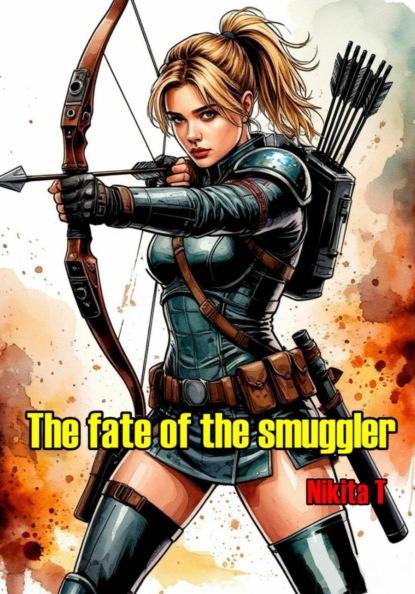
The fate of the smuggler

Nikita T
The fate of the smuggler
Prologue
En Cloud sat on the beach, gazing at the water. Not far from him, perched on the trunk of a fallen tree, Feta sat with her eyes narrowed, watching tiny crabs scuttle across the sand. The girl was trying to capture a fleeting moment gifted to her by nature.
She wanted to finish her drawing before these clumsy red and brown creatures, hurrying toward the sea, vanished beneath the salty, lightly frothing waves.
The waves seemed light and airy. Warm rays played with the glints on the water, magnifying the colorful fish and the red and brown crabs that sought refuge from the sudden danger posed by the girl and her companion.
They reminded her of a childhood spent somewhere far away in space, at the other end of the galaxy, when she was but an innocent child.
Vague memories came to her of parents who took her to the seashore, where she played with similar translucent, foaming waves washing over sandy shoals, observing the myriad inhabitants of the deep.
Feta took out her sketchbook and tried to apply vibrant colors to her drawing, hoping to breathe life into the blue-green sea that remained black and white on the page—a sea into which, for some inexplicable reason, she had not yet infused vitality.
The pencil glided over the thick sheet of papyrus, tracing the image before her eyes. The sea changed. Now it seemed alive and moving. The sky and waves merged with the landscape her companion was watching as he sat a short distance away.
En Cloud had done his best to provide her with everything she needed, bartering papyrus and pencils for the water he now possessed. He had seen such drawings before. The Commander knew that Feta possessed a divine talent bestowed by the Creator, and the drawing would turn out remarkably truthful and realistic.
To him, this act was incomprehensible. No one had taught the girl this craft; she acquired her skills through intuition. It was a true miracle. Long ago, in another life, he too had tried to learn to draw, but nothing had come of it. Apparently, he lacked the natural aptitude. But for Feta, everything came easily and simply. It seemed that everything she looked at or touched flowed seamlessly onto her drawing.
It was chilly, and he wrapped himself in the waterproof sea suit he had brought along. A cold sea breeze blew from the north, making the suit quite appropriate.
His gaze was fixed beyond the horizon, where the salty seawater splashed. The ebb tide was due to begin soon. The sea pulled and called to him. But swimming in such weather was unwise; one could easily catch a cold.
The water would rush onto the sand, hiding the crabs and fish from the curious girl's sight, then recede. The scene was mesmerizing and sat in stark contrast to the recent events unfolding across the reaches of the neighboring galaxy.
It was these events that occupied all his thoughts...
En Cloud was not so much a soldier as he was a poet and philosopher, and thus he loved to reflect on the past and future of this world, which was full of contradictions and irreconcilable conflicts.
Gradually, his thoughts returned to reality...
The Empire was constantly expanding, and such lost worlds, where one could hide from the war and ponder the state of the universe, grew fewer and fewer each year. Naturally, there were very few uninhabited planets left where one could bask on warm sand right now, watching a translucent sea wave.
On most planets, open bodies of water were non-existent. There, water was either locked within minerals or held in a gaseous state, making the spontaneous emergence of not only intelligent life but even simple bacteria impossible. Yet even in such remote and inhospitable worlds, settlers managed to survive, seeking to escape the massive hive-cities where living conditions were even more grueling.
In the large, urbanized cities, the poor were not considered human; they had to survive in harsh conditions, struggling to feed their families. Meanwhile, officials constantly increased taxes and the cost of the meager resources they were forced to use.
Leaving the civilized worlds, these same poor souls became colonists, attempting to terraform the climates of these hostile planets. They sought to extract water and other resources necessary for survival by every known means.
The settlers built underground bunkers or installed impact-resistant glass domes over their primitive dwellings, where they tried to grow various crops and raise livestock.
Some succeeded and grew wealthy. Others were less fortunate and perished before reaching their goals. Their places were immediately taken by other settlers, and the cycle repeated. Everyone had their own destiny, and everything depended on their knowledge, the natural characteristics of a given planet, and the settlers' diligence.
However, even where there was water, fierce conflicts erupted over it.
And more often than not, the victors in these skirmishes were not the colonists or temporary settlers, but common Imperial mercenaries. They were better organized and possessed more powerful weaponry. They had excellent leaders who knew their trade, hardened in battles against humanoids on the Empire's frontier.
Only this confederation could produce weapons on an industrial scale, and only it dictated its will to the colonists who migrated to new worlds from distant hive-like settlement cities.
The Empire's generals brought death and destruction, but his mission was to deliver clean, fresh water to the settlers—the primary wealth of this world, and the one thing they lacked most.
Once, long ago in another life, he had been such a colonist-farmer himself. En Cloud remembered how he had struggled to obtain water and provisions, how he had hungered and tried to save meager resources for his family. He knew this world well and had experienced firsthand all the difficult problems that hindered growth, wealth, and development.
En Cloud understood perfectly the pressing issues that troubled the poor who arrived in remote worlds in search of a better life. All of them exploited natural resources. Some, besides water and food, sought solitude. But the Empire came here too, imposing a New World Order, levying taxes, and conscripting some into the mercenary army, where most colonists-turned-soldiers eventually perished.
The Empire shattered the peaceful lives of the colonists, but few dared to oppose the cold-hearted mercenaries: only pirates and smugglers, who had little left to lose.
While food was still sufficient—it could always be bought with money—water was always in short supply, and purchasing it was problematic.
Since the time of Enlil, the illegal trade of water had been prohibited. Only those merchants who held a special permit from the Imperial High Council, the Senate, or Enlil himself had the opportunity to legally trade water across the universe.
One had to improvise, setting traps to extract water directly from a planet's atmosphere or digging deep wells into rock to reach minerals or underground springs.
But still, there was never enough for everyone. Sometimes smugglers, like himself, would bring water to the settlers, and then they would have a true celebration. The colonists bartered for it with the fruits of their hard labor or with electronic credits. Even so, they were grateful for the smallest amount...
The colonists drank wine and danced. It was customary to set out wide benches and pile them with leftover wine and food. Children and adults ate and drank their fill, knowing that such feasts would not happen again soon.
For a brief time, water became so plentiful that one could even wash in it. Dirty water was also put to use, given to animals or used to water plants. Some portion of the water was always reserved for a 'rainy day'.
These events were memorable. They were the only bright spots in the lives of the settlers, but later, during periods of drought, they tried to forget them.
Chapter I
Taking advantage of their monopoly, water merchants grew wealthy at a rapid pace. But the richest beings in the universe were not them, but the ordinary Imperial officials who received kickbacks for selling water trade permits and for delivering it to remote colony-settlements far from established trade routes.
En Cloud had never been to the Imperial capital, Hamra, where the Senate was located, but like all its citizens, he had heard tales of the massive city where they resided. It was said that some officials owned golden buildings where even the toilets were adorned with precious stones. And, of course, he would not have been surprised if this story turned out to be true rather than a flight of fancy by the short-sighted poor inhabiting the rim worlds.
All other transactions involving water resources were considered illegal. However, there existed small teams of daring smugglers who ignored these legal norms, contrary to common sense and current legislation, and En Cloud's crew was one of them...
If he were caught, the consequences would be grim. Usually, smugglers were publicly executed. Therefore, he savored every minute and every moment of his difficult and dangerous life, full of worries and unforgettable adventures.
Danger made his life more vivid and filled with meaning. It seemed that without this risk, life would be bland and tasteless. And now, he could never go back to being an ordinary farmer or colonist, those who loathed risk and adventure.
Public killings of the undesirable had become the norm, sometimes taking intricate forms reminiscent of the bloody gladiatorial battles of the past. For this purpose, massive open-air Amphitheaters with vast seating capacities were built. Some officials were so greedy and bloodthirsty that they even profited from such spectacles.
He heard stories of the brutal executions of smugglers not only from settlers but also from defectors and deserters who had once been ordinary Imperial soldiers. It was from them that he eventually formed his crew. He was as confident in them as he was in himself.
Each of his fighters had their own reasons for leaving the hated army. Some blamed their commanders for one failure or another on the battlefield, while others were angry because their own settlements had been razed to the ground.
No one liked deserters, and they could rely only on themselves. The Emperor's mercenaries were capable of much, but within his group, they had changed significantly for the better, becoming more educated and disciplined.
But that changed nothing. If they were captured, they were killed in one way or another, and so far, no one had managed to escape from captivity.
Despite this, En Cloud continued his dangerous activities in searching for and extracting minerals. Above all, he sought the water that the colonists so desperately lacked. He believed in fate, and this faith brought him luck.
Chapter II
En Cloud looked at the young girl once more. He tossed a small shell at her, which his hand had found while warming on the sand.
Feta wagged a finger at him and smiled. En Cloud liked her smile—the smile of a teenager just entering the initial period of her bloom and early puberty.
Feta had joined his crew by chance. The men were exploring a deserted planet and, quite unexpectedly, found a teenage girl of five or six years old in an abandoned colonist camp. The colony had a source of drinking water, which was why the girl had survived, even though no adults remained in the settlement.
Apparently, the colonists had been in a hurry to leave the planet due to the threat of an alien attack or other armed criminals, and in their haste, they forgot to take their child. And for some reason, they were unable or did not manage to return. It was quite likely they had perished or gone somewhere from which return was problematic...
They did eventually find several killed settlers in burned-out buildings on the outskirts of the village. These people had high status and were well-dressed. One man stuck in his memory. He had a noble appearance and wore expensive clothing embroidered with gold thread, indicating a high status in society. However, who he was and what he was doing there remained unknown.
For some reason, the humanoids or other criminals had not spared them or taken them into slavery. It seemed they were killed intentionally. Such a practice existed in all worlds where hired assassins hunted important persons or high-ranking officials.
But even they left children alive, relying on the will of fate and providence. However, only a few of these abandoned children managed to survive, given the harsh conditions they were left in. Only some were saved by the arrival of a merchant vessel or a rescue shuttle, and this girl was one of them...
Warm clothes and food supplies were scattered around, which this clever and quick girl, left alone for some reason, managed to use. The child was unusual. At that time, she was like a wild animal and barely understood human speech. How she survived alone in such difficult conditions was a mystery.
At first, she went unnoticed, as everyone was busy with their own tasks. She was only seen after someone had a bag of provisions and medicine stolen. The men became more attentive and cautious, and only then did they discover the nimble thief who was watching their every move. The girl hid behind crates of equipment, so she wasn't found immediately.
The child was not afraid to pick a fight with them, which amused the brutal men who surrounded her and openly mocked her. The Captain pushed the men aside and tried to offer her food. Apparently, the child was starving. She looked with surprise at the Commander, who towered over her and offered nourishment.
The girl did not refuse the dry rations they tossed before her. She leaned down, trying to pick up the unseen riches scattered on the sand, and pounced on the food like a wild beast from a neighboring tropical forest. This allowed her to be caught.
For some reason, she caught En Cloud's eye, and he ordered her to be taken aboard his spaceship. The girl was washed, though she tried to resist. En Cloud came up with a new name for her and took her under his care. By doing so, he not only saved her life but also predetermined the future fate of his small but tight-knit group.
The girl's hair was combed, and she was dressed in a smuggler's technical jumpsuit. En Cloud personally tailored his spare protective suit for her, which fit her incredibly well, both in size and military style. Over time, she grew up and stopped fearing them. Feta became a full member of the crew, with the right to vote alongside the others.
From that time on, the girl became their mascot—the only female representative on this fast ship roaming the reaches of the universe.
The men whispered that since she appeared on their ship, Imperial patrol ships had never crossed their path, and luck continued to favor them, which was an incredible rarity. Perhaps it was true...
Feta possessed another trait. Since childhood, she knew several foreign languages and had a knack for learning them. As she aged, these abilities progressed...
Apparently, her parents had intended to give her a good education and had once tutored her; thus, she could become a true polyglot in the future, rivaling ordinary translation robots.
This was discovered by chance after they landed on a remote planet. En Cloud noticed her listening to the conversation of the natives surrounding them, her brow furrowed. None of his crew knew the dialect, so they treated the natives kindly. Apparently, the local aborigines took this for weakness and decided to outsmart them.
En Cloud did not hesitate and asked her directly what the natives of this remote Star Federation planet were discussing. The girl explained their plan. As it turned out, the local aborigines intended to rob them and were planning to slip a potent sedative into their food. Only the girl's linguistic skills prevented this unfortunate event.
The smugglers drove the natives away, forbidding them from trading the goods they had. Patrols had to be set up on the outskirts of the camp to control the occupied territory.
Feta had only one flaw—she never spoke of her past and did not reflect on the future. When asked about it, she preferred to remain silent. En Cloud believed she was burdened by heavy childhood memories, so he tried not to pry with his questions. Besides, there were plenty of storytellers without her.
Unlike Feta, the men loved to chatter about their past lives. This brightened their leisure time during long journeys to other worlds. The search for habitable planets was conducted around the clock, and this work took up all their free time. Therefore, there was no one else to share impressions with besides the crew members. But after work, in moments of rest, they wanted to talk about how they lived in the past, and these stories would stretch until morning...
Sometimes the talk was of the war with aliens and the heroic deeds performed by mercenaries. Everyone liked these stories, and even En Cloud tried to join these unusual gatherings, though he had even less free time than his comrades-in-arms.
He also had much to tell his companions; after all, they hadn't chosen him as the ship's captain for nothing. En Cloud, like all former military men, had already encountered aliens and could share his impressions of meeting these alien creatures inhabiting the borders of the Star Federation.
Конец ознакомительного фрагмента.
Текст предоставлен ООО «Литрес».
Прочитайте эту книгу целиком, купив полную легальную версию на Литрес.
Безопасно оплатить книгу можно банковской картой Visa, MasterCard, Maestro, со счета мобильного телефона, с платежного терминала, в салоне МТС или Связной, через PayPal, WebMoney, Яндекс.Деньги, QIWI Кошелек, бонусными картами или другим удобным Вам способом.
Вы ознакомились с фрагментом книги.
Для бесплатного чтения открыта только часть текста.
Приобретайте полный текст книги у нашего партнера:
Полная версия книги
Всего 10 форматов