Полная версия:
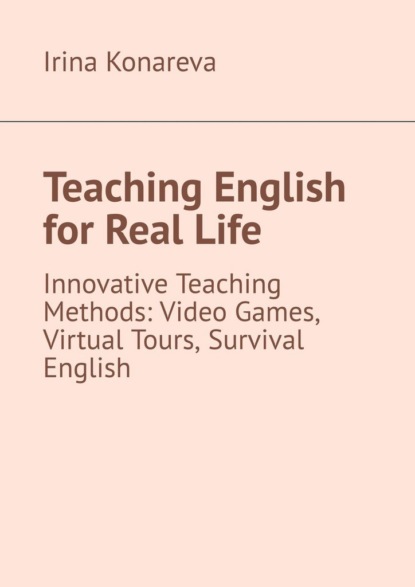
Teaching English for Real Life. Innovative Teaching Methods: Video Games, Virtual Tours, and Survival English
Chatbots for conversation practice: ChatGPT, Claude, and specialized language learning bots can hold conversations on any topic, at any level, with infinite patience. They never get tired, never judge, and are available 24/7.
Automated writing feedback: Tools like Grammarly provide instant feedback on writing. AI can now offer suggestions on style, tone, and organization, not just grammar.
Speech recognition for pronunciation: Apps can now analyze pronunciation and provide specific feedback on individual sounds. This was science fiction a decade ago.
Adaptive learning paths: AI can analyze student performance and create personalized learning sequences, focusing on weak areas and moving past mastered content.
However, AI cannot replace human connection, cultural understanding, or the motivation that comes from a caring teacher. AI is a tool, not a teacher. Students who rely solely on AI often plateau because they lack the social and emotional dimensions of human learning.
3.4. Adaptive Learning Platforms
Adaptive platforms adjust content difficulty based on student performance. They identify knowledge gaps and create personalized learning paths. They track progress with detailed analytics and can predict areas where students will struggle.
For teachers, these platforms provide valuable diagnostic information. You can see exactly where each student struggles, how much time they spend on practice, and what their progress trajectory looks like. This enables more targeted instruction during face-to-face time.
Limitations: Platforms are only as good as their content and algorithms. They work best for discrete skills (vocabulary, grammar) and less well for integrated skills (discussion, writing). They require reliable internet access and devices. They can create dependency if overused.
3.5. Multimedia Resources: Podcasts, Video, Social Media
Authentic media provides exposure to real language use that textbooks cannot match. Students hear language as it is actually used, with all its imperfections, variations, and cultural references.
ESL Podcasts: BBC 6 Minute English (structured lessons, British accent). All Ears English (natural conversation, American accent). ESL Pod (clear, slow speech for beginners). VOA Learning English (news-based content).
YouTube: English with Lucy (grammar, vocabulary, British). Rachel’s English (pronunciation, American). TED-Ed (academic content). Vox (current events, intermediate+). Thousands of channels for every level and interest.
Netflix and streaming: With subtitles, streaming platforms provide extensive listening practice. The three-watch method: First with L1 subtitles (comprehension). Second with English subtitles (connecting sound and text). Third without subtitles (testing).
Social media platforms like TikTok expose learners to current slang, trends, and authentic communication. The shift from passive consumption to content creation amplifies learning – students who create content in English learn faster than those who only consume.
3.6. Practical Application
Technology Integration Framework
Start small: Introduce one new technology at a time. Master it before adding another.
Ensure readiness: Check that students have necessary technical skills and access.
Set clear expectations: Explain why you are using technology and what students should do.
Balance: Screen time should complement, not replace, human interaction.
Evaluate: Regularly assess whether technology is actually enhancing learning outcomes.
Sample Blended Learning Week (Intermediate)
Monday: In-class speaking practice (no technology).
Tuesday: Homework – listen to 6 Minute English podcast, complete comprehension questions in shared doc.
Wednesday: In-class – discuss podcast topic, language focus on new vocabulary.
Thursday: Homework – Duolingo 15 min, Anki vocabulary review 10 min.
Friday: In-class – task-based lesson using Google Maps.
Key Takeaways from Chapter 3:
• Technology should enhance, not replace, effective teaching practices.
• Different tools serve different purposes – match app to learning goal.
• AI offers powerful practice opportunities but cannot replace human teachers.
• Authentic media engagement builds real-world language skills.
• Successful integration requires training, planning, and ongoing evaluation.
Chapter 4.
Virtual Reality and Immersive Learning Environments
4.1. The Presence Revolution: What Is Immersive Learning?
Immersive learning creates environments where students feel psychologically present in another place, interacting with the language in context. Traditional classroom instruction is limited by four walls; immersive technologies transport students to airports, restaurants, offices, and cities where they practice language in realistic scenarios.
The key concept is presence – the psychological feeling of being there. When students feel present in a situation, their emotional engagement increases, their memory retention improves, and their motivation to communicate rises. Fear decreases because mistakes feel safe in virtual spaces.
This is not science fiction. Virtual reality headsets are now available for under $300. Google Street View is free. The Sims 4 costs less than a textbook. Immersive learning is accessible to most teachers today.
4.2. Technologies for Immersive Learning
Virtual Reality (VR): Full immersion with headsets like Oculus Quest or HTC Vive. Users enter 3D environments and interact with virtual objects and characters. The sense of presence is strongest in VR.
Augmented Reality (AR): Digital content overlaid on the real world through smartphone cameras or AR glasses. Think Pokemon Go but for language learning. Labels can appear on real objects in the environment.
360-degree Video: Panoramic videos allowing users to look around in any direction. Available on YouTube. No special equipment needed beyond a smartphone.
Low-tech immersion: Role-plays with props and costumes, simulations, Google Street View explorations. Often more accessible and equally effective for language learning purposes.
4.3. VR Platforms for Language Learning
ImmerseMe: Structured lessons in virtual environments. Practice ordering food in a restaurant, checking into a hotel, asking for directions. Available scenarios cover many common situations.
Mondly VR: Gamified VR language learning with speech recognition. Available for multiple languages. Conversations with virtual characters.
VirtualSpeech: Public speaking and presentation practice in virtual environments. Practice presenting to a virtual audience before facing a real one. Reduces public speaking anxiety.
The psychological safety of virtual mistakes reduces anxiety and encourages risk-taking. Students who are terrified of speaking in class often become confident speakers in VR because the stakes feel lower.
4.4. Practical Scenarios for VR Use
Travel scenarios: Airport check-in, immigration interview, hotel reception, taxi directions, tourist information, buying tickets.
Professional scenarios: Job interviews, business meetings, presentations, customer service interactions, phone calls.
Daily life: Doctor visits, pharmacy interactions, supermarket shopping, banking, apartment rental, utility setup.
Emergency situations: 911 calls, car accidents, asking for help on the street, reporting a crime. These high-stakes scenarios are especially valuable to practice in VR first.
4.5. Immersive Experience Without VR Equipment
Not every school can afford VR headsets. Fortunately, many alternatives achieve similar learning benefits.
Google Street View virtual tours: Walk through any city in the world. Explore neighborhoods where your students will actually live. Read real signs, see real stores. This is the basis of my Google Maps methodology (Chapter 9).
360-degree YouTube videos: Thousands of immersive videos available for free. City tours, nature experiences, cultural events. Students can look around as if they were there.
Detailed role-plays with props: Transform your classroom into an airport, restaurant, or office. Use real objects, realistic scenarios, and committed acting. The imagination is powerful.
Simulation games: The Sims 4, Minecraft, and other games create virtual worlds where students can practice language in context. See Chapter 8 for detailed methodology.
Video conferencing: Connect with partners in other countries. Real conversations with real people about real topics. The ultimate authentic communication.
4.6. The Future of Immersive Learning
Costs are declining rapidly. VR headsets that cost $600 in 2020 cost $300 in 2024. Within 5—10 years, VR may become standard classroom equipment.
AI-powered virtual conversation partners are becoming more realistic every month. Soon students will practice with AI characters that respond naturally to any input, remember previous conversations, and adapt to learner level.
Haptic feedback will add touch sensations. Students will feel the handshake at a job interview or the vibration of a subway car.
Social VR will enable students worldwide to meet in shared virtual classrooms. A student in Brazil, a student in Japan, and a student in Egypt could practice English together in a virtual New York coffee shop.
The key is balancing VR practice with real human interaction. VR prepares students for reality; it does not replace it.
Key Takeaways from Chapter 4:
• Immersive learning creates psychological presence that enhances language retention.
• VR allows safe practice of high-stakes scenarios like job interviews and emergencies.
• Low-tech alternatives (Google Maps, simulations) can achieve similar learning benefits.
• Virtual practice should complement, not replace, real-world communication.
• Costs are declining – VR will become increasingly accessible.
Chapter 5.
Social Media, Video, and Podcasts in Language Learning
5.1. Language Where Life Happens: A New Paradigm
Modern students spend hours daily on social media, streaming platforms, and podcasts – all in their native language. The revolutionary insight is redirecting this time toward English content. When a student watches Netflix in English, scrolls TikTok for English creators, or listens to English podcasts during their commute, they are accumulating hundreds of hours of authentic input.
This massive exposure to authentic language is something previous generations could never access. A student in rural Vietnam can now hear more authentic English in a week than a student in 1990 might hear in a year. The question is how to harness this abundance effectively.
The teacher’s role shifts from content provider to content curator. We do not need to create all the materials – we need to help students find, select, and learn from the ocean of available content.
5.2. YouTube: University in Your Pocket
YouTube offers unlimited free content for every level and interest. The key is matching content to level and learning goals.
For beginners: English with Lucy (clear British accent, structured lessons). Rachel’s English (pronunciation focus, American accent). BBC Learning English (varied content, excellent quality). JenniferESL (comprehensive grammar series).
For intermediate: TED-Ed (animated educational content). Vox (current events, clear explanations). Crash Course (academic topics).
For advanced: TED Talks (intellectual content, various accents). Documentaries. Vlogs from native speakers. News channels.
Teachers can assign specific videos, create comprehension questions, and use content as springboards for discussion. Students can control pace with pauses and subtitles. The homework that used to feel like homework now feels like entertainment.
5.3. Podcasts: Learning on the Go
Podcasts transform commute time, exercise time, and waiting time into learning time. This is potentially hundreds of hours per year of additional input.
ESL-specific podcasts: 6 Minute English (BBC) offers short, structured lessons on interesting topics. All Ears English provides natural conversation between American hosts. ESL Pod speaks clearly and slowly with explanations.
For intermediate and advanced: This American Life tells compelling true stories. Freakonomics explores economics and human behavior. The Daily covers news. Radiolab investigates science and philosophy. These podcasts develop listening skills with diverse accents and speaking styles.
Transcripts enable reading practice and vocabulary study. Students can listen multiple times, read along, and extract useful language.
5.4. Social Media: From Consumption to Creation
Social media sites expose learners to current slang, trends, and authentic communication. This is language as it is actually used by young people today – not the sanitized version in textbooks.
The shift from passive consumption to active creation amplifies learning dramatically. Students who create content in English engage with language more deeply than those who only consume.
Content creation ideas: TikTok videos explaining vocabulary in their native language. Short video stories about their daily life in English. Twitter threads on topics they are passionate about. YouTube videos teaching something they know.
The authentic audience motivates higher quality output. When students know real people will see their work, they care more about accuracy and clarity.
5.5. Streaming Platforms
Netflix, Amazon Prime, and Disney+ offer extensive content with English audio and subtitles. This is entertainment that doubles as learning.
The three-watch method: First viewing with native language subtitles (focus on comprehension and enjoyment). Second viewing with English subtitles (connecting sound and written text). Third viewing without subtitles (testing comprehension).
Genre recommendations: Sitcoms like Friends and The Office work well for conversational English – short episodes, simple plots, repeated vocabulary. Documentaries build academic vocabulary. Reality TV shows authentic unscripted speech. News programs develop listening for formal registers.
Students should choose content they actually enjoy. Forced viewing of boring content does not work. The best learning happens when students forget they are learning because they are engrossed in the story.
5.6. Integration Strategies
Assign specific media homework: Watch this video and answer these questions. Listen to this podcast episode and summarize the main points. Post three social media stories this week in English.
Create media logs: Students track their English media consumption. How many hours? What types? What did they learn? This builds awareness and accountability.
Use media as lesson springboards: A TikTok trend becomes a discussion topic. A podcast episode provides content for a lesson. A Netflix show inspires a writing assignment.
Connect consumption to production: After watching a cooking show, students create their own cooking videos. After listening to a storytelling podcast, students record their own stories.
Key Takeaways from Chapter 5:
• Media consumption in English dramatically increases authentic input.
• YouTube offers structured learning; podcasts enable mobile learning.
• Moving from consumption to content creation deepens learning.
• Streaming with subtitles provides controlled immersion.
• Teachers should curate and guide rather than compete with free content.
Chapter 6.
Assessment and Testing in Language Education
6.1. Rethinking Assessment: From Tests to Competencies
Modern assessment moves beyond grammar tests to evaluate communicative competence. The fundamental question changes from What does the student know about English? to What can the student do with English?
Can the student accomplish real-world tasks? Can they negotiate meaning when misunderstandings occur? Can they adapt their language to different contexts and audiences? These are the competencies that matter in real life.
Assessment should mirror the communicative goals of instruction. If we teach through tasks, we should assess through tasks. If we value fluency and communication, our assessments should measure these, not just accuracy.
6.2. Types of Language Assessment
Diagnostic assessment: Administered before instruction to identify strengths and weaknesses. What does the student already know? Where are the gaps? This informs planning and placement.
Formative assessment: Ongoing feedback during instruction to guide learning. This is not graded – it is informational. Quick checks, observations, student self-assessments. The purpose is improvement, not judgment.
Summative assessment: Evaluates achievement at the end of a unit or course. This is when grades are assigned. Should reflect what was actually taught and how it was taught.
Each type serves different purposes and requires different tools. Problems arise when we confuse them – when we grade everything (no space for risk-taking) or when we never measure outcomes (no accountability).
6.3. Alternative Assessment Methods
Portfolios: Collections of student work demonstrating progress over time. Students select their best work and reflect on their development. Shows growth, not just final performance.
Self-assessment: Students evaluate their own performance against clear criteria. Develops metacognition and learner autonomy. Students must understand what good performance looks like.
Peer assessment: Students evaluate each other’s work using rubrics. Develops critical skills and deepens understanding of criteria. Must be carefully structured to be constructive.
Performance assessment: Students demonstrate skills in realistic tasks. Give a presentation, conduct an interview, participate in a discussion. Authentic evidence of communicative ability.
These methods develop learner autonomy and metacognition – essential for lifelong learning. Students who can assess themselves can continue improving after the course ends.
6.4. Rubrics: Tools for Transparent Assessment
Rubrics define criteria and performance levels clearly. Students know expectations before they begin the task. There are no surprises – success is achievable when the path is clear.
Analytic rubrics: Evaluate separate components independently. A speaking rubric might have separate scores for pronunciation, fluency, accuracy, vocabulary, and task completion. Provides detailed feedback but takes longer to use.
Holistic rubrics: Give a single overall score based on general impression. Faster to use but less informative for feedback. Useful for large-scale assessment.
Effective rubrics use clear, observable descriptors. Not fluent versus very fluent but speaks with few hesitations versus speaks with frequent long pauses. Anyone using the rubric should reach similar scores.
6.5. International Examinations
IELTS: Academic and General Training versions for immigration, study, and work. Band scores from 1—9. Most universities require 6.0—7.0. Immigration requirements vary by country. Tests all four skills plus grammatical range.
TOEFL: Primarily for US and Canadian university admissions. Internet-based test (iBT) scores 0—120. Academic English focus. Integrated tasks combine skills.
Cambridge exams: FCE (B2), CAE (C1), CPE (C2). Recognized globally. Valid for life (no expiration). Detailed feedback on each skill.
TOEIC: Business and workplace English focus. Listening and Reading test most common. Used by employers globally. Speaking and Writing tests also available.
Understanding exam formats helps teachers prepare students effectively while maintaining broader communicative goals. Exam prep should not replace communicative teaching – it should build on it.
6.6. Feedback: The Key to Development
Effective feedback is specific, timely, actionable, and balanced. Vague feedback like Good job! or Needs improvement provides no guidance for growth.
Specific: Your introduction clearly stated the main argument. Your use of past perfect was inconsistent – you used simple past where past perfect was needed.
Timely: Feedback on speaking is most useful immediately after the activity. Feedback on writing can be slightly delayed to allow for processing.
Actionable: Students should know exactly what to do differently next time. Not better organization but try using clear topic sentences at the start of each paragraph.
Balanced: Highlight strengths alongside areas for improvement. Students need to know what they are doing right so they continue doing it.
Written feedback should prioritize key issues rather than marking every error. A paper covered in red ink overwhelms and discourages. Focus on patterns, not instances.
Oral feedback options: Immediate correction (interrupt to correct). Delayed correction (note errors, address later). Recasting (reformulate correctly without explicit correction). Each has its place depending on context and focus.
Key Takeaways from Chapter 6:
• Assessment should evaluate communicative competence, not just grammar knowledge.
• Formative assessment guides learning; summative evaluates achievement.
• Alternative assessments develop learner autonomy and metacognition.
• Rubrics ensure transparent expectations and consistent evaluation.
• Quality feedback is specific, timely, actionable, and balanced.
Конец ознакомительного фрагмента.
Текст предоставлен ООО «Литрес».
Прочитайте эту книгу целиком, купив полную легальную версию на Литрес.
Безопасно оплатить книгу можно банковской картой Visa, MasterCard, Maestro, со счета мобильного телефона, с платежного терминала, в салоне МТС или Связной, через PayPal, WebMoney, Яндекс.Деньги, QIWI Кошелек, бонусными картами или другим удобным Вам способом.
Вы ознакомились с фрагментом книги.
Для бесплатного чтения открыта только часть текста.
Приобретайте полный текст книги у нашего партнера:
Полная версия книги
Всего 10 форматов