Полная версия:
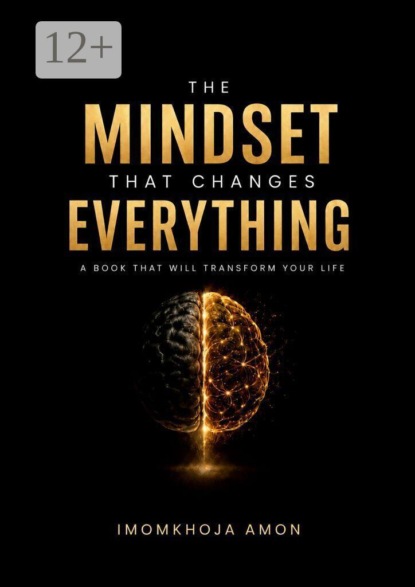
The Mindset That Changes Everything. A Book That Will Transform Your Life
Control sources consciously. The quality of what you consume daily directly determines the quality of your thinking. And the quality of thinking is the foundation of the life you are building.
How to Develop Intellect Through What You Enjoy
Many imagine intellectual development as a painful and lengthy process: textbooks, memorization, endless courses, searching for some secret techniques. But in reality, this process can be much more interesting.
What if I told you that you can develop your mind through hobbies, games, and sports? And do it faster and more deeply when you engage in what you truly enjoy, rather than through compulsory learning?
The thing is that compulsion almost always causes internal resistance. The brain defends itself when someone tries to implant something it does not want, and does only the necessary minimum so that they “leave it alone.” Intellect reveals itself to its full potential only when the activity is engaging in itself and does not include the mode “this is mandatory.” Engaging in what truly captivates you, you develop thinking more effectively than in any obligatory courses.
Hobbies as a Natural Brain Trainer
A hobby is a rare form of activity where the brain works voluntarily. There is no pressure, no fear of error, no sense of duty — only interest and involvement. This is precisely what creates ideal conditions: attention gathers by itself, thinking activates, and energy is not wasted but accumulates and grows.
In such a state, flow arises. The brain does not resist the process, and therefore opens hidden abilities and draws strength from its own reservoir. The key idea here is that maximum development occurs at the boundary between “too easy” and “too difficult.” Hobbies often maintain this boundary naturally, because you yourself choose the pace and depth of immersion. As long as this balance is maintained — the activity remains developmental.
Foreign Languages: Rewiring Thinking
Among hobbies, one occupies a special place. It not only engages, but literally rewires neural connections from within. I am talking about learning foreign languages.
A new language forces the brain to restructure the course of thoughts, hold several layers of meaning simultaneously, read context, intonation, cultural nuances. Learning to think in another language means temporarily abandoning the familiar picture of the world and accepting a new one. This requires flexibility and effort, which is why languages are simultaneously difficult and incredibly powerful for developing the mind.
It is often said: “Smart people find languages easier.” Usually they mean already developed neural connections — memory, attention, ability to hold complex structures. This is true. But few notice that the mechanism works in the opposite direction as well: by mastering a language, you purposefully develop precisely these systems.
Movement and Sports: The Foundation for Brain Function
However, intellectual development is not limited to mental activity. Without physical activity, the brain simply cannot work at full capacity.
All thought processes pass through the brain, and the brain is part of the body. Therefore, its ability to learn directly depends on physical condition. Regular activity improves blood supply, enhances neuroplasticity, and creates a biochemical environment in which new connections form faster. Making movement your hobby is one of the most practical decisions for the mind.
Sports, active games, dancing, or simply regular walks train not only muscles. They sharpen reaction, concentration, the ability to make decisions under pressure, and quickly switch between tasks. This skill transfers directly into life: negotiations, conflicts, crises, unexpected turns. A person who moves regularly does not merely maintain health. They train the brain to cope with real challenges faster and more accurately.
Four Traps That Kill Development
Hobbies develop intellect only under certain conditions. Otherwise, the effect is easily reversed. It is important to know four typical mistakes.
First trap: stress and perfectionism. When a hobby becomes a source of constant anxiety, development stops. A chess player losing sleep over rating; an artist hating every sketch; someone who panics over every grammatical error — they have all fallen into this trap. Recognizing it is simple: if after an activity you feel emptiness, and thoughts about the hobby cause tension instead of anticipation, it is time to change your approach.
Second trap: turning into an obligation. As soon as a hobby becomes just another item on a to-do list that must “definitely be done,” the brain stops perceiving it as play. The mode of compulsion returns, the state of flow disappears. A to-do list and a hobby are different things. If you notice that a hobby has turned into a duty, restore interest by lowering the bar: not “an hour of practice,” but “five minutes, and only if you feel like it.” No violence against yourself.
Third trap: lack of progression. When an activity is reduced to mechanical repetition of the same thing, development stalls. Any trainer is useless without gradual complication. Consciously seek the next level of difficulty, but one that intrigues rather than repels. In language — move from textbooks to original articles; in chess — play with stronger opponents; in running — add intervals.
Fourth trap: passive consumption. Not all games and activities are equally useful. There are those that truly make thinking work, and there are those that simply kill time. Endless scrolling of feeds, passive series watching, repetitive games without the need to make decisions create an illusion of busyness but do not develop intellect. If after an activity you cannot recall a single decision made or a single problem solved — this is not a trainer for the mind.
How Different Skills Reinforce Each Other
The key factor in deep development is variety. When you engage in different types of activities, you activate different areas of the brain: logical, creative, physical, spatial. The wider the spectrum of your hobbies, the more neural networks are involved in the work.
It is precisely thanks to this that the brain learns to subtly connect skills. It begins to transfer experience from one sphere to another and suggest unconventional solutions in life. Discipline from sports helps in language learning. Creativity from drawing breaks through in solving logical problems. Strategic thinking from chess works in business negotiations. The skill of holding attention, developed in music, helps in deep analysis of complex texts. In people with developed intellect, the formation of unconventional solutions happens precisely this way — through non-obvious connections between, it would seem, different areas.
Personal example: since childhood, I have regularly played chess with my brother. These games required concentration and calculation several moves ahead. To this day, I feel how they formed the ability to think strategically — not only at the board, but also in life: when planning projects, analyzing consequences, building dialogue. On one hand, it is just a game. On the other — it developed those areas of the mind that work every day.
The conclusion is simple: the more diverse activities in your life, the stronger your intellect becomes. The brain begins to automatically seek connections, transfer ideas from one area to another, and find solutions where others see a dead end. This is that very “secret” that is rarely found in standard self-development books. It is not in techniques, but in lifestyle. Use it.
Fast Dopamine: How We Unconsciously Sabotage Ourselves
We’ve already covered the foundation: what intelligence is, how it works, and how to develop it. This was the first and essential starting point. Without it, any discussion of self-improvement inevitably devolves into empty talk. Now we can move on to other areas. But instead of jumping straight into them, we should first understand the primary trap that affects the vast majority of people — a trap that quietly puts development on hold and slowly pulls us backward. Without recognizing this trap, any attempt at growth will inevitably end in failure.
I’m referring to fast dopamine.
The Nature of the Trap: What Dopamine Is and Why It Breaks Down
Let’s start with the concept itself. Dopamine is a neurotransmitter central to motivation and reward. It’s released when we overcome challenges, solve problems, work toward goals, or develop new skills. It also comes from simple pleasures like food and social interaction — and there’s nothing wrong with that. When dopamine serves as a reward for genuine effort, it acts as fuel: it helps build habits, endure discomfort, and keep moving forward.
The problem isn’t dopamine itself. The issue is that, in the modern world, people increasingly substitute real dopamine — earned through effort and achievement — with a counterfeit version. Fast dopamine refers to stimuli that provide pleasure without personal growth. This happens because the dopamine system doesn’t distinguish between reward sources. Biologically, the brain always opts for the path of least energy expenditure — an ancient survival mechanism. The illusion of progress triggers the same pleasure spike as actual growth. For instance, your conscious mind knows a video game isn’t real life, but your dopamine system doesn’t care. To it, winning a match, getting likes on a photo, or leveling up a character send the exact same success signal as a real-world achievement.
With frequent stimulation, the brain reduces both the number and sensitivity of dopamine receptors. The psychological consequences creep in gradually, which is exactly why we rarely notice the moment our motivation system starts deteriorating. Internal motivation erodes, complex tasks trigger anxiety, and procrastination becomes the default. To feel the same level of pleasure, increasingly intense stimuli are required, while real-life tasks start to feel dull and exhausting.
Sound familiar? You feel completely drained of energy, even though just yesterday you were brimming with enthusiasm to start a project, set a goal, or create something new. You can’t focus on a book for more than ten minutes before your hand instinctively reaches for your phone. A challenging task at work sparks not curiosity, but an urge to distract yourself with literally anything else. You plan a productive evening, but by 8 p.m. you’re mentally exhausted and stuck binge-watching a show because your brain demands a guaranteed reward rather than a potential one. This is dopamine system exhaustion.
Sources and Context: Where Addiction Comes From
Fast dopamine comes from many sources, each with slightly different mechanisms, but the outcome is the same. Scrolling through short-form videos and drinking alcohol may seem completely different on the surface, yet both deliver rapid gratification, foster dependency, and contribute to stagnation. The rule of thumb is simple: if an activity leaves you craving to repeat it while your actual life remains completely unchanged, that’s fast dopamine.
What dominates modern life? Mindless social media scrolling, chasing likes, video games, binge-watching series, endless entertainment content that serves neither survival nor growth, along with alcohol and nicotine.
In a game, the character levels up, you don’t. On its own, that’s harmless. But when virtual progress replaces real-life development, the brain stays satisfied while your skills and circumstances remain frozen. Alcohol and nicotine are the most destructive forms of fast dopamine. They directly hijack the dopamine system, damage physical and mental health, offer a fleeting illusion of relief, and then trigger a prolonged crash. Neurons gradually lose resilience, and your ability to handle stress weakens. This creates a vicious cycle: stress leads to temporary relief, which leads to greater stress and further breakdown.
For the most part, this state is a product of the environment you grew up in. It’s hard to consciously figure out how to live, what to quit, and what to strive for when everyone around you is doing the exact same thing, and no one ever explains that this is even a problem. You were raised in an era engineered for addiction: dopamine hooks are everywhere. It’s not your fault. But from the moment you realize this, inaction becomes a conscious choice. The environment won’t change, but your responsibility for how you respond to it now rests entirely on you.
That’s actually excellent news: you’ve finally faced the problem head-on, understood how it works, and recognized its true scale. Awareness alone is the first step toward breaking free from this trap. Now, let’s look at how to get out of it.
How to Escape the Trap: Five Steps to Recovery
Only you can pull yourself out of this trap. Once you acknowledge the problem exists and honestly admit you’re not immune to it, the next step is to make a firm decision: you will fight it. Without that commitment, there is no way out.
1. Act Gradually: Quit One Thing at a Time
Trying to cut everything out at once is too overwhelming for most people, and sudden abstinence can trigger a rebound effect: your brain will fight to return to its old habits. Approach this strategically. Pick one fast-dopamine source to eliminate, replace it with something beneficial, stick with it for a few days, and only then move on to the second, then the third, and so on.
2. Cut Off the Supply and Ride Out the Withdrawal
For the system to heal, it needs a break from constant stimulation. A quick warning upfront: you will experience anxiety, irritability, and a sense of emptiness, as if you’ve lost something. But this isn’t a malfunction; it’s a sign of recovery. Delete apps that drain your attention without offering value, stop consuming content that merely wastes time, and quit habits that damage your body.
3. Make Friends with Boredom
Boredom is the enemy of an addicted brain, and it’s exactly where you should start, because clarity emerges in silence. Spend ten minutes without your phone, or ideally an hour, without any external stimulation. This grounds you more effectively than any motivational speech ever could. During the first few weeks, you might not notice obvious progress. You may feel like life has gone flat, and that’s completely normal. You’ve stripped away the familiar background noise, and your brain needs time to rewire itself. Scientifically, receptor recovery takes anywhere from two to six months. However, the first signs of improvement, reduced anxiety and sharper focus, typically appear within three to four weeks.
Eventually, clarity returns: inner chaos subsides, focus improves, you regain interest in challenging tasks, and your energy levels rebound. You’ll start tackling things you’ve put off for years, pushing your own boundaries, and you might barely recognize yourself. In the best possible way.
4. Fill the Void, Don’t Just Leave It Empty
Simply removing a fake-dopamine source isn’t enough. You must actively fill the newly created space, and this is crucial. Emptiness always pulls you back toward old habits. You can’t overcome addiction without replacing it with something else. Swap endless scrolling for learning: fifteen minutes of reading or a quick workout. Trade junk food for balanced meals. Replace alcohol with physical activity.
5. Accept Relapses as Part of the Process
Setbacks are inevitable on the path to change. They happen to most people, and you should expect them. If you don’t understand this, your first slip-up will trigger thoughts like, “That’s it, I failed, I’m beyond help.” That’s the wrong mindset. Instead, that’s exactly the moment to start fresh. Relapse into two hours of mindless videos? Don’t wipe out your progress. Ask yourself: “What triggered it?” Fatigue? Anxiety? Boredom? The answer will reveal a weak spot in your system. The next step isn’t self-punishment; it’s fixing that weak link. That’s the most effective strategy.
Reboot: The Life You Choose
Once you’ve walked this path, you’ll start living differently. You won’t become someone else, you’ll finally become your true self. This isn’t about building a new version of you; it’s a system reboot of the best version that was always inside, just buried under unhealthy habits and artificial stimuli.
It’s only in this state, free from unnecessary noise, that you can genuinely commit to self-improvement and see real results. Of course, there are still many steps ahead. But when you understand the fundamentals, recognize what’s holding you back, and remove that obstacle, you’re ready to begin. The foundation is laid. And that means every step forward will be built on solid ground.
Part 2: Self-Development
Self-Development Is a Necessity
The world changes every day. Everything is accelerating, becoming more complex, and less predictable. Standing still is like swimming against the current: if you don’t paddle, you’ll be swept backward. Life resembles a downward-moving escalator — if you want to stay in place, you must keep stepping upward; if you want to grow, you must run.
Self-development means working on every aspect of yourself: your mind, body, emotions, and skills. It can include reading, exercise, therapy, learning, meditation — anything that makes you more aware, resilient, and capable.
It’s the most reliable way to preserve your true self, because only through growth does a person discover who they really are and find their path. Without development, you live half-asleep, mechanically doing what you’ve been conditioned to do — often without even realizing it. With development, your abilities unfold; you move through fears that once paralyzed you and begin to see opportunities where you previously saw only dead ends.
Self-development isn’t a hobby or a passing trend. It’s a choice: to take responsibility for your life, stop following someone else’s script, and define your own course. Because no one else will live your life or make that choice for you.
Honesty with Yourself Is the Starting Point
At first glance, it may seem we’re already honest with ourselves. How can you lie to yourself? But reality is more complicated. We deceive not only others but also ourselves — and rarely admit it. This inner dishonesty blinds us: it prevents us from seeing our weaknesses and mistakes, and therefore blocks our understanding of how and what to change. You cannot grow properly while deceiving yourself. The process begins only with truth — and nothing else.
Without this honesty, everything else risks becoming an exhausting illusion. You might read books, attend workshops, and make grand plans — but if self-deception lies at the core, you’ll just run in circles, creating the appearance of progress. Because of dishonesty, you’ll direct your energy toward the wrong things, ignoring your real weak spots.
For example, you might sincerely believe you “don’t have time for self-development.” But if you honestly examine your day, you might discover that many hours are wasted on useless and harmful activities: social media, TV series, mindlessly scrolling feeds — things you don’t actually need, yet always seem to find time for. Honest acknowledgment leads to a simple conclusion: it’s not about lack of time, but about self-development not yet being more important to you than those habits.
It’s precisely through this uncomfortable but necessary honesty that you begin to uncover your mistakes and understand where to start. When you look in the mirror and say to yourself, “This is who I am. These are my strengths. These are my weaknesses. And I take responsibility for them,” real work begins.
Take a sheet of paper. Write down three habits that drag you down daily, and three that lift you up — or could replace the harmful ones. This is a simple but powerful first step. You’ll make your weaknesses visible, and from that point, you can move forward consciously and purposefully.
Build Yourself First
Career, relationships, business — none of these have a solid foundation if you aren’t internally ready. You might temporarily “jump” above your level, but sooner or later, reality will pull you back if you haven’t matured as a person.
Development in any external area must begin with internal growth. Any other approach is self-deception that ultimately wastes time and energy. If you become the kind of person capable of creating wealth, you can rebuild it — even after losing everything — because your true wealth is you: your character, discipline, mindset, and resilience. This clearly proves that growth is never external. It always starts within; external success is merely its natural reflection.
Everyone has a best version of themselves. It already exists as potential, but won’t manifest on its own. You must build it — step by step, through daily, honest, and conscious effort. This is your personal responsibility, and only you can fulfill it. And once achieved, no one can ever take it from you, because it’s not an external acquisition — it’s an inner possession that stays with you forever.
Конец ознакомительного фрагмента.
Текст предоставлен ООО «Литрес».
Прочитайте эту книгу целиком, купив полную легальную версию на Литрес.
Безопасно оплатить книгу можно банковской картой Visa, MasterCard, Maestro, со счета мобильного телефона, с платежного терминала, в салоне МТС или Связной, через PayPal, WebMoney, Яндекс.Деньги, QIWI Кошелек, бонусными картами или другим удобным Вам способом.
Вы ознакомились с фрагментом книги.
Для бесплатного чтения открыта только часть текста.
Приобретайте полный текст книги у нашего партнера:
Полная версия книги
Всего 10 форматов