Полная версия:
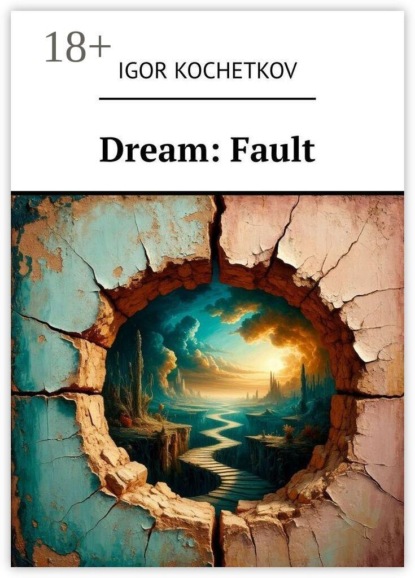
Dream: Fault
Chapter 5. The Price of a Glance into the Abyss
The procedure room resembled a chamber on a spaceship or, what was more frightening, a crematorium. All surfaces were smooth, matte white, absorbing sound. In the center stood two capsule-chairs of polished metal and milky plastic, entangled in bundles of wires and flexible tubes leading to consoles by the wall. The air hummed with a low, barely perceptible drone — the work of hidden generators and cooling systems. Leo, clad in a thin coverall of conductive fabric, felt like a laboratory rat prepared for the most sophisticated experiment.
Dr. Sun, in his immaculate white coat, floated between the apparatuses, checking readings. Beside him, at the second capsule, lay Sofia. She had been brought here under cover of night, in a special medical module — the whole operation was shrouded in a haze of semi-legality that Leo preferred not to think about. To see her here, in this sterile hell, rather than in the familiar hospital room, was unbearable. Even paler, even smaller among the high technology. The only thing connecting her to that world was the quiet hiss of the portable ventilator.
“The ‘Guest’s Gaze’ is not a dream,” Sun’s voice sounded like a lecture in an auditorium. He attached cold sensors to Leo’s temples. “It is a controlled projection. Your consciousness will use her neural activity as… a map. You will see what she sees. Or rather, what her basic consciousness perceives. Remember: you are an observer. A ghost. Any attempt at interaction, any emotional surge on your part can break the connection or distort the picture. You are here to watch. Only to watch.”
Leo nodded, swallowing convulsively. His mouth was dry as dust. Fear had frozen his insides into an icy lump, but he drove it deep down, to the very bottom. For this he had gone through everything. For this moment.
“What… what should I expect to see?” he squeezed out.
Sun shrugged, and there was something frighteningly dispassionate in that gesture.
“Anything at all. A static image. Chaos. A memory loop. Sometimes…” he paused, “sometimes consciousness, trying to save itself from unbearable reality, constructs entire worlds. Primitive ones, based on fragments of memories, fears, desires. You may become the first person to see the architecture of such a world from the inside.”
Leo looked at his sister’s face. “Entire worlds.” So she wasn’t in a void. She was somewhere. This thought simultaneously seared with hope and terrified him.
“We begin calibration,” Sun announced and placed a helmet resembling an inverted basket of black plastic and fiber optics on Leo’s head. The world narrowed to a narrow slit before his eyes. “Relax. Breathe evenly. The system will guide you to the threshold itself.”
Leo leaned back against the soft back of the chair. Cold suckers of sensors on his chest, arms. The hiss of an injector administering a light sedative cocktail — “to reduce cognitive noise.” His body became heavy, distant. The hum of the equipment turned into a monotonous background, then began to change, rising and falling, merging with the rhythm of his own heart.
The darkness behind his eyelids ceased to be merely the absence of light. It became matter. Thick, viscous, pulsating. Leo felt his thought — no, not thought, but his very attention — stretching somewhere forward, as if on a thread. Sparks flickered in the darkness. Not colors, but vague impressions: a flash of warmth (the sun in the car?), a sensation of falling, a distant, distorted sound of a siren.
And then — a plunge.
The darkness parted. But what he saw was neither a picture nor a dream. It was a sensation translated into an image. He did not see with his eyes — he perceived with his entire being.
Pain.
It was everywhere. Not sharp, but dull, diffuse, like leaden heaviness in every molecule. It was the color of dull, rotting iron. It was the sound of a low, continuous hum that made you want to howl. It was the world.
Leo floated — no, his consciousness drifted — through this nightmarish soup. He tried to find form, boundaries, but there were none. Only endless, suffocating pain-substance. And in this substance floated fragments. Fragments of her.
Here a flash: her own hand before her face, but distorted, huge, motionless. Here an echo: his voice calling “Soph!”, but stretched out like a recording on a demagnetizing tape, turned into meaningless roar. Here a feeling: oppressive cold (hospital sheets?), mixed with burning (medication in veins?). Everything was mixed, deprived of cause-and-effect connections, like the contents of a blender after an explosion.
And through it all — fear. Primordial, animal fear of a lost child. Fear of the dark, where there is no top or bottom. Fear of loneliness, absolute and complete.
Mom? Le?..
A thought, not a sound. A weak, barely discernible impulse of despair breaking through the pain. She was here. She was all of it — this pain, this fear, these fragments. Her consciousness had not built a world. It had been torn to pieces by trauma and floated in its own hell.
“Sofia!” Leo tried to shout, but he had no mouth, no voice. He was merely a clot of awareness, and his own horror, his love, his guilt struck his perception like a hammer.
The pain-world shuddered. The fragments flashed faster, the hum grew, turning into a deafening screech. In the chaos, something coherent momentarily appeared: the image of his face, as she had seen him last behind the wheel. But the face was distorted by a grimace of horror, the eyes empty as a dead man’s. Her fear for him. Fear that something had happened to him.
He understood. She was not simply stuck in the pain of her injuries. A part of her, the deepest part, was locked in the moment of the accident. In the moment when she saw his frightened face and became frightened for him. Her last conscious thought was not about herself. It was about him.
This realization crashed down on Leo with such force that his own physical body in the chair jerked in a convulsion. The price of a glance into the abyss turned out not to be the risk to the psyche that Sun had spoken of. The price was in the knowledge. In the knowledge that his sister, even crushed, torn apart, continued to love him. And that this hell in which she dwelt was partly his creation.
The connection began to break. White noise swallowed the images. The last thing he managed to feel was a tiny, weak impulse resembling a call. Not “help me,” but “where are you?”
Then — a sharp, painful jerk.
He gasped, coughed, convulsing in the chair as if electrified. Real sensations crashed down on him: cold sweat on his back, trembling in his limbs, nausea rising to his throat. Someone removed the helmet. The bright light of the procedure room hit his eyes, making him squeeze them shut.
“Interesting,” he heard Sun’s voice somewhere nearby, calm, analytical. “Strong empathic interference. But the structure… fragmented, primitive. Typical for deep organic trauma. Did you understand anything?”
Leo opened his eyes. His gaze fell on Sofia in the neighboring capsule. She lay exactly as before. Motionless. Quiet. But now he knew. He had seen the hell in which she floundered. A hell where she was still looking for him.
He pushed away the assistant’s hand trying to hold him and stood up. His legs gave way, the world swam.
“I understood everything,” his voice was hoarse from tears that had not yet broken through. “She’s not just sleeping. She’s trapped. In hell.”
Sun looked at him attentively.
“And what do you intend to do with this knowledge?”
Leo slowly turned to him. In his eyes, a minute ago full of horror, a new fire now burned. Not hope. Determination. Mad, desperate determination.
“Knowledge is not enough,” he said quietly, but in such a way that each word fell like a guillotine. “Observing is not enough. You said that theoretically more is possible? To enter? To interact?”
Sun frowned.
“The ‘Guest-Actor’ protocol… It has not been tested. The risks for the operator and the subject increase by orders of magnitude. It could kill both of you. And the cost…”
“I didn’t ask about risks or cost!” Leo’s voice broke into a shout, the echo of which resounded dully in the white room. “Is it possible to enter there for real? Is it possible to pull her out?”
Dr. Sun looked at him for a long time, and in his gaze something human finally flickered — not sympathy, but rather cold curiosity of a scientist who has seen a perfect, suicidal experiment.
“Theoretically… yes. For that you need not a ‘gaze’ but a full immersion. A transfer of consciousness. But for that you will have to plunge into the same coma. The outcome is unpredictable. You may not return. You may burn up there in a second. You may go mad, even if you return.”
Leo did not hesitate for a second. He had already seen the abyss. And he knew that the only place he could now be was at its bottom, beside her.
“Prepare the protocol. I’m going in.”
Chapter 6. The Threshold of an Alien Sky
The pain was different. Not sharp like a blow, and not dull like an aching wound. It was dissolved in the very process of becoming, in the birth from nothing. Leo did not open his eyes — he had none. He did not inhale — no breathing was required. He manifested. Like a photograph emerging in developer, but in three, no, four dimensions, where the fourth was the very sensation of “I.”
And the world… the world appeared together with him.
He did not get to his feet — he realized he had a form. Human, familiar, but weightless as a thought. He stood on… on what? The surface beneath him was neither solid nor liquid. It was the idea of a surface. It responded to his intention to be standing rather than floating. And it changed. A light breath of doubt — and beneath his “feet” rippled an elastic, pearlescent wave. Panic — and the ripples froze into sharp, glassy spikes, which immediately crumbled into golden dust when he took himself in hand.
“Stabilize your form,” Sun’s voice came from somewhere very far away, as if from another universe, distorted, devoid of timbre. “Remember: your body here is a projection of your self-perception. Hold the image. Clear and firm.”
Leo forced himself to recall his reflection in the mirror. Height, proportions, face. The sensation of muscles beneath skin. Gradually the form stopped trembling and solidified. He felt a semblance of weight. He looked around.
What he saw made him forget about breathing, which he did not have.
He stood on a plain of iridescent, translucent substance resembling either cloud or frozen light. This plain stretched into infinity in all directions, merging at the horizon with a sky that was not blue but a shimmering canvas of all colors at once and none in particular. Colors did not simply exist — they sounded. Where deep indigo predominated, there was a low, vibrating hum. Bands of gold emitted a pure, high chime. And all of it moved, flowed, like a giant living watercolor painted by a mad god.
The air (if it was air) was filled not with smells but with memories of sensations. Here — the fleeting, sweet taste of grandmother’s jam from the dacha. There — the coolness of wet sand between bare toes. A little further — the distant, distorted smell of burning and gasoline, which made something clench inside his projection.
This was not the chaos of pain he had seen as the “Observer-Guest.” This was something else. Formed. Albeit insane. Her world? No. Too complex, too… multidimensional. It was like a border space. A threshold.
“You are at the threshold,” Sun’s voice confirmed, as if reading his thoughts. “The subject maintains a stable but primitive world somewhere deep. What you see is a buffer. An area where her perception mixes with the fundamental protocols of this layer of reality. Different laws apply here.”
“Different laws” was an understatement. Leo took a step. The place where he was supposed to step curved toward his foot, shortening the distance. The sky above this place flashed brighter, illuminating ghostly, translucent structures resembling petrified lightning or the roots of giant trees reaching both into the earth and into the sky simultaneously. He extended his hand, wanting to touch one of these arches. His fingers met no resistance, but the space around the arch thickened, became visible — a shining haze pulsing in time with his intention.
The power of a guest, he recalled from the briefing. The ability to influence the reality of this place directly, by force of thought. But not to change it — rather to interact with its fluid nature.
He concentrated on the arch. Not on touching it, but on the desire to understand it. The space thickened more, and suddenly a stream poured into his consciousness: not images, but pure abstractions. A feeling of safety (shelter?). A sense of path, road (direction?). The bitterness of loss (memory of something destroyed?). The arch was not an object. It was a clot of meanings, torn, probably, from Sofia’s memory and projected into the landscape.
Recoiling, Leo understood the main thing. Here everything was real. Not in the sense of physical solidity, but in the sense of intensity of experience. Fear was sharper, beauty more blinding, loneliness all-consuming. And the laws here were the laws of psychology, not physics. Thought gave birth to form. Emotion colored space. Will moved matter.
In the distance something stirred. Not in the usual spatial sense. Rather, a patch of sky forgot to shimmer and began to condense into something dark, angular. Leo felt attention upon him. Cold, indifferent, hungry. This was not part of the landscape. This was something else. An inhabitant.
Instinct screamed: run! But where? There were no shelters here in the usual sense. Leo instinctively wanted to be farther away. And space responded. The plain beneath him floated, the sky changed its palette to darker, more alarming tones, and he moved a hundred meters without even moving. The dark form in the distance froze, as if rebooting, assessing the new position of the target.
Leo’s nonexistent breath caught. He could influence the world. But the world and its inhabitants, obviously, could influence him. And he did not know the rules of this game.
“Channel stable,” Sun’s voice sounded again, this time with a shade of something like satisfaction. “Projection maintained. You are the first to cross the threshold in active mode. Congratulations. Now find the anchor. Look for the trace. The thing that leads to the core, to her stable world.”
A trace. Leo looked around, trying to drive away the growing panic and the feeling of absolute lostness. He was in someone else’s paradise, which could turn into hell at any moment. And he needed to find the way into an even deeper, more personal hellish abyss of his sister.
He closed his eyes — his human gesture — and tried to remember. Not the picture from the “Guest’s Gaze,” but the feeling. That pain. That fear. That love mixed with horror for him.
And the world responded. Beneath his feet the pearlescent plain darkened, became viscous as tar. The sounding sky muted its melodies, leaving only a low, alarming hum. And directly before him, cutting through the surreal landscape, a crack appeared. Narrow, shallow, but from it stretched a weak, trembling trail of that very familiar despair. A trail that was the color of rust and tasted of blood on the tongue.
This was the trace. A path of her pain leading into the very heart of her nightmare.
Leo looked at the dark, angular form still hanging on the horizon. Then at the crack at his feet. The threshold of an alien sky had been crossed. Now began the journey. A journey into the unknown, where he was simultaneously savior, stranger, and the only hope for a soul lost in the labyrinths of its own mind.
He took a step toward the crack. Space contracted, and he plunged downward, into thick, dark tones, leaving behind the iridescent, mad paradise.
Chapter 7. The Language of New Laws
The crack did not lead downward — it led inward. Leo was not falling; he was being drawn in, like water into a drain, only the drain was made of congealed fear. The shimmering, multicolored chaos of the threshold gave way to a compressed, monochrome reality. He stood in a gorge of something resembling gigantic, compressed shadows. The air (or its equivalent) was thick, viscous, and smelled of static electricity after a thunderstorm and… dust. The dust of an old library where no one had opened the books for a long time.
The trace — that thread of rusty despair — hung here more distinctly, pulsing with a weak light like a bad neon sign. He walked along it, and the world around him changed, adapting to his inner state. When he concentrated on the trace, the walls of the gorge parted, forming a tunnel. The moment he was distracted, doubted — the passage immediately overgrown with black, needle-like growths resembling crystals of frozen pain.
Think. Want. Believe. It was not a magic spell but survival. Sun’s briefing now seemed like a children’s fairy tale. The theory of “will creating reality” in practice meant that any weakness of yours immediately materialized beneath your feet as a pit, above your head as a collapse, and from every shadow your own personified doubt could crawl out.
Конец ознакомительного фрагмента.
Текст предоставлен ООО «Литрес».
Прочитайте эту книгу целиком, купив полную легальную версию на Литрес.
Безопасно оплатить книгу можно банковской картой Visa, MasterCard, Maestro, со счета мобильного телефона, с платежного терминала, в салоне МТС или Связной, через PayPal, WebMoney, Яндекс.Деньги, QIWI Кошелек, бонусными картами или другим удобным Вам способом.
Вы ознакомились с фрагментом книги.
Для бесплатного чтения открыта только часть текста.
Приобретайте полный текст книги у нашего партнера:
Полная версия книги
Всего 10 форматов

