Полная версия:
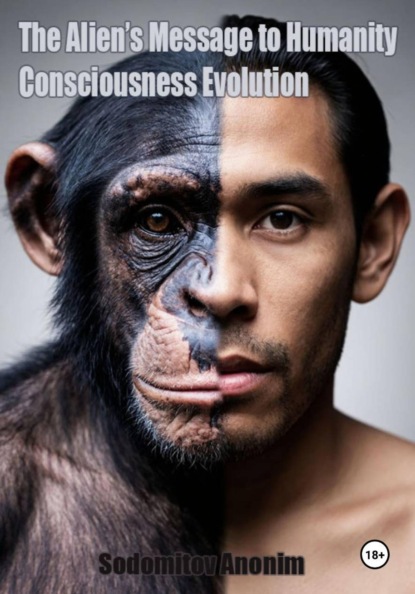
The Alien’s Message to Humanity: Consciousness Evolution
The new evolutionary conditions impose extreme demands both on humanity’s intellectual threshold and on the choice of tools for intraspecies competition, including global economic and geopolitical competition. Over time, this range will narrow until competition, in principle, becomes impossible.
It is necessary to commission highly specialized experts from a wide array of fields to begin studying and analyzing the nature of neurorecursive bifurcations (mutations) in the human nervous system. Based on these findings, new systems for assessing political, economic, social, and legal frameworks, including law enforcement systems, must be developed. In parallel, educational and upbringing systems should be modernized, with new long-term strategic objectives and tasks defined, and self-organizing mechanisms for social and educational support of society’s intellectual health must be created – mechanisms capable of integrating into culture and becoming its reliable shield.
It is important to understand that the future will transform all aspects of global economy, geopolitics, social policy, ideologies, and societal consciousness – absolutely everything on which modern civilization stands – into something entirely different, beyond the imagination of many. I will attempt to convey the contours of this future to you.
Those who correctly understand this message may not achieve immediate results, but their standard will fly in the wind even a thousand years from now, rather than gathering dust in historical archives.
What is «Emossive»
Although the word «emossive» was coined in my mind during adolescence, at the age of fourteen, this should not be dismissed as naïve, because over time – even to the own surprise – it developed into a complete model describing the nervous system not only of humans, but potentially of all living beings.
The term is derived from two words: emotion and poetry, since the sequences of human cognitive and behavioral factors, expressed in habits and dependencies, evoked associations with the patterns of poetic texts, and later with the patterns of binary code and algorithms.
A human being, like any living organism, is an evolutionary Frankenstein – genetically assembled from the “spare parts” and mechanisms of positive selection inherited from all predecessors, while traits of negative selection were generally eliminated. Biologists and anthropologists will confirm that you are alive only because each of your ancestors managed to win their evolutionary lottery. And at this very moment, nature is conducting the same lottery with you, which you observe in demographic trends. But for a clear understanding of the entire picture, it is necessary for me to explain many details and nuances step by step, and I ask for your patience.
Nature has no goals or instruments to carve unique masterpieces like a sculptor, but it does follow a principle. Drawing an analogy with known physical laws, the evolutionary path of organic life can be compared to the “triple point of water”.
Quantum processes of interaction between multidimensional phenomena and space – still undescribed by science – leave ripples on the surface of a lower-dimensional space; and this, in essence, is what you call “organic life”. Visually, this can be compared to smells seeping through cracks. I would not call this “organic life” at all, but rather an inversion trace left by the impact of a multidimensional object on a lower-dimensional space.
Returning to the subject:
You inherit genetically not only memory of external traits and anthropological features, but also cognitive memory. In many animals, this manifests as innate reflexes and instincts. Humans are no exception, but the reason for the absence of strongly expressed instincts lies in the modernization of this mechanism, while preserving the general principles of the functions of the emossive model.
The human organism consists of many autonomous systems, and its nervous system is an emossive model, which itself consists of many subsystems – like layers of a cake – each performing its own functions. The complexity of its structure is not accidental but part of the regularity of the universe and its physical laws.
However, I will touch only on one of its key layers and attempt to reveal its essence. To do this, I must introduce another term: the neuromarker (or neuro-identifier, if you prefer) – a key component of your thinking activity.
For ease of understanding, imagine neuromarkers as emotional notes (like musical notes), and your brain as a synthesizer of emotions. Its task is to transform information received through your sensors (vision, hearing, smell, touch) into compositions that you later use to orient yourself in the world and to carry out tasks of survival, competition, and reproduction.
Your vision perceives information in specific ranges of electromagnetic waves; your hearing perceives information within certain frequency ranges. Vision, hearing, smell, and touch are all different layers of incoming information, which undergo decoding and processing, after which neuromarkers are assigned to them.
Your emotional factors constitute another virtual layer of information, with its own spectrography and range of “frequencies”. In this illustrative model, this range consists of neuromarkers that form different levels of awareness, sensation, and perception. It is precisely this factor that fundamentally distinguishes you from artificial intelligence, and to some extent from individuals like myself. Taken together, this entire emossive model of brain algorithms creates you as subjectively thinking individuals.
Your brain does not primarily operate with meanings, concepts, and ideologies by which you believe you are guided. Instead, it operates with an extraordinarily complex structure of algorithms – numbering in the trillions and quintillions – that generate them. It operates with the relationship between processed information and neuromarkers, which collectively manifest in external social factors as the symptoms of unique meanings and concepts for each individual.
Neuromarkers are a control instrument by which the brain governs the behavior of the biological organism. Just as you use reins and a harness to control a horse, the brain uses neuromarkers to control you.
If the neural network of the brain is the instrument for compiling information, then neuromarkers are one of the two instruments for formulating tasks for that neural network. They dynamically regulate so-called synaptic weights, acting as coded signals that trigger chemical reactions, through which the brain transmits the necessary information to activate corresponding and subsequent reactions within entire chains of algorithms.
This is also one of the hints for developers of artificial intelligence in creating human-like self-thinking systems or superintelligent systems that qualitatively surpass existing analogues and developments.
Even a single emotion is not the work of one neuromarker, but rather a specific sequence of code reproduced through neurons like the audio track of a musical composition – hence the association with “emotional poetry”.
They imbue information with the very semantic load by which you guide your thinking. It is they that make the subsequent development of “creativity” inevitable as a result of the brain’s excessive intellectual potential. Creativity is not a sign of the development of intelligent life, as you might assume, but rather a consequence of neurorecursive mutations, which I will also describe later.
The number of levels of awareness and emotional spectra is not limited to what the modern human as a species can currently experience, understand, and comprehend. This is comparable to the range of information perceived by the senses of sight, hearing, smell, and so on. To clarify: you exist within a certain range of the intellectual spectrum, measurable in levels of awareness and emotional spectra. The inability to intellectually transcend this range is comparable to the inability to see what lies beyond the perceptual limits of human vision.
Technological progress will open ever greater possibilities in these directions. Just as many animals cannot experience or express many human emotions and levels of intellectual awareness, humans themselves are prisoners of their own species limitations. It is important to understand that the mere fact of the existence of such gradations means they are subject to mathematical description, thereby confirming that you and your brain consist of sets of algorithms. The issue is that socially imposed limitations on the human intellectual threshold – reinforced by binary systems of representation – create substantial barriers to deeper analytical capacities.
The Emossive Model of the Nervous System
As an evolutionary Frankenstein, humans consist of a collection of genetic memories – biological programs inherited from their predecessors. In this regard, chimpanzees are our closest relatives, which is why both species share certain social and behavioral traits. This is governed by a common “biological factor”, representing the inheritance of shared or similar primary genetic programs and algorithms, which significantly influence a species’ behavior, regardless of social environment, intellectual development, or level of consciousness.
I must note that this is a key point, potentially providing answers to everything. If we take this “biological factor” as a reference point for modeling human development from prehistoric times to modern civilization, the current global picture becomes predictable. While different economic and political models of civilization are permissible deviations, the development of society itself – its consciousness, and the crises of past and future civilizations – is not only predictable but was inevitable from the outset, just as the trajectory of celestial bodies is inevitable.
Moreover, it is mathematically possible to model and predict not only global trends but also the behavior of individual humans, particularly their thought processes. However, this requires a complete understanding of the brain processes that generate your thoughts: “the algorithmic maps of the emossive model”.
During brain development, the primary task is to form a complete “emossive data library”, classifying all information and linking it with neuromarkers, thereby creating cognitive and behavioral algorithms.
In the case of instincts and reflexes, this is an “inherited data library”, and the brain’s task is to synchronize it with the nervous system and motor functions. This is an evolutionarily convenient approach, solving simple tasks: shorter fetal development, faster maturation, and higher reproductive output.
However, evolution went further, modernizing this genetically inherited library into an “acquired data library” with a high priority on social learning. This is essentially how the predecessors of the Homo-sapiens species emerged. Nevertheless, the fundamental principle of the emossive library remained unchanged, though the development of a fetus and maturation of offspring now requires significantly more time.
Unlike instinct-driven animals, the human brain can no longer simply synchronize the inherited library with the nervous system and motor functions. It must also create, through social learning, an “acquired library” – a unique algorithmic map of the emossive model for each individual.
Furthermore, playful and active interactions are crucial for both human and animal offspring, as the brain uses these activities to complete its developmental tasks. By classifying decoded information and assigning neuromarker barcodes, the brain fine-tunes the system so that stimuli evoke the correct cognitive response, which is then expressed externally as emotions, desires, and drives.
For this reason, a child’s cognitive system quickly and effectively memorizes profanity, since such words carry strong emotional charge. Evolutionarily, the emergence of profanity was inevitable due to the characteristics of the nervous system. Similarly, modern internet memes are cognitive novelties sharing the same nature as profanity: they provide the emossive system with an emotional context and contrast to reinforce certain information.
By adulthood, humans, like instinct-driven animals, become constrained by their pre-formed algorithm libraries, expressed externally as cognitive and ideological constructs, habits, dependencies, and ritualistic behaviors.
If “instincts” are inherited cognitive constructs, human ones are acquired. Yet it is crucial to understand that these are not different models but the same principle with differing genetic priorities. Animals can also learn dynamically, but in some species, instincts hold higher priority. Humans, born with genetically inherited reflexes, prioritize dynamic adaptation. Essentially, it is the same model, refined and reprioritized.
Evolution thus achieved two goals: energy optimization of the nervous system and a high degree of adaptability to a changing environment. This significantly enhanced survival but came with side effects. A major drawback of this evolutionary solution is the human nervous system’s vulnerability to neuro-recursive brain mutations: socio-cognitive hallucinations and algorithmic logical conflicts. The higher a species’ intellectual potential, the greater the risk.
Having solved one problem, evolution encountered the significant downside of its solution. Natural mechanisms cannot keep pace with technological progress or the rate of neuro-recursive mutations in conditions of high informational invasiveness. Humanity will have to solve this problem artificially, as there is no alternative. This is why a qualitatively new civilizational approach is required to mitigate these risks. Humanity must stop playing in the economic sandbox and start maturing.
Humans are neither the pinnacle of creation nor a unique intelligent species in the universe. The reality is far more prosaic: we are a byproduct of evolution – or, put differently, an intermediate stage in the evolutionary transition from non-intelligent life to intelligent life.
All living organisms inhabit their natural environments and function with minimal cognitive and intellectual deviations. This difference largely distinguishes humans from related species. The primate’s excess intellectual potential produced cognitive distortions, where rituals began to take precedence over the organism’s primary biological programs and natural needs. Cause and effect were reversed: reproductive tasks were replaced by pleasure-seeking tasks.
Cultural identity, with its traditions, mentality, and moral compass, is a model of a social construct formed by neuro-recursive mutations of the cognitive system in response to the environment, carrying both positive and negative effects.
Dynamically learning organisms like humans can change and adapt their environment to their needs. However, the very fact of a constantly changing environment introduces the risk of socio-cognitive hallucinations. Each generation develops and forms ideological perceptions of the world in a different environment than the previous one. Until the end of the twentieth century, this trend was subject to positive selection; under current conditions of exponential information growth, selection has become negative.
Humans’ high intellectual threshold, relative to close relatives, enables the accumulation of social knowledge and experience, creating a technologically evolving environment. Such an environment inevitably generates neuro-recursive mutations in each successive generation, amplifying informational noise and social hallucinations. Examining the technological development curve of humanity reveals how informational noise progressed regionally and globally.
Social hallucinations lead to economic hallucinations, which in turn drive inadequate political and social transformations. Collectively, this chaos, created by non-intelligent beings, ultimately undermines civilization itself. A long causal chain can be traced in the progression of neuro-recursive mutations within social consciousness, akin to a genealogical tree.
All of this exponentially increases informational noise, and thus informational invasiveness inevitably triggers new social and economic hallucinations, with demographic trends serving as external symptoms of evolutionary conflict, especially when the dominant species is biologically vulnerable to these threats.
Everything occurring in the world – and even how your thoughts are born – is mathematically predictable. The only problem is a lack of knowledge and understanding, which leads to mysticism. For some, an airplane in the sky is a magical bird; for others, their own thoughts are magical entities.
The Existential Consequences of This Knowledge
The knowledge and full understanding of “the algorithmic map of the emossive model” of the human nervous system – in essence, a complete map of the brain’s algorithms – have the potential to alter the world and its balance to a degree far exceeding the combined impact of Oppenheimer’s work and the creation of the computer to date. The very survival of humanity directly depends on the adequacy of the approach to technological implementation and application. Evolutionary demands for intelligence and responsibility are orders of magnitude beyond the human threshold and incomparable to the responsibility associated with the non-use or non-proliferation of nuclear weapons, due to the incomparability of the temptation to deploy a weapon that cannot be tracked or retaliated against.
Even the most prudent and responsible individuals cannot resist the folly of challenging nature – especially under conditions of high economic and political competition and the democratic roulette, where both “human” and “biological” factors determine the direction of the next political move. Analyzing negative demographic trends alongside current economic and geopolitical realities, you should understand this more clearly than anyone.
Crises do not emerge from nowhere; they are the consequence of actions taken by those whose intellectual capacity did not allow them to see beyond the visible horizon. Just as a human cannot beat artificial intelligence at chess, humans attempt to play two-dimensional chess with nature on her three-dimensional board – and thus encounter suddenly appearing pieces in the form of unforeseen challenges.
Neurohacking Technology:
Much like soundtracks are recorded and musical compositions are created in recording studios today, emossive compositions of neuromarkers will be created in “neurohacking studios” and transmitted directly into the brain via neural interfaces and relays. If magnetic storms can trigger headaches and mood swings, what might technologies capable not only of focusing large amounts of energy in a specific direction but also of transmitting compressed information in waves perceptible to the brain’s neurons achieve? The era of cognitive-virus threats is closer than it seems. It may require only a spark in the form of concrete knowledge, while you yourself supply the technological fuel.
The Principle of the Technology:
Why immerse yourself in the history, atmosphere, and emotions of literature, music, or cinema via analog methods of transmitting information through external sensors (eyes, ears, touch, smell, etc.) when it can be delivered directly into the neurons of the brain?
Let us go even further: why transmit information as external signals requiring additional resources for the brain to decode, when it can be delivered already in the deciphered form of emossive code, directly reproducing cognitive programs that trigger the corresponding chemical reactions?
Not only humans but any “living being” could follow commands while fully aware that it has independently chosen to do so. The risks are far too great for this to be placed in the hands of civilization at this stage of development.
Neurohacking also allows complete control over surrogate conscious dreams, enabling one to live a full life of a character from a beloved work in just a short hour. You will not read the story or imagine it; your brain will create the scenery and place you in a scenario where you are the protagonist, unaware that you are a fictional character until you wake. Your brain does this regularly in dreams, but without artificial technological intervention and control, those dreams are chaotic and incoherent.
Конец ознакомительного фрагмента.
Текст предоставлен ООО «Литрес».
Прочитайте эту книгу целиком, купив полную легальную версию на Литрес.
Безопасно оплатить книгу можно банковской картой Visa, MasterCard, Maestro, со счета мобильного телефона, с платежного терминала, в салоне МТС или Связной, через PayPal, WebMoney, Яндекс.Деньги, QIWI Кошелек, бонусными картами или другим удобным Вам способом.
Вы ознакомились с фрагментом книги.
Для бесплатного чтения открыта только часть текста.
Приобретайте полный текст книги у нашего партнера:
Полная версия книги
Всего 10 форматов