Полная версия:
Marcel's Shop

Александр Оним
Marcel's Shop
The prologue. Marcel Lemaire: The merchant of other people's destinies.
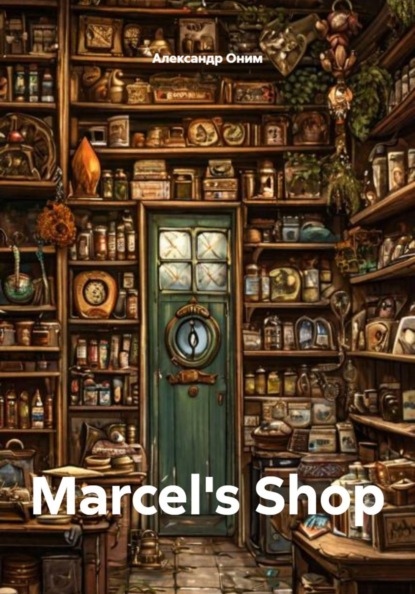
To say that someone knew Marcel Lemaire would be a lie. His name was not listed in the registers, no one remembered when he appeared in the city. He just was. Like an old bridge, like a random breeze in the silence. His shop, hidden in an alley where the phone doesn't pick up, and the lights are dim, like in an old photo, has a simple name.: "Marcel's Shop." Marcel did not advertise his products. He wasn't trying to sell anything. And he never mentioned the price, although they always paid. Sometimes with money. Sometimes it takes time. Sometimes with memories. He was a tall, skinny old man with a gait that had no age. His hair was silver, but not gray. Rather, they glowed like frost on glass. He didn't talk much, and when he did, it felt like his voice wasn't in the room, but inside you. And the main thing is his eyes. Amber, dull, like a predator that has long lost interest in hunting, but never in observation. There were rumors that the shop did not always appear. Someone said they came to her and couldn't find her. Others claimed that they did not enter through the door, but rather "fell through" it by simply turning the corner. Some claimed to have seen her in other cities. In other countries. With the same name. With the same old man. Marcel has never denied or confirmed. He was just watching. And if a person was really looking for something – not an object, but a lost part of himself – he would raise his finger, go deep into the shelves and bring the thing. The most ordinary one. Sometimes it's a cracked mirror. Sometimes a porcelain doll. Sometimes it's the key. Or a clock that goes backwards. "That's not what you want," he said. – This is what awaits you. People asked, "What do I need this for?" – Are you sure you want to know? – He replied. After the purchase, changes took place in the buyer's life. Someone was returning the love. Someone was leaving forever. Someone woke up and started crying. One day, a man who bought his long-dead wife's hairpin from Marcel disappeared three days later. He was found in another city, where he began his life anew, as if the previous one had been crossed out. But Marcel himself… seemed untouchable. Neither age, nor time, nor death touched him. There were legends: he was an apothecary in the 18th century. A magician in a cabaret. The keeper of the clocks that only went in the opposite direction. People asked him who he was, and he smiled sometimes.: "Me?" I'm just someone who remembers what was forgotten. Sometimes he disappeared for weeks. He left a sign: "Closed for the past." Sometimes, when customers returned, they found a shop with a different facade and different lighting, as if it reflected their inner state. Time passed differently in his presence. Some claimed that they had been inside for 10 minutes, and hours had passed outside. Others say the opposite. Marcel never asked why they were here. He knew. Sometimes he looked at a person and nodded, as if there were flashes of someone else's life in his eyes. In those moments, he wasn't just an old man. He was… a witness. Not a judge. Not an adviser. Witness the intersections of destinies and the things through which these destinies could be rewritten. The main rule of the "Marcel's Shop" is that each item can only be sold once. And you can't return it. Who is he? Where do the items come from? Why do they work? There are no answers. Just stories. And it all starts with a bell above the door. A call that you only hear once.
Chapter I. A mirror that does not reflect Nicole didn't come for a thing–she was just walking home with another door. From work, as always. Tired, but collected. Gray trousers, dark raincoat, hair tied up in a bun. Everything screamed at her: "I know who I am." But inside, under the clothes and roles, there is silence. It's like in an apartment where the lights haven't been turned on for a long time. She noticed the shop by accident. On the corner where there used to be a baker. The worn signboard: "Marcel's Shop", a showcase without ads, glass with a slight distortion, like in old mirrors. And the faint ringing of a bell, as if not from her movement, but from someone else's permission. The interior smelled of old wood and time. Shelves filled with strange things: caskets, books, lanterns. No prices, no music. Just the ticking. And the look. He sat in the depths, almost merging into the twilight. Tall, thin, with silver hair and amber eyes like dusty stones. He didn't say, "Hello." He didn't ask, "How can I help you?" He just stared. Nicole felt strange. It was as if they were already waiting for her. –I'm… just looking,– she said, smiling awkwardly. Marcel nodded slowly, not looking away. "Sometimes it's the only way to see," he said. She walked around a couple of shelves, not knowing why she stayed. His hand reached for the object of its own accord–an old round mirror with a worn copper frame. It was opaque, misted up from the inside. She ran her finger along the glass. And the mirror… reflected nothing. Not her face, not her hand. Only a dim depth, where silhouettes seemed to float. "It doesn't show your appearance," Marsel's voice came from behind her. – It shows something that you have not wanted to see for a long time. –Is it… ruined?" Nicole asked, but her voice was shaking. – Or you've ruined yourself by trying to be right. The words stung. Too accurate. She wanted to leave, put the mirror back on the shelf, but she couldn't. It held her gaze, as if someone was whispering in it from afar. "I wasn't going to buy anything," she almost defended herself. "It's not for sale," Marcel said, and something like a slight grin appeared on his face. "It just chooses. You've been chosen. She paid. I didn't even remember how much. I went out at dusk, with a mirror that doesn't reflect. At first, she just kept it in a drawer. But at night, when I woke up from anxiety – for no reason, as it often happened in recent months – I got annoyed. Looked. There was no face in it. But there were shadows. Similar to her, but different. The way she used to laugh. How she sang on stage at the university. How I drew – a long time ago, before law, before a career, before endless alignment. Then the mirror began to change. Not literally– but by feeling. She began to see herself. Without makeup. Without a mask. Without tension in his eyes. And there was pain in that reflection, but also relief. It was as if her inner voice, driven deep, had found a way out. She started to change. At first, it was almost imperceptible. She began to speak more slowly. I've given up on two extra projects. She stopped wearing things she was uncomfortable in. One day I came to work and suddenly said: "I'm leaving." The boss did not immediately understand. "I'm leaving." I'm going to teach. In another city. Painting. "Are you… an artist?" "What is it?" he asked in amazement. Nicole didn't answer. She wasn't sure yet. But the mirror no longer showed shadows. It was her face. Calm. And finally, the living. Six months later, she returned to the alley. I wanted to thank you. Bring the mirror back. But there was no shop. In its place is an empty facade. Tablet: "Marcel's shop. It's closed to someone else's future." She smiled. And, turning around, she left. There's a mirror in her pocket. Now it reflected everything. Even the things she was no longer ashamed of.
Chapter II. The music box that knows your dreams Sometimes people don't come to Marcel's Shop to buy things. Sometimes for forgiveness. But they say it differently. Laura was a frail woman in her forties, with her hands always clenched into fists, as if hiding everything she didn't say in them. She went into the shop, as if apologizing to the world – quietly, with downcast eyes. Her face resembled a city in the fog: you could guess the lines, but not the feelings. "I'm looking for… something." For my daughter," she said uncertainly. Marcel looked at her with a look that needed no explanation. And he went deeper into the shop. He knew. She waited among the objects, each of which seemed to be watching her: books with empty spines, a glass bird without pupils, an hourglass in which the sand was falling upwards. He returned with a small music box. The black tree. A worn lid with a faded flower. "She doesn't play by tapping,– he said. – Only when the person is ready to hear. – And the music?.. Laura ran her fingers over the lid. – Music comes from dreams. The kind that we forgot. Or we don't want to remember. "Is that a toy?" – A thing. He wasn't smiling. – But if you're looking for a toy, it's not here. She bought it. Not because I wanted to, but because I was afraid to leave empty–handed. Her daughter hadn't spoken to her for a long time. After my father's death, everything collapsed. A teenage girl, silent and prickly, looked at her mother as if she had betrayed everyone. And Laura? She was just trying to survive. Replace love with control. Substitute a conversation with a schedule. For the first week, the box was on the windowsill. Laura didn't dare open it, and she wouldn't let her daughter. As if she was afraid that the music would be a trial. Or he'll start playing… not about her. One night, she woke up to a sound. A subtle, almost childish motif was pouring from somewhere in the kitchen. The melody was unfamiliar, but there was something scratching in her chest. Laura went out barefoot, and saw her daughter sitting at the table, in front of the box, with her eyes closed. The music stopped when Laura entered. "What was that?" "What is it?" she whispered. – Dad. – The girl did not open her eyes. "I dreamed about Dad." How he laughs. How he carries me on his shoulders in the garden. I had completely forgotten that. Laura sat down next to him. And for the first time in months, they were just silent. Together. Not as enemies, but as two lost souls who have found one window in the dark. The box didn't play every night. But when I played, I had dreams. Laura dreamed of her youth, forgotten evenings in the park, and her first trip to the seaside with her husband. The daughter began to talk, not about pain, but about memories. And in these conversations, they became a family again. Then the box fell silent. Forever. I just stopped reacting one day. As if everything necessary had already been said. Or heard it. They tried to open the mechanism, but found nothing. Only the phrase engraved on the inner wall: "Music is the memory of the heart. Even if the mind wants to forget." A couple of months later, Laura returned to the alley. But there was no shop. In its place is a brick wall. As if she had never existed. She smiled. And she turned around. In the reflection of the window, where the entrance to the "Marcel's Shop" used to be, she saw herself. Not a woman with fists. And a woman with her palms open. Ready to hold – and let go.
Chapter III. The clock that goes backwards When the door of Marcel's Shop opened, a man with the face of a man who has already lost everything appeared in the doorway. And yet he came in. His name was Victor. Fifty three. The successful one is in the past. He used to be the owner of two restaurants, but now he's a useless consultant, divorced, estranged from his son and himself. The face wasn't tired, it was… empty. It was as if no one had lived in it for a long time. Just a function. He looked around the shop: dusty clocks, shelves, lamps with warm light. Something in this place breathed differently. Not modern, but not ancient either. Forever. "I'm looking for a present,– he said almost mechanically. Marcel, as usual, did not respond immediately. He was standing at the far wall, leaning on a wooden ladder, from which he seemed to be watching people without even turning around. "To whom?" "What is it?" he asked, without changing his position. –For myself,– Victor said after a pause. Marcel nodded briefly, as if something had been confirmed. Then he took a pocket watch from the shelf. The glass is cloudy, the body is brass. The dial is reversed. The numbers went from right to left. The arrows are backwards. "This watch doesn't measure time,– he said. "They're bringing him back." But not how you think. Victor laughed dryly. – If they can erase mistakes, I'll take it. "They don't do laundry." They show exactly when you decided that life was over. Victor didn't wear watches because he believed in them. He just didn't want to throw it away – he paid, as it seemed to him, a lot. But from the very first day, the clock began to strangely "interfere". He woke up at 7:30, and the clock showed 3:14. He left work at 18:00 – the clock went to 10 in the morning. He began to notice that the moments when he managed to laugh, the clock accelerated. When he returned to the usual bitterness, they pulled back. One day he got stuck on one number – 12:06. The clock stopped. Neither here nor there. For several days in a row. He hardly slept, he kept looking at them. And finally, one morning, when I couldn't stand it, I went to the old apartment where the family used to live. There was still a nail hanging crookedly on the wall. There is a white spot under it. There used to be a picture there that he took after the divorce. The photo showed his wife, his son, and himself, laughing as if he didn't know that in a year he would lose them both–not by death, but by indifference. The clock in his hand ticked. Back. Until 11:58. He began to return there every day. Not to believe, but to remember that he wasn't fighting back then. I just accepted it. As with a change in the weather. And he allowed himself to disappear from the lives of his neighbors. Not by one act, but by a series of procrastinations, missed words, and refusals to have honest conversations. And now the clock was taking him back not to the past, but to the cause. The hands were unwinding not the chronology, but the moment when he decided to be unhappy. He began to notice something else: in the morning, when he called his son, the arrows were moving forward. When I was just working, we stood there. When I started to judge myself, they were unwound. And one evening, when he found an old video with his son on his phone, edited a short clip and sent it to him with the caption "I still remember how to be with you," the clock showed 00:00 for the first time. Zero. Not the end. Beginning. He came back a month later. I wanted to return the watch, but the shop had disappeared. In its place is wet asphalt, not a single sign. He stood in the rain, with his watch in his hand, and stared into the void as if into a mirror. Then he laughed. And he went. The clock was going backwards. But now it's not about the past. To the point where he became himself again.
Chapter IV. A tape that can only be rewound once When Leila first saw the shop, it seemed to her that it was a mirage. Everything was too ordinary: the supermarket, the laundry room, the travel agency sign with peeling letters. And suddenly – "Marcel's Shop", as if interspersed with someone else's century. But not the old one, no. Rather, timeless. Leila was thirty-six. Behind her are performances that didn't happen, roles that went to others, and the pain she learned to hide behind stage lights. Now she was teaching acting to teenagers, although she hardly believed in her own acting. Neither in the theater, nor in life. She entered without purpose. I just… wanted to hide from the city, the people, and myself. Inside, it smelled of old paper and tart wood. And – lada- nome? Or the rain? The mixing of odors, as well as objects, defied logic. There were toys, masks, rolled-up maps, jars of feathers, and untitled books. And – silence, so deep, as if the shop itself was breathing, but not making any noise. Marcel appeared, as always, silently. "You're looking for something you don't remember," he said, without asking for a name. – Can you guess? She chuckled. – I just know how to see the shadow that a person hides in himself. He handed her a small coil–an old magnetic tape, tightly wound, without a signature. "Is this a movie?" Leila was surprised. "It's you,– he replied. At home, she hesitated to listen for a long time. She didn't have a smartphone, and she thought it was just as well. But the next day, passing by the store, I saw Marcel again – now he was standing at the door with a suitcase and holding an old portable player in his hands. He held it out silently. And disappeared inside. At night, after making tea, she turned on the device. First, silence. Then a faint crack. And… a voice. Child. Her own. "I'm going to be an actress. I want people to feel. Even if it hurts, I still want to." The girl's voice. Sure. Whole. Without fear. Layla froze. And then the voice changed: fragments of rehearsals, laughter backstage, whispers on recordings, audio recordings that she probably once kept for herself. At a time when I still believed in my dream. Into something more. With every passing minute, something that had not been felt for a long time stirred in her chest: thirst, anger, courage. There were no tragedies on the tape – only the life she gave as a pledge of reality. Where they pay for convenience with memory. And at the end, a quiet whisper. "You still can. If you're not afraid to hear yourself. But you can only rewind once." She realized that if she turned it off now, everything would remain as it was. If he clicks "rewind", he won't come back. The tape will give her the opportunity to live one day from the past to the present. Not as a reminder, but as a chance. Layla pressed it. She woke up in the dressing room, smelling of powder and dust. In two minutes, there's a scene. People. Poster: "One-man show. Leila O." My heart was beating like it hadn't for a long time. Not with anxiety, but with a living thrill. Like before jumping into the water from a height. She went out. And she played. Not the way they teach. It was as if she had finally remembered who she was. Not for the sake of the audience. For the sake of the one who recorded the voice on tape. When the curtain came down, she knew she would never return to the institution where she was hiding. Tomorrow will be difficult. But she's back on stage. And in the morning, her apartment is back. The player was silent. The tape is jammed. She pulled it out and saw that instead of a ribbon, there was a cloth inside. A narrow, faded flap. Like out of a suit. It had embroidery on it: "One chance to hear yourself is already a lot. The second one is impossible. Don't lose the first one." Leila came to the alley. There was no shop. Instead, Count–fithi says, "The theater begins with the one who dares." She smiled. She turned around. And she went. Around her neck is a pendant made of old magnetic tape. Empty. But – full of meaning.
Chapter V. The key that doesn't open the door Alexey came to the city for three days. Business trip. Numbers, conversations, courtesy on duty. The hotel is odorless, with windows facing the courtyard. It was all right. But it's kind of inanimate. Just like him. In the evening, returning from an endless dinner with partners, he turned into an alley, trying to take a shortcut. The lights were flashing like in an old movie. Suddenly, my gaze caught on a neon sign: "Marcel's Shop." For some reason, I wanted to come in. Without a goal. Just… to check that the shops that smell of time still exist. Marcel was standing behind the counter, as if he already knew who was coming in. He looked at Alexey not with interest, but as if he had known him for a long time. "We've lost something important," he said. "But you don't know what it is." Alexey was not surprised. He didn't even ask again. He just nodded. – It feels like this every day. Everything seems to be in place, but as if something is missing. – Because a loss is not always a loss. Sometimes it's a rejection. He went behind the screen and returned with a small wooden box. He handed it to Alexei. There was an antique key inside. Heavy, with a twisted pattern. And no locks. – What does it reveal? Alexey asked. –Everything that you once locked yourself,– Marsel replied calmly. "Just once." And not any door. Just the one you don't want to look into the most. The key was on the bedside table at the hotel. Alexey looked at him as if he were a thing from a dream. At night he dreamed of a corridor. Long. Hundreds of doors. And only one is black, with a tiny keyhole. He inserted the key and woke up. My heart was pounding. He looked at his watch–3:17. This is not the time for decisions. But he got up, got dressed, and went out. I don't know where I'm going. A city at night is a city without masks. Empty, honest, like a mirror. Alexey walked through the streets, remembering. My native home. The sister I haven't spoken to in fifteen years. The girl he was in love with at university and never told. The book I wanted to write. The one who once believed that life should be real, not comfortable. He came to the river. Bridge. Somewhere below there is dark water that does not reflect the sky. Alexey took out the key. He brought it to his chest. He closed his eyes. And I saw myself standing outside the hospital room. A sister crying in the hallway. My father is on the machines. The last day. Then he chose to leave – for an important meeting, which he did not even remember afterwards. He didn't say goodbye. He didn't stay. He didn't support it. He had forgotten that day. Consciously. Built a wall. The key in my hand opened this memory. Painfully. But… for real. In the morning, he found his sister's number. He entered it, not believing that he would press "call". And yet, he pressed it. Beeps. Silence. Then the voice. Doubt. Weeping. Silence. And finally: – Alyosha? – hello. Sorry. I… wasn't the brother you deserved. "Do you think I was a good sister?" We just had to… get back. At least once. He wanted the key back. But there was no shop. The alley was empty, with graffiti: "Some doors can't be opened twice. But you don't have to. " He put the key in his pocket. And suddenly I realized: it's not about the castle. It's about the courage to look inside. A month later, he returned to the city. Not on a business trip. With my sister. They were walking and laughing, just like they used to when they were kids. He showed her the alley where the shop was. "Do you think he's a wizard?" "What is it?" she asked. "I think he just remembers that we forgot."
Chapter VI. A mirror for those who look too far away. The morning turned gray, as did the week, month, and year. Svetlana walked down the street with the air of a man who has not been waiting for a turn for a long time. There was coffee from the vending machine in his hands, and eternal skepticism in his eyes. She worked in a bank, where every day was an exact replica of the past. Endless reports, colleagues always discussing promotions, and a boss who didn't know her name. She had a cat and silence. Sometimes books. Sometimes there were memories that weren't enough to really feel. She decided to take a different route that morning, just to prove to herself that she could. And I came across it: "Marcel's Shop." The sign was burned into the dark wood. Everything and nothing is in the window: dolls, feathers, clocks, music boxes. Everything seemed to be calling, but it didn't promise. She came in. The bell didn't ring. But the air had changed, as if she had left the usual passage of time behind the door. Marcel was sitting behind the counter, surrounded by notes and ink. He smiled slightly, with his eyes. "You've been gone a long time,– he said. "Do we… know each other?" – Svetlana was confused. – The soul does not know by name. He took out a small round mirror from the drawer. Rimless. The glass was slightly cloudy, as if it were storing not a reflection, but a memory. – This mirror does not show the face. Just the things you avoid the most. – Is it scary? – Is it honest. And the truth scares only those who have forgotten how to breathe freely. Svetlana took the mirror home, not understanding why. I put it on the table, ran off to work, and came back. Everything is as usual. But at night, having woken up from a causeless alarm, she came up and took a look. I expected anything. But not that. She was in the mirror. Younger. Funny haircut, ripped jeans, brushes, paints. Sparkling eyes. The one who dreamed of becoming an artist. The one who drew not for likes, but to avoid suffocation. And next to it is an easel. Light in the window. And the voice is hers, but alive.: "You promised. To myself. That you'll never turn gray. Whatever you choose, even if it's scary." The next morning, she took out the old canvases. I dusted off the paint box. She sat down. His hand was shaking. The fear was almost physical. Not the fear of failure, but the fear of memory. That one day she chose convenience. And she closed herself. But when the brush touched the canvas, she felt that something was wrong. Not all. But it's a start. In the following days, she painted at night. In the afternoon – the bank. Courtesy, schedules, reports. And at night, the color. Svetlana felt alive for the first time in a long time. She posted one of the works on an old blog. Without a signature. Without hope. A day later, a comment: "You haven't exhibited before? This style seems to bring dreams to life." Then – a letter from the gallery. Small, but real. An invitation to participate in a collective exhibition. Not a promise of fame. But it's a confession. That night, the mirror suddenly dimmed. The reflection disappeared. An inscription appeared on the glass, as if scratched by the light.: "When you see yourself, you don't need a reflection anymore." Svetlana went back to the alley. There was no shop. Just an old poster, as if it had been painted by hand.: "Marcel's shop. It is closed until someone appears who is not looking, but is ready to accept." She smiled. And there's a mirror in my pocket. It's empty. But it keeps the light.