Полная версия:
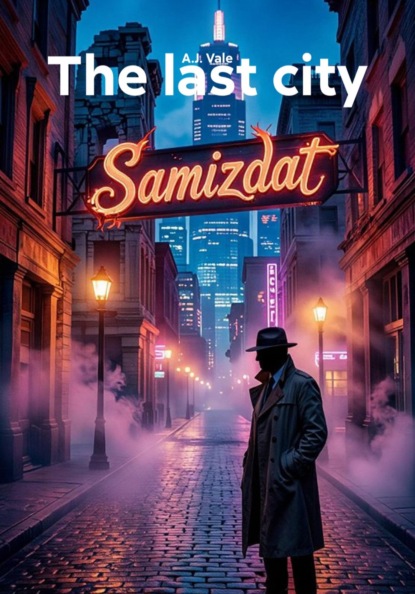
The last city
A figure stood behind a high window.
The figure was too far away for them to see its face, but it was standing perfectly still, looking down at the bridge. When Adrian stepped forward, the light went out.
“Someone’s in there,” he said.
“Someone is always in there,” Claire replied. “The question is whether they’re supposed to be.”
She closed the folder and tucked it beneath her coat. “Victor Laurent runs the archive. He’s been there since before Elena disappeared. He knows the restricted file exists, and he knows I’ve been asking about it. I’m going to see him when the doors open.”
“He’ll refuse.”
“Probably.”
“Then I’ll come with you.”
She searched his face. “You don’t have to do this because I asked.”
“I’m doing it because she called me.”
“And because you want to know whether your future self is trying to save you or frighten you.”
“I don’t know which would be worse.”
“Good,” Claire said. “At least we’re being honest.”
They started across the bridge. Halfway over, Adrian stopped. On the far bank, beneath a streetlamp, a girl stood in a yellow raincoat. Her hair was dark and cut unevenly at the shoulders. She held a red umbrella closed at her side, though the rain was falling hard.
“Elena?”
The girl looked up.
For one impossible second, Adrian saw his sister as she had been at seventeen: the crooked smile, the small scar on her chin from falling off a bicycle, the impatient lift of her left eyebrow. Then a tram passed between them, its windows full of pale faces. When it had gone, the pavement was empty.
Adrian ran to the far end of the bridge. He searched the alley, the steps, the narrow passage beside the bakery. There was no one there. Only a red umbrella lay in the gutter, its fabric torn and its metal ribs bent inward.
Claire came up beside him, breathing hard. She looked at the umbrella but did not touch it.
“Was that her?” she asked.
“I don’t know.”
“You knew her face.”
“I knew a face that looked like hers.”
He picked up the umbrella. Water ran over his fingers, cold as the sea. A small white label had been sewn into the handle. On it, in faded blue ink, was a name.
ELENA VALE.
The first tram of the morning rattled along the boulevard behind them. The city was waking up, and Adrian understood with a certainty that frightened him more than the radio had: Saint-Veron was not merely hiding what happened to his sister. It was trying to decide whether she had ever been there.
CHAPTER THREE
THE HOUSE ON THE BOTTOM
The municipal archive opened at eight, but Victor Laurent arrived at seven twenty-three.
Adrian and Claire waited across the square in a café that served burnt coffee and croissants too flaky to eat without making a mess. Claire had bought a newspaper and held it open between them, though neither of them read it. Every few minutes she glanced at the archive entrance. Adrian watched the clock above the counter.
At seven twenty-three precisely, a tall man in a charcoal overcoat crossed the square. He carried no umbrella. His silver hair was combed flat, and he walked with the careful balance of someone who had spent years navigating rooms where a misplaced gesture could be recorded against him.
“Victor Laurent,” Claire said.
“He looks like a man who alphabetises his dreams.”
“He probably does.”
They waited until he had unlocked the archive’s side door, then crossed the square. Claire reached the entrance before it could close.
“Mr Laurent?”
He turned. His eyes moved from Claire to Adrian, and something in his face tightened.
“Miss Moreau. I believe I’ve already explained that the records you requested are restricted.”
“You explained that the records don’t exist.”
“I explained that no records matching your description are available to the public.”
“That’s not the same thing.”
“No,” Laurent said. “It isn’t.”
His gaze remained on Adrian. “You should not have come here.”
Adrian felt his jaw clench. “You know who I am.”
“Everyone in this city knows who you are.”
“That’s not what I meant.”
Laurent glanced at the square. The early commuters moved past without looking at them. “Come inside. Both of you. And do not touch anything unless I tell you to.”
He led them through a narrow corridor lined with framed photographs of mayors and civic ceremonies. The building smelled of paper, dust, and something mineral beneath it, like a basement after a storm. At the end of the corridor, Laurent unlocked a glass door and ushered them into a reading room. Rows of tables stood beneath green-shaded lamps. A wall clock ticked with a sound too loud for the size of the room.
Laurent removed his coat and laid it over the back of a chair. “Tell me exactly what you found.”
Claire put her folder on the table. “Two versions of Elena Vale’s record. A death register entry for Adrian, dated 2039. A photograph of the lighthouse that shouldn’t exist.”
Laurent did not look at the papers. “And what did you hear?”
Adrian felt a cold pressure behind his ribs. “Why do you assume I heard something?”
“Because the clocks stopped at 03:17. Because the radio transmitted a voice. Because the dead have begun to use the old frequencies again.” Laurent folded his hands. “I had hoped we had more time.”
“You know about the radio?”
“I know about the signal.”
“What is it?”
“A warning. A symptom. Sometimes an invitation. It depends on who is listening.”
Claire leaned forward. “Who is sending it?”
Laurent looked at her for a long moment. “That is not a question with a safe answer.”
“I’m a journalist. Safe answers are usually the least useful.”
“Yes. And journalists sometimes mistake the danger of a question for proof that the question is important.”
“Are you going to answer me?”
“No.”
Adrian struck the table with his palm. The sound echoed across the reading room. “My sister is in those records. My name is in a death register sixteen years in the future. A photograph of me is dated tomorrow. If you know what’s happening, stop talking like a clerk and tell us.”
Laurent’s face did not change, but his fingers tightened together. “Your father said you would come back.”
“My father is missing.”
“No,” Laurent said softly. “Your father is where he chose to be.”
The clock on the wall ticked once, twice, then stopped.
Adrian looked up. Every hair on his arms rose.
Laurent closed his eyes, as if he had heard a familiar voice calling from another room. “It has started earlier than I expected.”
He stood and walked to the back of the reading room, where a tall cabinet stood between two shelves. He removed a ring of keys from his pocket and selected one small brass key. Behind the cabinet, he pressed a section of wood paneling. A latch clicked. The entire cabinet swung inward on hidden hinges, revealing a narrow stairwell descending into darkness.
Claire stared. “That isn’t on the building plans.”
“No,” Laurent said. “It isn’t.”
He switched on a wall lamp. The light reached only the first six steps. Beyond them, the stairwell bent to the left and vanished.
“Where does it go?” Adrian asked.
“To a room that was built before this archive existed. The city’s official history says the building was erected in 1891. The foundation beneath us is older than the harbour itself.”
“Who built it?”
“People who knew there were things in Saint-Veron that should not be given names.”
Laurent handed Adrian the flashlight from his coat pocket. “You will see records that contradict one another. You will hear things that sound like people you love. Do not follow any voice unless you can see the person speaking. And if you hear three knocks, do not knock back.”
“Why?”
“Because something below may answer.”
He descended first, moving carefully, one hand against the damp stone wall. Adrian followed, then Claire. The air grew colder with every step. A smell of saltwater rose from below, although the archive stood nearly a kilometre from the shore. At the landing, Laurent took a second key from the ring and unlocked a steel door.
The room beyond was larger than the building above it should have allowed.
Metal shelving covered the walls. Each shelf held boxes, ledgers, glass plates, reels of tape, and bundles of maps tied with string. A long table stood in the centre. Above it, a single lamp burned with a steady amber glow. The floor was stone, but not the grey granite used in the archive’s foundations. This stone was black, glossy in places, and cut with narrow grooves that converged at a circular mark in the centre of the room.
Adrian stepped across the threshold and felt pressure in his ears, as if he were descending beneath water.
“What is this place?” Claire whispered.
“The room beneath the record,” Laurent said. “The city keeps what it cannot explain here.”
He moved to a shelf marked with a brass plate: VALE, 2011. The label had been scratched through and rewritten several times. Beneath it, in smaller letters, someone had engraved: *ORPHEUS / INCIDENT 07.*
Adrian reached for the box.
“Wait,” Laurent said.
“Why?”
“Because the file may not be the same every time you open it.”
“That makes no sense.”
“It makes less sense to pretend otherwise.”
Laurent set the box on the table and opened it himself. Inside lay a school photograph, a folded map, three audio cassettes, and a thick envelope sealed with dark wax. Adrian recognised the school photograph immediately. It showed his class at Saint-Veron Secondary, taken in the autumn of 2011. He was in the back row, looking bored. Elena was not in the picture. He remembered that day: she had skipped the photo session to meet a university recruiter at the library.
But in this version of the photograph, Elena stood at the centre of the second row, smiling at the camera. Her hand rested on Adrian’s shoulder. Everyone around them had their eyes closed.
Claire leaned close. “Look at the date.”
The date printed in the lower corner was 24 OCT 2011, though the photograph had been taken weeks earlier. In the background, through the school’s glass doors, a dark sea was visible where the courtyard should have been.
Adrian turned the photograph over. The back was covered in handwriting, most of it crossed out. He could make out fragments:
*…first sound…*
*…do not let Daniel…*
*…the girl remembers…*
*…the city will choose…*
A noise came from the far side of the room. Three knocks, slow and deliberate.
Claire’s hand closed around Adrian’s wrist.
Laurent went still. “Nobody speak.”
The knocks came again, this time from beneath the table.
Adrian looked down. The circular mark in the floor had filled with a thin layer of water. It spread through the grooves, following their lines like ink through a map. The amber lamp flickered.
From somewhere under the stone, a girl’s voice called, “Adrian?”
He nearly answered. The sound of his name was perfect. It carried the same impatience, the same faint rasp, the same familiar breath. Claire’s fingers tightened around his wrist until it hurt.
“Don’t,” she whispered.
The voice came again. “Adrian, it’s cold down here.”
He shut his mouth so hard his teeth clicked.
Laurent took a cassette from the box and pushed it into a battered recorder. “We need to hear this before the room changes.”
The tape began with a wash of static. Then a man spoke.
“If you are hearing this, the first barrier has failed. You have reached the archive beneath the archive. You may believe that you are investigating a disappearance. You are not. You are approaching a door that has been opened before, and every time it opens, the city loses a piece of itself.”
Adrian recognised the voice. It was his own, older and roughened by exhaustion.
“Do not trust the records. Do not trust the photographs. Do not trust the people who claim they remember the same history you do. The city is not lying to you. It is trying to survive.”
The tape hissed. A chair scraped in the background.
“If Elena is still calling you, do not mistake the call for rescue. She may be alive. She may be an echo. She may be the only part of the city that remembers what happened. None of those possibilities gives you permission to open the gate.”
Adrian reached for the recorder, but Laurent caught his hand.
The voice continued.
“Find the light beneath the door. Find the room where the first sound was made. And when you see me, do not believe that I am the version of you who knows the most. I am only the one who has lost the most.”
The tape clicked off.
No one moved.
Claire was the first to speak. “How many times has this happened?”
Laurent looked at the dark water in the floor. “Enough times that I have forgotten which memories belong to me.”
“Who is Orpheus?” Adrian asked.
Laurent took a long breath. “A project. A theory. A mistake. The official account says it was a coastal-resilience programme designed to model flood conditions and preserve the city’s records during an emergency. That account is true, as far as it goes.”
“And beyond that?”
“Your father was an engineer on the project. He believed that a city could be saved by preserving every possible version of it. If one future drowned, perhaps another could be found where it survived. The experiments began with maps and sound recordings. Then they began to involve memory.”
Adrian stared at him. “My father opened the gate.”
“Yes.”
“Why?”
“Because your mother died.”
The words landed without drama, which made them worse.
Adrian had been told that Marion Vale died of a sudden cerebral haemorrhage in the winter of 2008. He remembered the hospital corridor, the rain on the window, his father sitting with both hands folded around a paper cup he never drank from. Elena had cried openly. Adrian had not. He had believed that if he stayed still enough, grief would pass through him without finding a place to settle.
“He wanted to bring her back?” Claire asked.
“He wanted to reach a version of the city in which she had never died. He found one. Or thought he did. But the gate does not distinguish between a person and the memory of a person. It opens onto whatever has been preserved strongly enough to answer.”
“And Elena?”
Laurent’s gaze shifted to Adrian. “Your sister went looking for him. You followed. The gate opened again.”
Adrian could not seem to draw a full breath. “You knew this for thirteen years.”
“I knew part of it. I did not know where your father had gone. I did not know whether Elena had crossed the threshold or been taken by it. I did not know which records were still true. Every time I tried to preserve the evidence, the evidence changed.”
“You could have told us.”
“I did tell your mother. She begged me to let the city forget. She believed that if the records were sealed, the door would remain closed.”
“Did it?”
Laurent looked at the water. “No.”
A sound came from the steel door behind them. The latch turned by itself.
Claire spun around. Beyond the doorway, the stairwell was no longer dark. It was flooded with pale daylight. A street ran down the steps where the stairs should have been, lined with houses Adrian recognised from childhood. At the far end stood a woman in a red scarf.
His mother.
She looked exactly as he remembered her from the last morning of her life, her hair pinned loosely at the back, her expression gentle and tired. She lifted one hand to beckon him.
“Adrian,” she said. “Come home.”
His feet moved before he could stop them. Claire caught his coat. Laurent seized his other arm.
The woman in the red scarf smiled. Behind her, the street filled with water.
“Come home,” she said again.
Adrian forced himself to look at her face. It was perfect, but there was no reflection in her eyes. He remembered his mother’s last words to him in the hospital: *Look after your sister.* The woman in the doorway did not say them. She had forgotten the one thing that made her his mother.
He stepped back.
The doorway slammed shut.
The water in the floor vanished, leaving the black stone dry and gleaming. The lamp steadied. Somewhere above them, the archive clock began ticking again.
Laurent let go of Adrian’s arm. “Now you understand why I told you not to follow a voice.”
“No,” Adrian said, though his voice shook. “I understand why you’re afraid.”
“That is the beginning of understanding.”
He returned the cassette to its box and closed the lid. “There is one more file you need to see. It is kept at the lighthouse. I have never been able to move it here, and I have never been able to destroy it.”
“What file?”
“The first photograph. The one taken before Elena disappeared. The one that shows who opened the door.”
Adrian took the two photographs from his coat. “This one?”
Laurent studied the image of the ruined lighthouse, then shook his head. “That is a later version. The first photograph is in the lantern room. It has been waiting for you.”
“Why didn’t you tell me that before?”
“Because you would have gone there alone.”
Adrian looked at Claire. She looked back at him, fear plain on her face, but beneath it was something steadier: not confidence that they would survive, but a decision not to abandon the question.
“Then we go now,” she said.
Laurent locked the file box away. “You may go to the lighthouse. But you must understand one thing. If the gate opens, it will offer each of you something different. It will know what you regret. It will know what you would sacrifice to undo it. And it will make the offer sound like love.”
Adrian turned toward the stairs. “Then we won’t listen.”
Laurent’s expression was almost pitying. “Everyone says that before they hear the voice.”
CHAPTER FOUR
THE WOMAN WHO REMEMBERED
The road to the northern lighthouse ran between the sea wall and a row of abandoned customs houses. In daylight, it was a popular walking route. At night, with the storm moving in from the west, the path seemed to narrow toward the lighthouse as if the city were drawing a breath.
Claire drove. Adrian sat beside her with the two photographs on his knees. The dashboard clock read 04:12. It had not stopped again, but he found himself checking it every few minutes. The road shone beneath the headlights. Beyond the barrier, waves struck the rocks and withdrew in long white sheets.
“You’re quiet,” Claire said.
“I’m trying to decide whether Laurent is telling the truth.”
“About which part?”
“All of it.”
“That’s sensible.”
“He said my father opened a gate to find my mother.”
“Do you think he did?”
“I think he was devastated. I think he would have done almost anything to see her again. I also think grief doesn’t explain a room beneath an archive or a photograph from the future.”
Claire glanced at him. “Sometimes grief is the reason people build impossible things. It doesn’t make the things less impossible.”
He turned the future photograph over in his hands. “If that is me in 2039, why am I trying to stop myself?”
“Maybe because you know what happens if you don’t.”
“Or maybe it’s a warning designed to make me do exactly what I’m being told not to do.”
“Which is why we should investigate instead of obeying it.”
“You say that as though we’re going to a council meeting.”
“I’ve been to council meetings. They’re much more dangerous.”
He laughed once, unwillingly. The sound startled him. Claire smiled without looking away from the road.
“Can I ask you something?” he said.
“You can ask. I reserve the right to refuse.”
“Why did you start investigating the missing streets?”
Her smile faded. She took a longer stretch of road before answering.
“My brother,” she said. “His name was Luc.”
Adrian turned toward her. She had never mentioned a brother.
“He was eight when he drowned,” she continued. “We were on holiday. There was a river near the house, shallow in summer, fast after rain. My mother was inside. I was supposed to be watching him. I looked away for maybe a minute. He slipped from the bank. I jumped in after him, but the current pushed me against a tree root. A man pulled me out. By the time anyone found Luc, he was gone.”
“I’m sorry.”
“I used to hate that phrase. It sounded like a door closing. But I know people say it because there isn’t anything else to say.” She tightened her hands on the wheel. “Two years ago, I found a photograph in my mother’s attic. It showed me and Luc at a birthday party. He was older than he had been when he died—maybe twelve or thirteen. He was standing beside me, holding a cake. My mother was in the background, laughing. I thought it was a dream or a composite. Then I found a school report with his name. A library card. A letter from a boy who signed himself Luc Moreau.”
“What did your mother say?”
“She said I’d had a brother, but he hadn’t drowned. He’d been sick. Then, a week later, she said I was an only child and asked why I kept inventing stories. The photograph vanished from the attic. The school had no record. The library card was blank. But I remember him. I remember the way he chewed the ends of pencils and the fact that he was afraid of moths. I remember him asking me to teach him how to swim, and I remember the river.”
“Do you think he’s alive somewhere?”
“I think there is a version of my life where he is. I think I have seen the evidence of it. I don’t know if that means he exists now, or ever did. But when I found the first map with a street that wasn’t there, I recognised the feeling. The city was doing to itself what it had done to my family.”
Adrian looked at her hands on the wheel. She held the car steady even as the road curved and the wind pushed against them. He had thought Claire’s investigation was fuelled by ambition, by the thrill of finding a story everyone else had missed. Now he understood the quiet desperation beneath it. She was not chasing a mystery for its own sake. She was trying to discover whether memory could be trusted when everyone around her insisted it was a lie.
“Do you ever think,” he asked, “that remembering him keeps you from living?”
“Every day.” She gave a small, rueful smile. “And every day I think forgetting him would be another kind of death.”
The lighthouse appeared ahead, a white tower rising above the rocks. Its lantern room was dark. The keeper’s cottage beside it had been boarded up for decades, but one window glowed faintly yellow.
Adrian sat upright. “Someone’s there.”
Claire slowed the car. “Could be a reflection.”
“It isn’t.”
They parked beside the sea wall and approached on foot. The wind was stronger here. It pushed salt spray across the path and tugged at their coats. The cottage window went dark as they reached the gate.
The lighthouse door stood closed. Adrian tried the handle. It turned freely.
Inside, the circular chamber smelled of damp stone and old metal. A spiral staircase climbed to the lantern room. Beneath it, a smaller door led to the keeper’s storage room. Adrian swept his flashlight across the floor. There were footprints in the dust—fresh, wet footprints leading toward the stairs.
Claire crouched beside them. “One person. Barefoot.”
The prints began at the door and continued up the steps. They were too narrow to belong to Laurent.
“Could be Elena,” Adrian said.
“Could be someone who wants us to think it’s Elena.”
He nodded. The distinction mattered, even if he could not bear it.
They climbed. The staircase was narrow, the handrail cold and slick beneath Adrian’s fingers. At the lantern room, the windows were clouded with salt. The great lens stood dark in its iron frame. Someone had set a small table beneath it. On the table lay a tape recorder, a stack of photographs, and a single white envelope.
Claire approached the table slowly. “This is the file Laurent mentioned.”
Adrian picked up the top photograph. It showed the lighthouse door on the night Elena disappeared. The image was grainy, washed out by a flash. His sixteen-year-old self stood in the foreground, one hand pressed to the doorframe. Behind him, his father stood with his back to the camera, holding something long and metallic. The lighthouse door was open. Below the threshold, a strip of white light cut across the floor.