Полная версия:
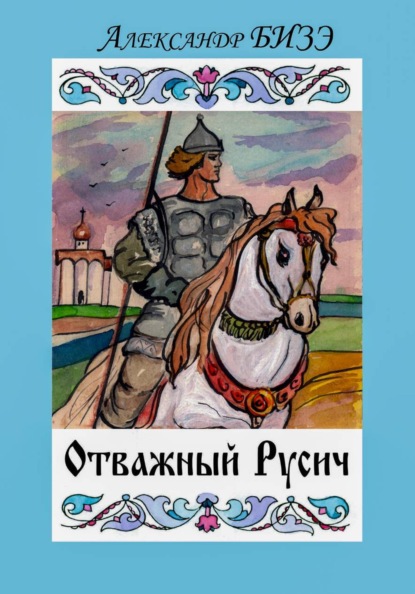
Отважный Русич

Александр БИЗЭ
Отважный Русич
Авторское повествование
о событиях русской истории,
русских полков во главе с великим
князем московским и владимирским
Дмитрием Донским и монголо-татарских войск
под началом Мамая 8 сентября 1380 года
на Куликовом поле.
BezE
RETURNING TO THE PAST
FROM THE AUTHOR
The events, which were described in the legend, are not imaginary, of course. When I was on a trip in Siberia near the river Angara, I became acquainted with a wise old man under very interesting circumstances (in a forest watchman’s box). Without pen and paper I was sitting with him until dawn near a small fire, and was listening and listening without interrupting a wonderful story-teller, a person, who had great knowledge, who was well-read and knew the history of the Ancient Russia very well.
An experienced hunter, he gave argumentative answers to all my questions, confirming his history with exact excerpts and dates from history books and encyclopedias.
Having listening to my new acquaintance attentively, I understood, that I should write as exactly as I could all I have heard and report to my readers. Later it happened so.
Years passed by, and now «The brave Russian» is being read not only by children, but also by people, who went through the war, who protected bounds and frontiers of our Motherland in the Great Patriotic War, and also by soldiers, who fought in Afghanistan, and participants of the Chechnya’s War – by young boys-soldiers, who took part in military operations and lost close friends or their health. It is being by eighteen-year old boys, who are only going to serve in the army and who have yet to accomplish kind things in this life.
Returning a lot of times to what was typed, I often think, that a person, who gave his life for the most precious thing – Motherland, is an example to follow. That’s why I want the boys, who will have to put on a military uniforms, to remember the most important thing: the work on the field of battle – is as responsible work as bringing-up a child or, if you want, as taking care of a blooming garden. In the first and in the second case it is necessary to do your work not only consciously, but doing all your best.
For example, Gleb is one of the heroes of the legend. By his noble action he shows us, how we must love earth, bread and how we must treat with the enemy. Without thinking for a minute, quite a young fellow of seventeen years old decides for himself the most important problem: to go and to fight with thousands of enemies: tartars, usurpers and oppressors, who united in one numerous army and risked to enslave all the Russian folk. Killed in an unequal battle, Gleb, fought like a brave man, didn’t shame his name.
Let this sad story about the family of Siberians, which our contemporaries also among our generations, to whom I address with the help of this beautifully illustrated book, which teaches and brings us up.
Read, discuss. And I, like an author, will be glad to realize, that I kept the promised word to my night story-teller. The book lives. And everyone, who will read it, I hope, will think over things happening on our planet.
Эта книга представляет собой поэтическую балладу, в которой органично соединены русская фольклорная традиция и современный параллельный перевод. Главная особенность издания – работа переводчицы Екатерины Бородулиной. Она не просто передала смысл, но сохранила ритм, напевность и образность оригинала, что позволяет русскоязычному читателю ощутить атмосферу старинной былины, а англоязычному – прочувствовать её поэтическую структуру.
В центре произведения – тема жертвенного служения Родине и вечной памяти о павших героях. Баллада показывает, как на защиту родной земли встаёт простой юноша, чья внутренняя сила и доброта оказываются важнее знатного происхождения. История Глеба – это не только рассказ о подвиге, но и размышление о преемственности поколений, о том, как подвиг одного человека становится частью общей судьбы народа.
This book is a poetic ballad that combines Russian folklore tradition with modern parallel translation. The key feature of this edition is the work of Ekaterina Borodulina, the translator of this ballad. She did not only convey the meaning but also preserved the rhythm, melodiousness, and imagery of the original, allowing Russian-speaking readers to experience the atmosphere of the ancient bylina, while English-speaking readers have an opportunity to appreciate its poetic structure.
The book is focused on the theme of sacrificial service to the Motherland and the eternal memory of fallen heroes. The ballad depicts how a simple young man rises to defend his native land, whose inner strength and kindness are more important than his noble birth. Gleb’s story is not only a tale of heroism but also a reflection on the continuity of generations, on how the heroism of one person becomes part of the shared destiny of a nation.
The Bravest Son of Rus’
(Aleksandr BezE)
The Ballad of a Brave Young Man
(translated by E.S. Borodulina)
За песчаной пустошью,
за морями синими
Жил красивый юноша
да с руками сильными…
Он по просьбе батюшки
мог поднять коровушку,
А по просьбе матушки
перепеть соловушку.
Far beyond the desert sands,
Where the blue seas gleam,
Lived a lad of mighty hands,
Handsome as a dream...
He could lift a heavy cow
Just to please his dad,
Then sing like a nightingale
Just to make mom glad.
Не страшился парень тот
дел мирских, а с радостью
Вытирал с лица лишь пот
и не знался с жадностью.
Отдавал последний хлеб
бедному, убогому
И в свои семнадцать лет
был готов ко многому…
That young man was so hardworking,
he wiped off the sweat.
Well, he worked and did it happily,
never dealed with greed.
To the poorest people
he could give some bread.
At the age of seventeen
he was to protect the land…
Вот однажды вечером
в дом вошли два странника…
– Вы, как птицы кречеты,
Божие избранники.
– Приземляйтесь, милые, –
молвила им матушка.
– Блинчики медовые, –
вторил жинке батюшка.
One night there were wayfarers –
Chosen they’re by God.
– Come here, please, gyrfalcons,
Enter, please, the hut.
– Sit down, guests our dear –
said the young man’s mother.
– Take pancakes with honey, –
added the lad’s father.
– К кипяточку пряники, –
сказывал и Глеб гостям.
– Странники, вы странники,
нелегко, пожалуй, вам.
Вижу: босы ноженьки,
одежонка старая.
Пожалей вас Боженька,
ведь вода–то талая…
– Take these pies and have some tea, –
Gleb invited all those guests.
– Oh, wayfarers, I can see:
Difficult your fates.
Well, I see your bare feet
and your clothes old.
You may get sick, God forbid,
Outdoors it’s wet and cold.
С тем, что обносилися,
мы давно смирилися.
Лучше нас, кормилец,
ты выслушай и смилуйся.
Сбереги–ка баб, детей
ты от злого Кáлина,
отведи беду скорей,
накажи татарина.
What we wear – we don’t care,
it is unimportant.
Listen, please, our dear friend,
listen, be supportive.
Save all children, also women
from bad Kalin’s raid.
Fight this tatar, give us freedom,
We need much your aid.
Знаешь ли ты, юноша,
то, что враг злорадствует?
И в Москве, и в Кинешме
он победы празднует.
Видим: ты отзывчивый,
да и не уродина,
Молодой, улыбчивый
сердце не озлоблено.
Do you know, Glebushka,
he’s attacking us.
He in Moscow and in Kineshma
celebrates his victories.
We see you are helpful,
boy, you’re handsome, not severe,
Young and smiling, unresentful
and you are not evil.
Помоги нам силушкой,
силушкой да удалью.
Русь в огне, под крышкою.
Хан уже под Суздалем.
Поезжай и выручай!
Пусть не рода знатного.
Сивку–Бурку оседлай,
ждут тебя, желанного… –
Show us your wit and might,
show us your power.
Rus’ is ready for a fight,
Khan’s in Suzdal now.
Ride a horse, come there,
may you be not noble.
Save us from despair,
we expect, we hope… –
Повернулся Глеб к отцу:
– Батюшка, что скажете?
– Да куда тебе, юнцу!
Все там и поляжете!
– Матушка, скажите Вы…
– И не вздумай, Глебушка!
Без тебя помрём же мы.
Кто помелет хлебушка?
Gleb appealed to his father:
– Dad, what’d you think?
– Stay at home, boy, rather
than be killed!
– Mother, what is your reply?
– Glebushka, I plead!
If you leave, we both will die,
who will grind us wheat?
– Не в обиде я на вас,
батюшка и матушка,
Но не время мне сейчас
кушать здесь оладушки.
Соберите–ка поесть
в путь–дорогу дальнюю.
От посыльных ждите весть. –
Только не печальную…
– Dad and Mother, dear,
you do not offend.
I must go, it is clear,
I can’t eat your bread.
It’s my way, I am to choose,
Give me, please, some food.
Messengers will spread the news
that will raise your mood…
Ты один у нас сынок.
Если что – не выдюжим.
– Мать права. Поможет Бог!
Раз решил, мы выдержим.
Поезжай и проучи
наглецов и Кáлина,
Чтоб исчез с лица земли
даже дух татарина…
– Gleb, you are the only one
and you go to struggle.
– Mum is right. We won’t survive, son,
God save from a trouble!
Well, be safe and fight this Kalin,
enemies are near.
Tatars’ spirit is alarming,
Make it disappear…
Будь, как ястреб, как лиса,
заступись за детушек.
Ну, а в поле за тебя
посажу я хлебушек…
Не волнуйся и за мать,
с нею мы бывалые.
Конец ознакомительного фрагмента.
Текст предоставлен ООО «Литрес».
Прочитайте эту книгу целиком, купив полную легальную версию на Литрес.
Безопасно оплатить книгу можно банковской картой Visa, MasterCard, Maestro, со счета мобильного телефона, с платежного терминала, в салоне МТС или Связной, через PayPal, WebMoney, Яндекс.Деньги, QIWI Кошелек, бонусными картами или другим удобным Вам способом.
Вы ознакомились с фрагментом книги.
Для бесплатного чтения открыта только часть текста.
Приобретайте полный текст книги у нашего партнера:
Полная версия книги
Всего 10 форматов